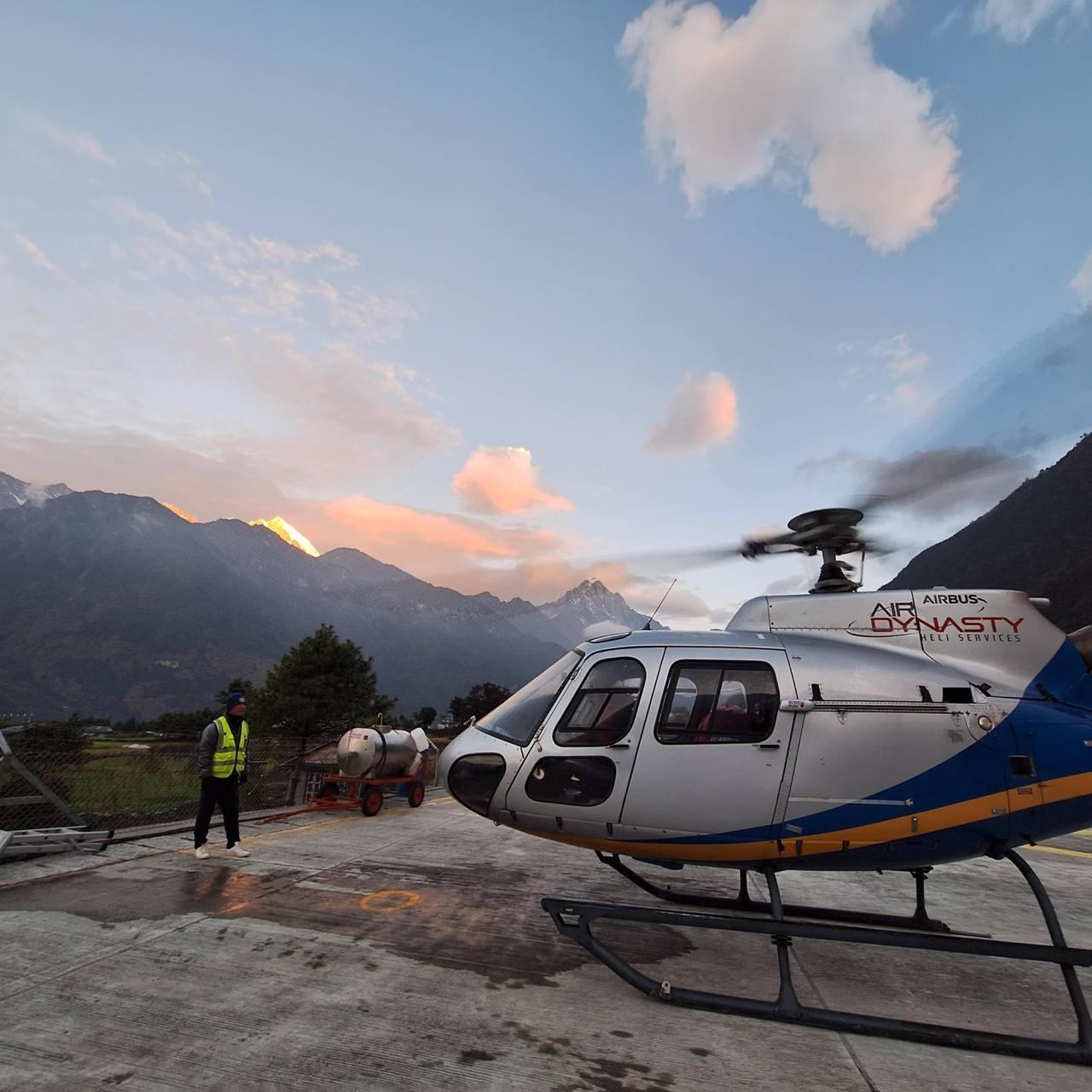
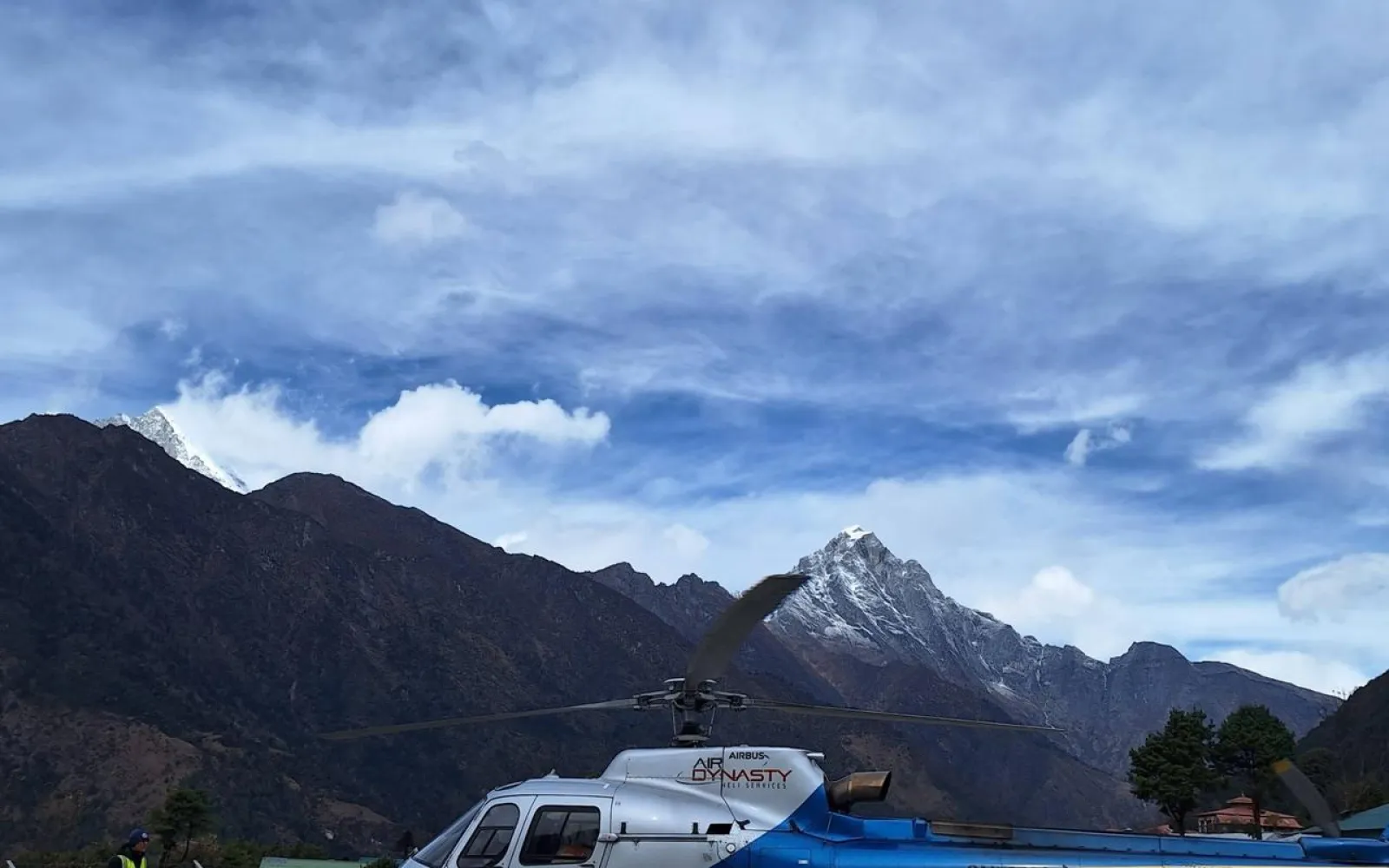
It is important to understand the concept of best Seasons & weather realities for the Muktinath Dharshan Helicopter Tour. Mostly because safe flights require good visibility, manageable winds, and suitable air conditions at high altitudes. When flying from lower valleys such as Kathmandu at around 1,400 meters or Pokhara at 822 meters to Muktinath at 3,710 meters, you pass through several different climate zones.
Weather can change quickly along the route, particularly in the mountains, so choosing the right season is an important part of planning your helicopter tour. Understanding seasonal conditions can help you choose better travel dates, prepare for changing temperatures, and reduce the chances of delays caused by poor visibility, rain, cloud, or strong winds.
Muktinath is sitting at an altitude of 3,710 meters (12,171 feet) in the rain-shadow of the Mustang region. Muktinath experiences an alpine desert climate that contrasts sharply with the warm, humid conditions of Kathmandu and Pokhara.
Ground temperatures remain consistently cool year-round, dropping well below freezing during winter nights and early mornings. Strong, unfiltered solar radiation hits the high-altitude valley on clear days, but fierce mountain winds regularly sweep through the nearby Kali Gandaki corridor by late morning, rapidly cooling the air.
Mountain helicopter aviation relies strictly on Visual Flight Rules (VFR), which require pilots to maintain clear visibility of the surrounding terrain and passes at all times. Flying through narrow river gorges like the Kali Gandaki means that sudden cloud cover, rain, snowfall, or high-velocity winds can compromise safety and block visual flight paths.
Flight dispatchers and captains conduct rigorous weather checks before every takeoff, continuously monitoring live mountain webcams, wind speeds, and cloud ceilings. Because localized atmospheric shifts can develop within minutes, operators frequently hold, delay, or reschedule flights to ensure that every leg of the journey meets strict aviation safety margins.
Selecting the right time of year for a Muktinath helicopter tour directly affects your flight reliability, mountain visibility, and ground comfort at the temple. While helicopters operate year-round, distinct seasonal weather patterns across Nepal dictate flight conditions and determine overall travel quality.
Spring brings increasingly stable weather and expanding daylight hours, making it one of the premier seasons for high-altitude aviation. As winter cold recedes, temperatures become comfortably mild during the day, though early mornings at Muktinath remain brisk and cold. High atmospheric clarity in March and April opens up brilliant, sweeping views of the Annapurna and Dhaulagiri ranges against clear blue skies. These favorable visual conditions, combined with comfortable daytime sightseeing temperatures, make spring an exceptional choice for pilgrimage visits and mountain photography.
The summer monsoon brings heavy rainfall, low cloud ceilings, and high humidity across most of Nepal, creating a challenging environment for mountain flights. While Muktinath itself sits behind the main Himalayan wall in a rain-shadow zone that receives minimal rainfall, getting there requires flying through lower valleys like Pokhara that experience frequent rain and thick cloud cover. These conditions reduce visual flight visibility and significantly increase the likelihood of flight delays or postponements. Travelers flying during this period must maintain adaptable itineraries to account for unpredictable departure windows.
Autumn stands as the most reliable and popular season for a Muktinath helicopter tour. As the monsoon gradually withdraws in September, dry northern air sweeps over the mountains, clearing away humidity and dust particles to reveal exceptionally sharp Himalayan panoramas. October and November deliver stable atmospheric conditions, calm morning winds, and comfortable daytime temperatures that ensure high flight completion rates. The pristine skies and predictable weather make this period the prime choice for pilgrimage, photography, and hassle-free sightseeing.
Winter delivers freezing temperatures, cold winds, and occasional snowfall at Muktinath, with morning and evening conditions dipping well below zero. Despite the biting cold, winter air is dense and exceptionally dry, frequently producing crystal-clear blue skies and stunning, unobstructed mountain visibility. However, frozen helipads, morning frost, and localized winter snowstorms present operational challenges that can lead to delayed departures or date changes. Success during these cold months requires heavy insulated clothing, thermal gear, and a flexible travel schedule.
| Month | Weather | Visibility | Flight Considerations | Overall Suitability |
|---|---|---|---|---|
| March | Cool and increasingly stable | Good | Generally favorable | Good |
| April | Mild with clearer skies | Very good | Favorable | Excellent |
| May | Warmer, occasional cloud | Good | Generally favorable | Excellent |
| June | Increasing monsoon influence | Variable | Weather-sensitive | Moderate |
| July | Wet across much of Nepal | Variable | Higher delay risk | Moderate |
| August | Monsoon conditions | Variable | Greater weather risk | Moderate |
| September | Monsoon gradually retreats | Improving | Increasingly favorable | Excellent |
| October | Stable and clear | Excellent | Highly favorable | Excellent |
| November | Cool and dry | Excellent | Favorable | Excellent |
| December | Cold and dry | Often excellent | Cold-weather considerations | Good |
| January | Very cold | Often clear | Cold and snow considerations | Moderate |
| February | Cold, gradually improving | Good | Increasingly favorable | Good |
Some months offer better weather, clearer skies, and more reliable departure windows for a Muktinath helicopter tour. Flying during these months improves your chances of seeing the mountains clearly and keeping to schedule.
April and May bring mild daytime temperatures and green spring scenery along lower flight corridors. Warmer ground conditions make the stop at Muktinath comfortable for pilgrims taking holy baths or visiting the temple grounds. Early morning departures offer especially clear views of the snow-capped Annapurna and Dhaulagiri ranges before afternoon thermals create haze.
October and November are the best months for high-altitude helicopter flights in Nepal. After the monsoon, the air is clearer and drier, giving better views of the Himalayas. Calm morning weather, lighter valley winds, and dry ground at Muktinath also help flights run smoothly, making this the best time for sightseeing and mountain photography.
September is a transition period as the monsoon ends, and weather becomes more stable across central Nepal. Flying conditions improve toward mid- to late September, with clearer skies and green valley views. It is a good option for travelers seeking an autumn flight before the October pilgrimage crowds arrive.
Himalayan mountain weather changes quickly, so conditions can shift dramatically in a short time. Clear skies at your departure airport in Kathmandu or Pokhara do not mean the flight path will be open or that landing conditions at Muktinath (3,710 meters) will be safe. Because cloud cover, ridge fog, and sudden temperature changes can develop fast along mountain passes, helicopter operators monitor live weather feeds, satellite data, and pilot reports to judge route safety.
Early morning departures offer the most reliable window for a Muktinath flight. In the early hours, mountain air is cold, calm, and stable, which lowers the chance of afternoon clouds and rising warm air in river valleys. This clear morning air also gives the best conditions for aerial photography and wide-open views of the Annapurna and Dhaulagiri ranges.
High-altitude areas are especially affected by strong mountain winds, which can directly impact flight stability and landing accuracy. In areas like the Kali Gandaki Gorge, winds often increase by mid-morning, creating turbulence that can make it unsafe for helicopters to approach or land on elevated helipads. Flight operations depend on real-time wind speeds, cloud ceilings, and visibility, not on calendar dates or fixed schedules.
Low cloud cover and poor visibility are major reasons helicopter flights may be delayed or stopped. Because pilots fly under Visual Flight Rules (VFR) and must keep the terrain in sight, low clouds over mountain passes or the Muktinath landing pad can block safe travel. When visibility falls below safe levels, aircraft must wait on the ground until conditions improve.
Rain or snow along parts of the route can also cause delays, even in otherwise good travel months. Heavy monsoon rain can affect lower valleys and departure points, while winter freezing rain or snowfall can cover higher passes and ice over landing areas. Safety comes first, so passengers should expect possible schedule changes or delays whenever rain or snow affects the flight path.
Autumn (October to November) and spring (April to May) usually offer the most reliable weather and clearest mountain views for a Muktinath helicopter tour, though alpine conditions can still change quickly and flights are never guaranteed. Safety and real-time mountain weather decide every takeoff, so a flexible schedule is essential for a smooth journey.
Contact an experienced helicopter operator to check departure schedules, monitor weather, and plan your Muktinath pilgrimage with confidence.
October is widely considered the best overall month due to exceptionally dry weather, minimal cloud cover, and outstanding flight visibility. November and April are equally reliable alternatives that offer clear Himalayan views and high flight completion rates.
Yes, October is the prime window because the monsoon has fully withdrawn, leaving pristine skies and stable atmospheric conditions across the Himalayas. The clear morning weather during this month allows helicopters to fly and land at Muktinath with very few weather disruptions.
Yes, helicopter charters operate during the summer monsoon months from June to August, but flight schedules face frequent delays. While Muktinath itself sits in a dry rain-shadow zone, low clouds and heavy rainfall in lower valleys like Pokhara often block the flight route.
Muktinath receives very little rain during the summer monsoon because it is shielded by the massive Annapurna and Dhaulagiri mountain ranges. However, high humidity and afternoon cloud cover can still build up around the surrounding high passes.
Muktinath is extremely cold during winter, with morning temperatures frequently dropping well below freezing between December and February. Despite the freezing ground conditions, winter mornings often feature sharp, clear skies that offer stunning views of snow-covered peaks.
Early mornings provide the calmest winds, clearest mountain passes, and lowest chance of cloud development. Flying early significantly lowers the risk of weather delays and gives you the best lighting for aerial photography.
Helicopters operate under Visual Flight Rules, requiring pilots to maintain direct visual contact with the ground and landing pad. If low cloud cover or dense fog obscures the helipad at Muktinath, the captain will hold the aircraft or return to the departure airport for safety.
If bad weather closes mountain routes, passengers wait at the airport terminal for conditions to improve. If the weather does not clear during your departure window, the operator will reschedule the flight for the next available morning or issue a refund per contract terms.
Yes, all passengers require the Annapurna Conservation Area Permit (ACAP) and a Trekkers' Information Management System (TIMS) card even when flying directly by air. Authorized helicopter tour operators typically arrange and include these entry permits as part of your booking package.
Severe altitude sickness is unlikely because the ground stop at Muktinath is kept to a brief 30 to 45 minutes. However, because you ascend rapidly to 3,710 meters, walking at a slow, steady pace and staying hydrated is highly recommended.
Yes, legitimate tour operators allow you to move your flight to the next available date if weather conditions prevent safe flying. If your travel itinerary cannot accommodate a rescheduled date, the operator will process a refund according to their cancellation terms.
For peak autumn (October–November) and spring (April–May), you should book at least 3 to 6 weeks in advance to secure your preferred departure date and early-morning time slot. Booking early ensures availability, especially if you require a group-joining seat rather than a private charter.
You can request a specific time slot, but operators heavily prioritize early-morning departures between 6:00 AM and 8:00 AM due to wind and visibility safety. Afternoon departures are rarely offered because high mountain winds and clouds make late flights unsafe.
Yes, private charters are available 365 days a year, provided weather conditions meet strict civil aviation safety requirements. Private flights offer personalized schedules and allow you to fly directly with your own family or private group.
Most reputable operators offer weather-flexible packages that allow free rebooking if mountain weather forces a cancellation. You should always reconfirm the operator’s exact refund and date-change policies before making your initial deposit.
Group-joining seat rates often rise during peak autumn and spring pilgrimage seasons due to high demand for shared aircraft. Full private charter rates remain fairly consistent year-round, though holiday periods can see increased booking volume.
Yes, private charters allow you to adjust your departure location between Kathmandu or Pokhara and can include custom stops like Annapurna Base Camp. You can also coordinate with the pilot for extended ground time at the temple if weather conditions permit.
Due to strict high-altitude payload limits, individual passenger luggage is restricted to approximately 5 to 10 kg (11 to 22 lbs). Passengers are encouraged to carry only a small hand bag containing warm layers, essential medicine, and personal items.
A standard Airbus H125 or Bell 407 helicopter typically accommodates up to 5 passengers, subject to maximum total weight limits. At higher elevations like Muktinath, total weight capacity is strictly monitored to ensure safe takeoff and landing performance.
Most commercial helicopter packages include private ground transportation between your hotel in Kathmandu or Pokhara and the domestic airport terminal. Reconfirm your itinerary inclusions with your operator to ensure all airport tax fees and road transfers are covered.