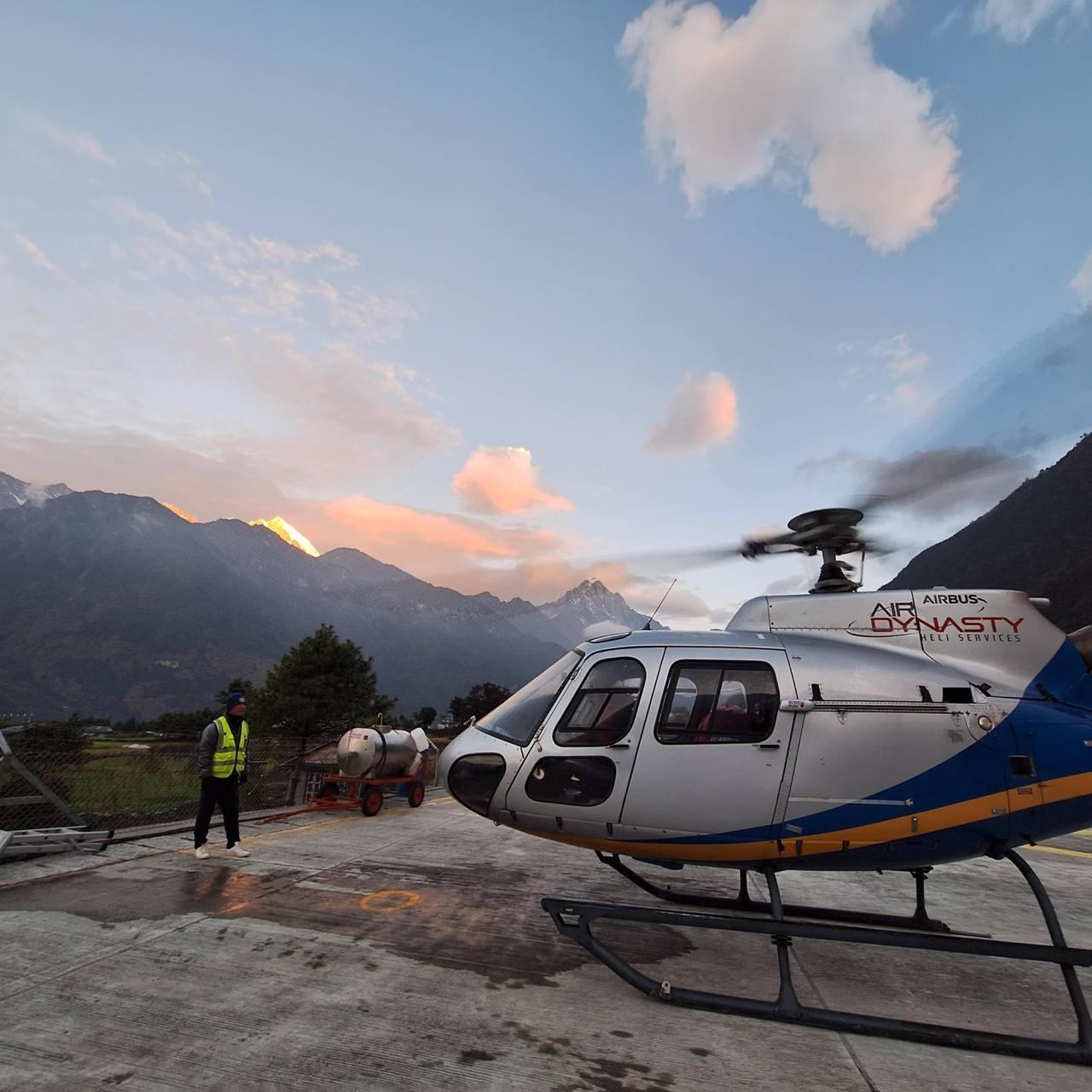
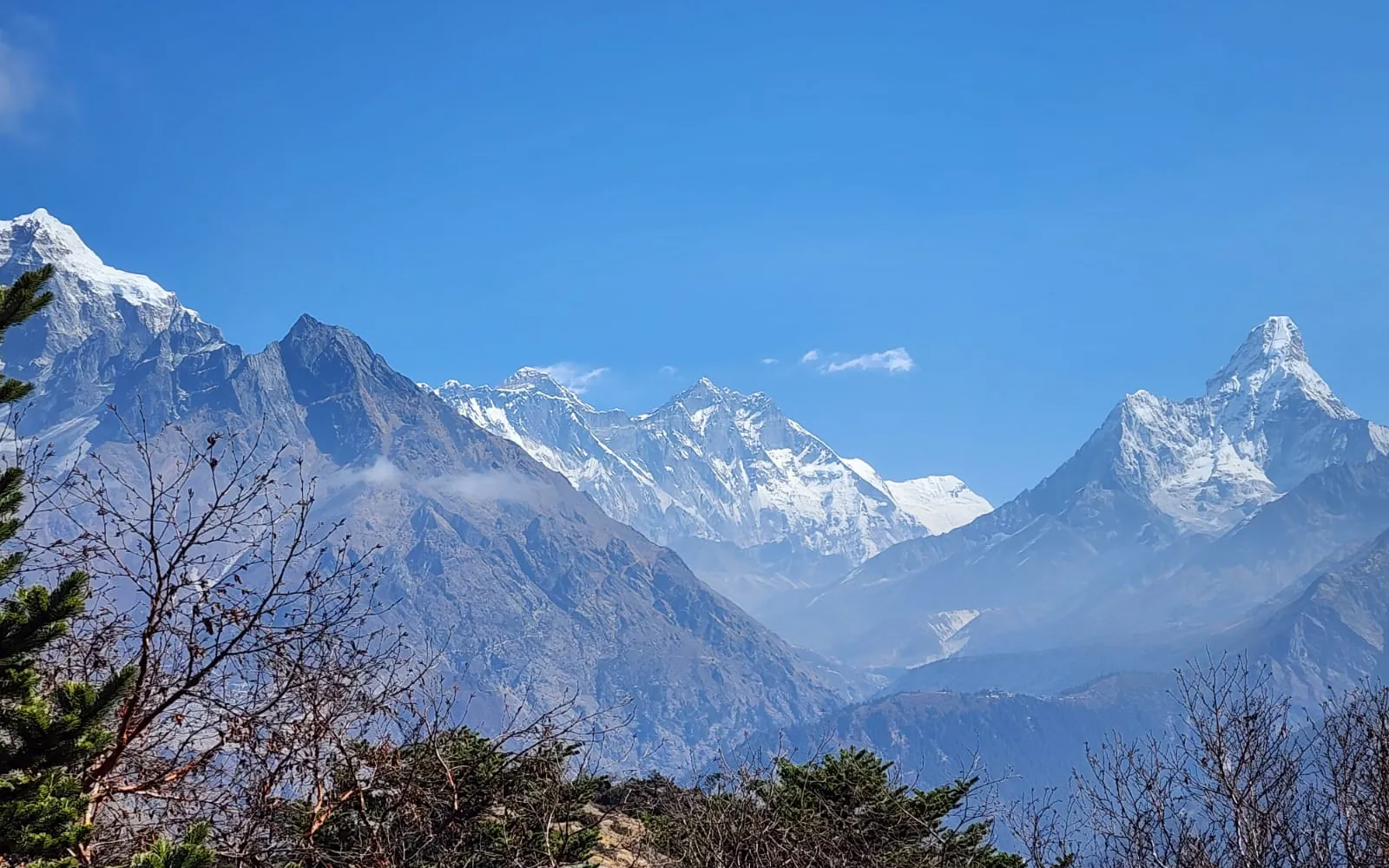
An Everest helicopter tour and a trek are two very different ways to experience the Everest region. Trekking is a multi-day journey on mountain trails through Sherpa villages, suspension bridges, forests, and high-altitude landscapes. It takes you gradually to places such as Namche Bazaar, Tengboche, Gorak Shep, and Everest Base Camp. The journey itself is a major part of the experience, with nights spent in local teahouses along the way. It requires preparation, physical fitness, and enough vacation time to complete comfortably.
A helicopter tour is a faster way to explore the Everest region. Packages may include Everest Base Camp or Kala Patthar, depending on the itinerary, weather, landing conditions, and operating requirements. The main differences between the two options are travel time, cost, physical effort, altitude exposure, scenery, comfort, weather dependence, safety, and overall experience. A trek gives you more time in the mountains, while a helicopter offers a wider aerial view in less time. Neither option is always better. The best choice depends on your vacation time, fitness level, budget, travel priorities, and how deeply you want to experience the Everest region.
| Factor | Everest Trek | Helicopter Tour |
|---|---|---|
| Duration | Usually several days to a few weeks | Usually completed as a day trip |
| Physical Effort | High, with long hours of walking at altitude | Low, with minimal walking required |
| Cost | Varies by route, duration, accommodation, and services | Higher per trip, especially for private flights |
| Mountain Experience | Immersive experience through trails, villages, and valleys | Aerial and panoramic views of the Himalayas |
| Acclimatization | Gradual ascent with acclimatization days | Rapid altitude exposure during high-altitude stops |
| Accommodation | Teahouses and lodges along the trekking route | Usually no overnight stay required |
| Weather Impact | Can affect trail conditions and daily progress | Can directly affect flight schedules and operations |
| Flexibility | Requires more time and advance planning | Useful for travelers with limited vacation time |
| Best For | Trekkers seeking an immersive mountain experience | Travelers seeking a quick and convenient way to see Everest |
The Everest Base Camp trek usually takes about 12 to 16 days for a standard round trip from Kathmandu, though the exact time depends on the route and operator. The itinerary includes trekking days, acclimatization stops such as Namche Bazaar, rest days, and the return from Everest Base Camp. Trekkers need several days to gain altitude gradually, which is an important part of the journey. Some itineraries are shorter or longer depending on the starting point, pace, acclimatization plan, weather, and any extra destinations included.
An Everest helicopter tour can usually be finished in a few hours to one day, depending on the package and departure point. A typical tour from Kathmandu may fly toward the Khumbu region, offer views of Everest and nearby peaks, and include a landing at an approved location such as Kala Patthar, when conditions allow. Unlike trekking, there is no need to spend several nights on the trail.
However, helicopter flights still depend on weather, visibility, wind, landing conditions, and operational requirements, so the schedule can change. For travelers with limited vacation time, a helicopter tour is the more practical choice. Business travelers can see the Everest region without taking two weeks off work, and short-holiday travelers can fit the trip into a tight itinerary.
It is also useful for travelers with fixed international flight schedules who cannot risk spending extra days on the trail. A trek takes much more time, including acclimatization and the return journey. A helicopter tour offers the mountain experience in far less time, making it better for travelers who value convenience and speed over a longer trek.
The Everest trek requires much more physical effort than a helicopter tour. Trekkers usually walk for several hours each day on steep, rocky, and uneven trails with many climbs and descents. At higher elevations, the thinner air makes walking harder, and proper acclimatization is important. Good cardiovascular fitness, leg strength, endurance, and preparation help make the trek more comfortable.
Experienced trekkers and fitness-focused travelers may enjoy this challenge, while families and older travelers should think about whether they are comfortable with the daily walking and altitude. A helicopter tour requires much less physical effort than trekking to Everest. Passengers can reach the Everest region without spending days walking between mountain settlements, which makes this option useful for travelers with limited time or those who cannot commit to a long trek.
However, a helicopter tour does not remove all physical demands. Depending on the itinerary, passengers may need to walk around a high-altitude landing area, and sudden exposure to elevation can still be challenging. Families, older travelers, and people with limited mobility may find a helicopter more practical, but they should consider their ability to handle high altitude and follow the operator's safety guidance.
Trekkers adapt to high altitude by ascending gradually over several days. On a typical Everest Base Camp trek, the route rises step by step, with acclimatization and rest days included to give the body time to adjust to the thinner air. Moving from one settlement to another also helps trekkers gain elevation gradually instead of reaching extreme altitude too quickly.
The pace should stay manageable, and trekkers should watch for symptoms such as headache, dizziness, unusual fatigue, or breathing problems. Staying hydrated, resting, and following a proper acclimatization schedule are important throughout the trek.
A helicopter tour gets to the Everest region much faster, so passengers do not acclimatize as gradually as trekkers. Flying over high mountains is different from landing at a high-altitude site: a sightseeing flight may involve only a short time at elevation, while a landing exposes passengers directly to thin air and cold conditions. Kala Patthar, at about 5,644 meters (18,519 feet), needs special consideration.
Whether a helicopter can land there depends on passenger and baggage weight, temperature, wind, fuel needs, aircraft performance, and landing conditions. The pilot and operator decide on the day whether a landing can be made safely, so a planned Kala Patthar landing should never be treated as guaranteed, even in good weather.
Trekking to Everest Base Camp involves gradually traveling through the Khumbu region on foot. The route passes through mountain trails, suspension bridges, forests, and several Sherpa settlements before reaching Base Camp. Trekkers gain elevation progressively over several days, with acclimatization stops included in most itineraries. This slower approach gives travelers time to adjust to the increasing altitude as they move toward Base Camp.
Walking the trail lets trekkers experience the terrain firsthand. You cross rocky paths, walk beside rivers and glaciers, and see the changing landscape up close.
The trek passes through places like Namche Bazaar, Tengboche, Dingboche, and Gorak Shep. Staying there lets you experience local lodging, meet other trekkers, and see life in the high Himalayas.
Each trekking day brings you closer to Everest Base Camp. The changing scenery and elevation give a clear sense of progress that is an important part of the trekking experience.
A helicopter tour offers aerial views of the Everest region in a shorter time. Depending on the package and conditions, it may include sightseeing around Everest Base Camp and a landing at an approved location.
From the helicopter, you can see a broad view of the Khumbu region, including mountains, glaciers, valleys, and trekking routes. This view is very different from what you see at trail level.
A helicopter can reach the Everest region in a few hours instead of taking several days to trek. It is a good option for travelers with limited vacation time or those unable to do a long trek.
Some helicopter packages include a landing at a designated high-altitude location, subject to weather, visibility, aircraft performance, and operational requirements. Landing at or near Everest Base Camp is not guaranteed and depends on the specific package and conditions.
Overflying means the helicopter goes above or near Everest Base Camp without landing, so passengers can see the area from the air. A landing means the helicopter touches down at an approved landing area, and passengers may leave the aircraft when allowed. These are different experiences, and a planned landing should not be assumed to be guaranteed.
No, trekking and helicopter tours offer very different experiences. A helicopter tour gets you quick access and wide views of the Everest region, while trekking gives you the full journey, including walking, acclimatization, mountain villages, trail conditions, and the gradual approach to Base Camp. The best option depends on whether you prefer the journey through the mountains or want to see the region in much less time.
Yes, combining an Everest trek with a helicopter flight is possible and can reduce the amount of time spent on the return journey. A common option is to trek from Lukla through the Khumbu region to Everest Base Camp, then book Gorak Shep to Kathmandu, Lobuche to Kathmandu, or Pheriche to Kathmandu. This lets you experience the main trekking route on foot while avoiding several days of walking back after reaching Base Camp.
Another option is to use a helicopter for part of the journey and trek the remaining section. For example, travelers can fly to or from the Everest region and complete selected sections of the route on foot. The exact combination depends on the helicopter package, landing availability, weather, aircraft performance, and operating conditions. Helicopter flights should be treated as weather-dependent, so it is also important to keep some flexibility in the itinerary if you plan to connect a flight with a fixed trekking schedule.
Neither option is better for everyone because they offer different experiences. Trekking provides a longer, more immersive journey, while a helicopter tour offers faster access and aerial views.
A standard Everest Base Camp trek usually takes around 12 to 16 days from Kathmandu and back. The exact duration depends on the itinerary, acclimatization days, route, and return arrangements.
An Everest helicopter tour can generally be completed within a few hours or one day, depending on the package and departure point. Flight duration can change because of weather, route, and operating conditions.
Yes, a helicopter tour requires far less physical effort than walking the entire Everest Base Camp route. However, high-altitude landings can still expose passengers to cold temperatures and thin air.
A helicopter tour does not provide the gradual acclimatization that comes with trekking. Passengers should still consider the effects of rapid altitude exposure, particularly if the itinerary includes a high-altitude landing.
A helicopter provides a wider aerial perspective of mountains, glaciers, and valleys. Trekking offers closer trail-level views and more time to experience the surrounding environment.
Yes, weather can directly affect helicopter operations in the Everest region. Clouds, poor visibility, strong winds, snowfall, and other conditions can cause delays or changes to the flight.
Some helicopter tours may include a landing at Kala Patthar when conditions and aircraft performance allow. The landing is subject to weather, wind, payload, fuel, and operational requirements.
Yes, trekking provides a deeper experience of the region because you spend days walking through villages, trails, valleys, and mountain environments. A helicopter tour focuses more on convenient access and aerial sightseeing.
Yes, travelers can trek toward Everest Base Camp and use a helicopter for part of the return journey. This can save several days of trekking while still allowing you to experience the main route on foot.
A helicopter tour generally costs more than trekking when comparing the basic transportation experience. Trekking costs vary based on accommodation, guide services, permits, duration, and other itinerary expenses.
Yes, private helicopter charters can be arranged for individuals, couples, families, and groups. Private flights provide greater privacy and flexibility but usually cost more than shared flights.
Yes, shared or group-joining helicopter flights are available on selected routes and dates. The cost per passenger is generally lower because the flight is shared with other travelers.
Yes, trekkers can arrange helicopter transportation from suitable locations in the Everest region for their return journey. The pickup point depends on the package, landing conditions, weather, and aircraft availability.
Inclusions vary by operator and package but may include the helicopter flight, sightseeing, and approved landing arrangements. Hotel transfers, meals, permits, and other services should be confirmed before booking.
Private helicopter tours generally offer more flexibility for customizing the itinerary. Any changes remain subject to weather, landing permissions, aircraft performance, and aviation requirements.
Advance booking is recommended during popular trekking seasons, particularly spring and autumn. Booking early gives you a better chance of securing your preferred date and flight arrangement.
The operator may delay or reschedule the flight when conditions become unsuitable. Refunds or alternative arrangements depend on the operator's booking and cancellation policy.
Helicopter pickups from Lukla can be arranged when aircraft, landing conditions, weather, and flight availability permit. The exact arrangement should be confirmed with the operator before booking.
A helicopter tour is generally the better option for travelers who have only a short holiday. It provides access to the Everest region within hours rather than requiring the 12 to 16 days often needed for a standard trek.