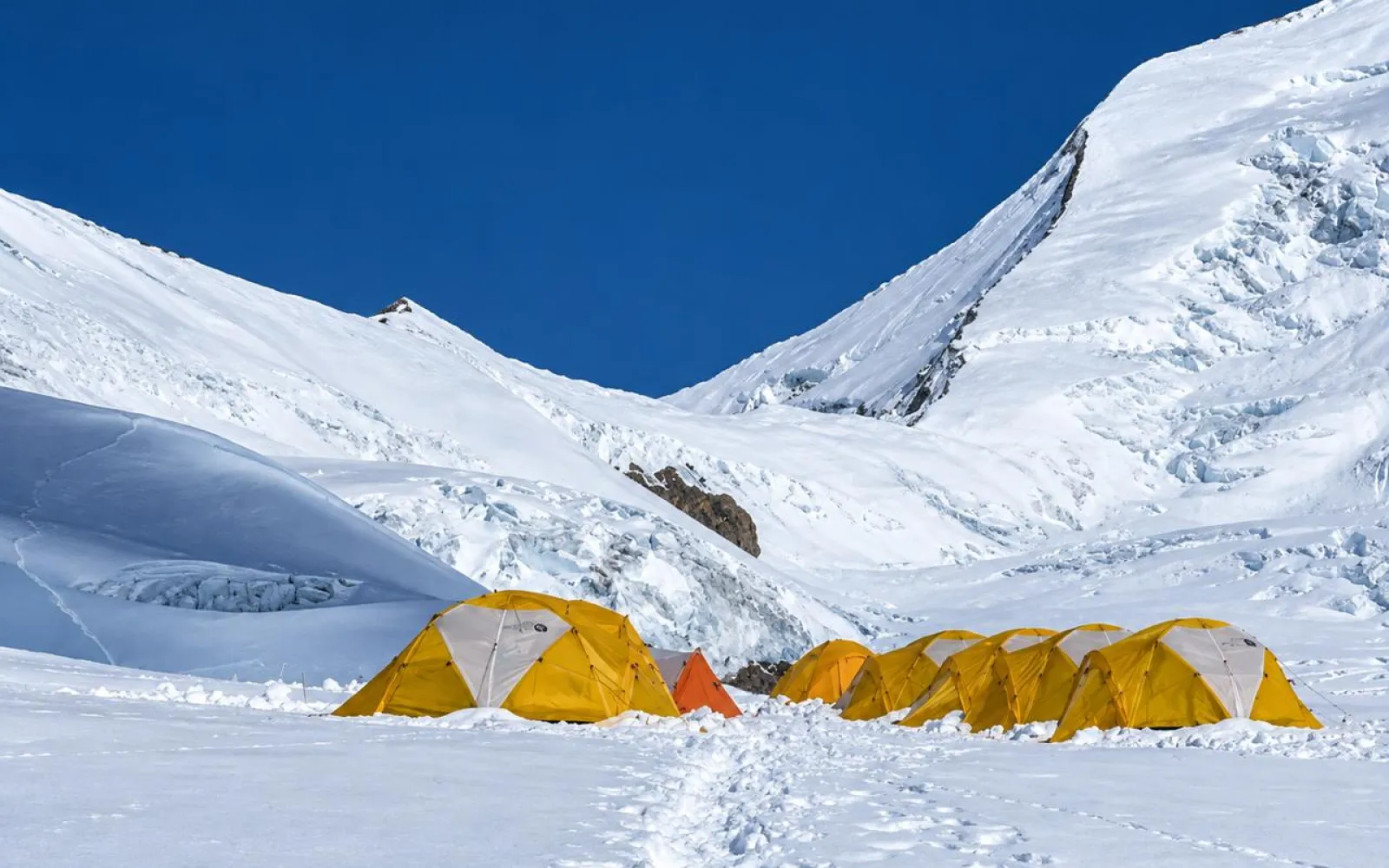
A large avalanche hit Himlung Himal base camp in western Nepal early this morning after heavy rain and snowfall, with at least 10 people reported missing. Eight climbers and support staff, plus two kitchen staff, lost contact after their tents were buried. Many other expedition teams had already descended after weather warnings.
The avalanche buried the base camp, sweeping away expedition tents after days of persistent rain and heavy snowfall across the mountain districts. Climbers in the nearby Samagaon region reported feeling strong tremors between 2:10 AM and 3:10 AM local time.
According to Rishi Bhandari, the General Secretary of the Expedition Operators Association Nepal (EOAN), the 10 unaccounted-for individuals belong to two specific agencies:
Most of the other expedition teams and rope-fixing crews had already left base camp and descended to safer, lower altitudes after receiving severe weather alerts.
Ram Krishna Lamichhane, Director General of the Department of Tourism, said the department is closely monitoring the situation and gathering more data. However, rescue operations face serious challenges: the region is under a heavy storm system from the Bay of Bengal, and Himlung Himal requires strict additional administrative permits for helicopter operations.
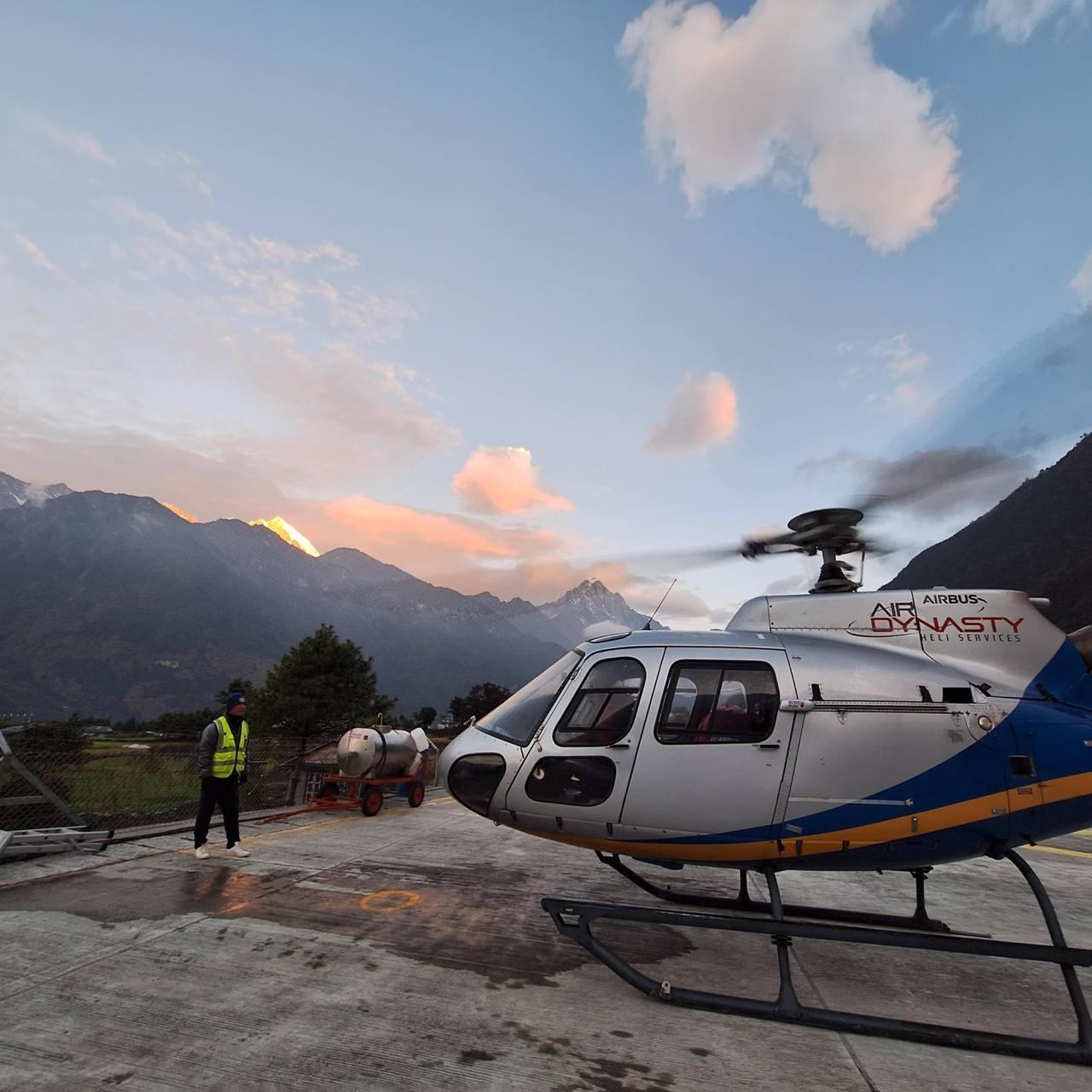
As a Nepal-based helicopter booking and flight coordination company, Aero Connect Nepal understands that a high-altitude rescue is not simply a matter of sending a helicopter to the location.
At Himlung Himal, several conditions can determine whether an aircraft can reach the affected area safely. Heavy snowfall, cloud cover, wind, visibility, fresh avalanche debris, and the altitude of the rescue site can all affect flight operations. Administrative permissions and coordination with the relevant authorities are also required before a rescue flight can proceed.
The situation is particularly difficult when an avalanche has buried a base camp. The location of survivors may not be immediately known, landing areas can be obstructed, and crews may need to work from information provided by expedition teams, satellite communication devices, or ground rescuers.
Aero Connect Nepal recently followed the high-altitude avalanche and search-and-rescue operation on Broad Peak in Pakistan. That incident demonstrated several of the same challenges facing Himalayan rescue operations.
During the Broad Peak operation, aerial reconnaissance depended on a narrow weather window, while GPS and satellite-tracking information helped search teams identify areas requiring attention. At altitudes above 6,000 meters, changes in wind and visibility can quickly affect whether a helicopter can operate.
The Broad Peak operation also showed why helicopter rescue should not be described as an immediate or guaranteed response. Aircraft performance becomes increasingly important at extreme altitude, and rescue teams must balance the urgency of reaching missing climbers with the safety limits of the aircraft and crew.
These factors are relevant to the Himlung Himal situation. The immediate priority is locating and assisting those who remain unaccounted for. If helicopter evacuation becomes possible, the operation will depend on weather conditions, the location and condition of the affected climbers, aircraft capability, required permissions, and coordination between the expedition team, authorities, and aviation operators.
Aero Connect Nepal is monitoring the situation and will share verified updates as more information becomes available. We extend our support to the families, expedition teams, and rescue personnel involved in the ongoing operation.
Aero Connect Nepal wishes for the safe rescue of those missing.
The number of people missing after this morning’s Himlung Himal avalanche has risen to 15. However, rescuers say there is still a good chance of finding survivors.
Mingma G and his team have reached the area and are assessing the situation. Three rescue team members are already at base camp, while five more guides are flying in by helicopter and four climbing Sherpas are coming from Kathmandu.
Rescuers are still trying to confirm the exact situation because communication in the area is unstable. Two kitchen staff from Imagine Nepal Treks are also still out of contact.
Himalayan Holidays General Manager Devashish Malla is flying to base camp to help coordinate the search and rescue effort.
Rescue teams recovered two bodies from the Himlung Himal avalanche site late this afternoon as search and rescue operations continue for those still missing. According to the Nepal National Mountain Guides Association, 14 kitchen and base camp staff members and two climbing guides from different companies were reported missing after the avalanche struck tents early this morning. The association confirmed that both climbing guides were found, but sadly, neither survived.
A rescue team led by Mingma G, along with Pasang Kaji Sherpa, Ashish Gurung, and Pemba Tsiring Sherpa, reached the site by Prabhu helicopter and has begun search and rescue operations. Four additional team members are also on their way to Himlung Base Camp.
Casualties Confirmed:
A helicopter rescue team from Kathmandu found and recovered two dead climbing guides from the avalanche zone. Manang Chief District Officer Mukti Prasad Khanal said their bodies were flown to Chame on Sunday afternoon. Their identities have not yet been confirmed.
Total Missing Rises:
Initial reports put the number missing at 10, but that figure has since risen. Fourteen Nepali expedition members, including Sherpa guides, kitchen staff, and support workers, are still unaccounted for. No foreign climbers were involved, as the local crew had been sent ahead to fix ropes and pitch tents before the autumn clients arrived.
Night Operations Suspended:
An eight-member rescue team from the Nepal National Mountain Guides Association (NNMGA), led by climber Mingma G, reached the mountain by helicopter earlier today and briefly searched the area. However, authorities said operations have been paused for the night and will resume at daybreak tomorrow.
Weather barriers and logistical delays
Grounded helicopters: Private helicopters from Kathmandu and Pokhara have been put on standby or forced to return because of zero visibility and strong winds over Manang district. A low-pressure system from the Bay of Bengal has brought heavy snowstorms that are blocking air access to the 7,126-meter peak.
Intermittent Communication:
Trekking officials like Bibhuti Chand Thakur, founder of [Himalayan Holidays Nepal], noted that communication lines with ground crews at the base camp are highly unstable. While a brief satellite call at 9:40 AM managed to initially request emergency air rescue, connectivity has since repeatedly blacked out, preventing coordinators in Kathmandu from getting real-time updates on ground conditions.
Some Hope
Despite the difficult flight conditions, a specialized eight-member rescue team from the Nepal National Mountain Guides Association (NNMGA), led by Mingma G, used a brief weather window to land a helicopter earlier today, recover two bodies, and assess the terrain. Rescuers said that because the snow was fresh, not massive glacial rock, hopes of survival for the remaining 14 to 15 missing personnel are still relatively high if teams can safely resume ground operations tomorrow morning.
This is a developing story. We will share further updates as more information becomes available.
(More to Follow)