
Shinta Mani Mustang Helicopter Charter: High-Altitude Logistics
26 Jul 2026•5 minutes read
Share


Why Shinta Mani Mustang Topped the Robb Report 50 Greatest Luxury Hotels on Earth
In a definitive move that shifted the gravity of global ultra-luxury travel, the Robb Report officially crowned Shinta Mani Mustang as the top property in its 2026 "50 Greatest Luxury Hotels on Earth" list. This accolade marks a significant milestone for Nepal, signaling that high-altitude, remote hospitality can outperform traditional icons in Paris, the Maldives, or the Amalfi Coast. For the discerning traveler and aviation professional, this ranking is not merely about aesthetics; it is a testament to the seamless integration of Bill Bensley’s visionary architecture, deep-rooted cultural integrity, and the high-stakes precision of Himalayan aviation logistics.
The Methodology: How the "Travel Masters" Evaluated Excellence
The selection process for the Robb Report 50 Greatest Luxury Hotels Earth Shinta Mani Mustang involved an elite panel of 24 "Travel Masters," including seasoned editors and global luxury consultants. Their evaluation transcended standard service metrics, focusing on a "sense of place" and the ability to maintain 5-star delivery under extreme geographical constraints. Shinta Mani Mustang achieved perfect scores for its cultural immersion, utilizing local stone and wood to reflect the traditional vernacular of the Thakali people, while offering modern Amchi wellness practices that connect guests to ancient Tibetan medicine.
Architectural Integrity and High-Altitude Design
Designed by the legendary Bill Bensley, the resort serves as a masterclass in localized luxury. Situated at 2,800 meters (9,186 feet), the design addresses the harsh environment through innovative site-specific engineering.
- Materiality: The use of hand-hewn local stone minimizes the carbon footprint and creates thermal mass to regulate interior temperatures.
- Spatial Planning: Floor-to-ceiling windows are strategically positioned to frame the Nilgiri and Dhaulagiri peaks, effectively making the landscape the primary decor.
- Sustainable Luxury: The property operates with a heavy focus on zero-waste initiatives, which is a critical factor for UHNWIs who prioritize environmental stewardship.
What Makes Shinta Mani Mustang Different?
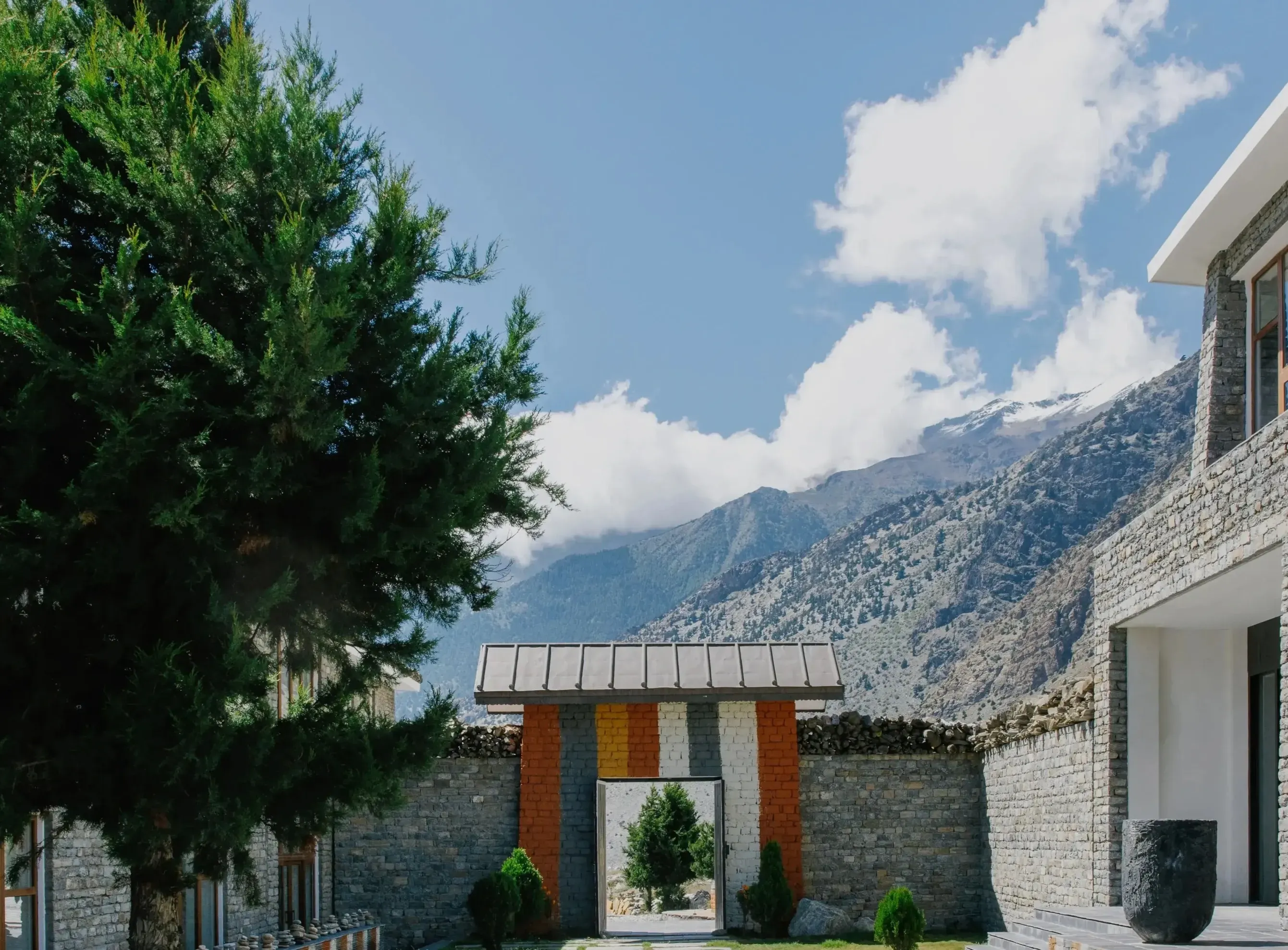
Shinta Mani Mustang brings simple luxury to the Nepalese Himalayas with an ultra-exclusive retreat in the once-forbidden Kingdom of Mustang. Set high above Jomsom in the Kali Gandaki Valley at 2,800 meters, it combines mountain wilderness with elegant design.
Architecture Inspired by Mustang's Heritage
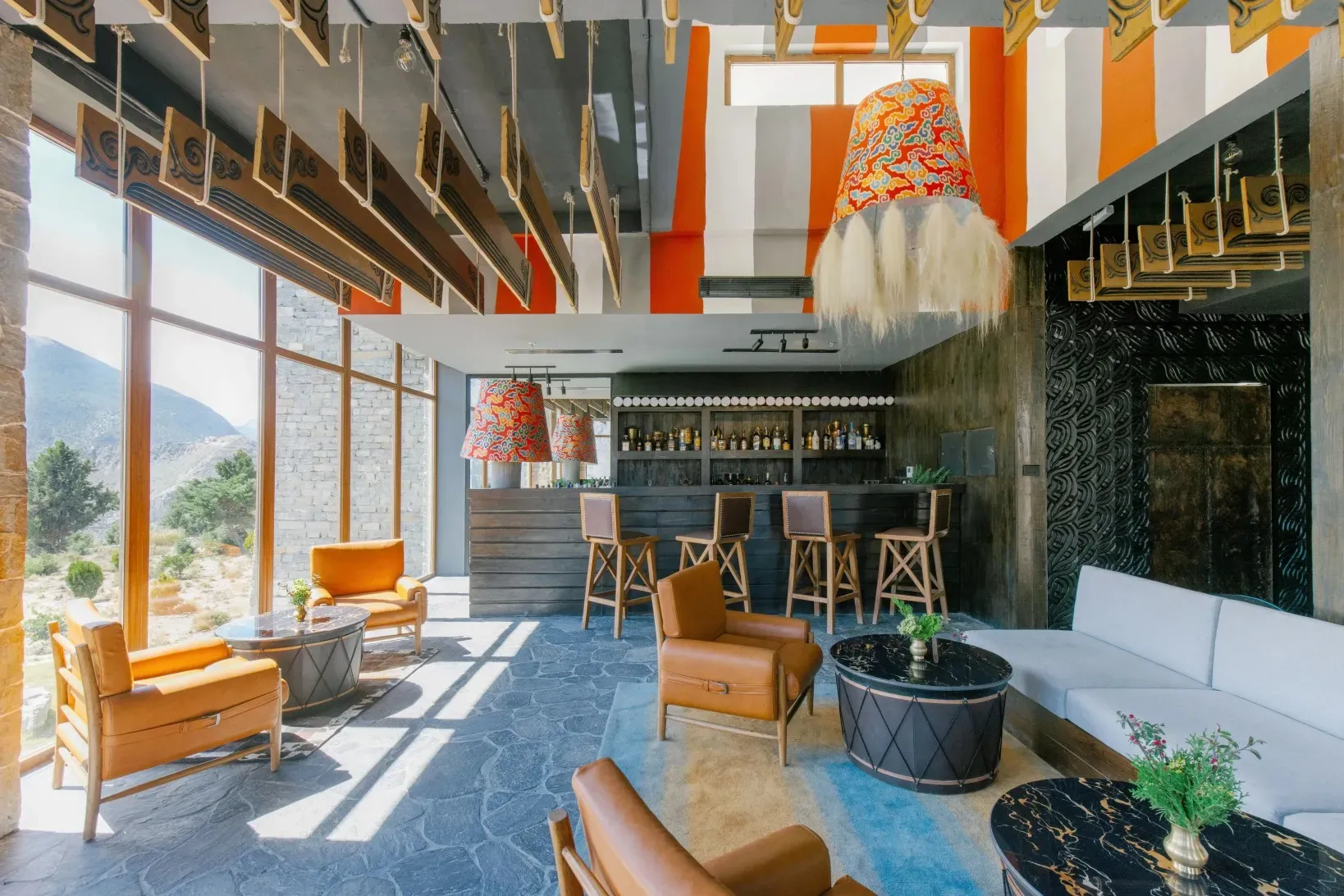
Designed by architect Prabal Thapa and reimagined by world-renowned resort designer Bill Bensley, the lodge’s design confidently honors traditional Tibetan Buddhist vernacular architecture. The low-slung stone structure blends seamlessly into the surrounding high-desert terrain, using passive solar design, thick stone walls, and strategic inner courtyards to shield against the valley's intense afternoon winds. Inside, rich interior spaces showcase hand-woven Himalayan rugs, upcycled local woodwork, traditional brass amenities, and regional artwork, creating a deep connection to local culture without resorting to artificial luxury clichés.
Luxury Suites with Himalayan Views
The resort’s 29 open-plan suites command sweeping views of the Nilgiri Himal range. Large windows in each suite boldly frame the contrast between snow-covered peaks and the dry canyon landscape below. Deep soaking tubs by the windows invite guests to unwind while taking in the mountain views, and warm wood accents, rich textiles, and plush bedding ensure the suites feel comfortably luxurious despite the high-altitude climate.
Personalized Guest Experiences
Hospitality at Shinta Mani Mustang is centered on customized stays led by experienced local Sherpa guides. Each day is tailored to the guest's interests, from guided treks to 800-year-old Bon Buddhist villages like Lubra, private helicopter trips to the walled city of Lo Manthang, and high-altitude mountain biking along the Kali Gandaki gorge. Back at the lodge, wellness features personalized herbal therapies led by an 11th-generation Amchi (traditional Tibetan healer), along with hot plunge pools, a steam room, and outdoor fire pits for relaxing under clear Himalayan skies.
Privacy and Exclusivity
With just 29 suites on a quiet 17-acre hilltop estate, the property delivers privacy and an intimate atmosphere. Its all-inclusive rate covers guided excursions, custom meals, spa treatments, permits, and private transfers, allowing guests to experience the Himalayan wilderness without worrying about logistics. Surrounded by desert landscapes, high peaks, and ancient cliff caves, it offers a rare sense of quiet isolation in one of the most remote, untouched parts of the world.
Aviation Operations: Navigating the Kali Gandaki Gorge
Reaching the world's best hotel requires expert-level aviation performance. The highly luxurious Shinta Mani Mustang Helicopter Tour has recently gained quite a reputation for tourists and trekkers looking for a different experience.
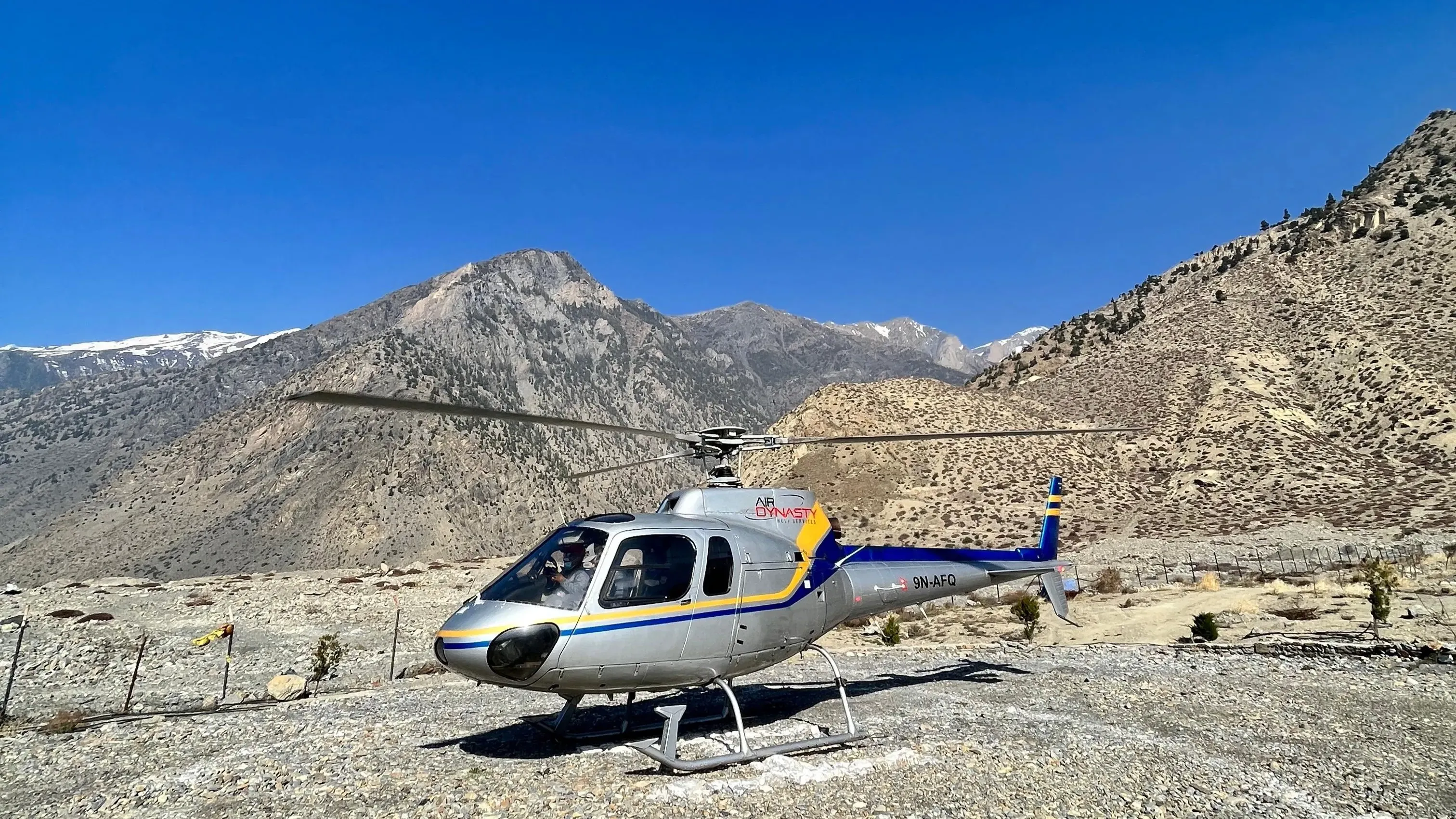
The flight path through the Kali Gandaki Gorge—the world's deepest gorge—presents unique challenges including microclimate wind profiles and rapid pressure changes. For private charter clients, the preferred asset is the Airbus H125 (B3e) helicopter, powered by the Safran Arriel 2D engine.
Operational success depends on strict adherence to VFR (Visual Flight Rules) windows, as high-velocity winds typically pick up after 11:00 AM local time. Aviation brokers must account for density altitude and fuel-to-payload ratios, ensuring that weight management allows for safe ascent and descent in Mustang’s thin air. AeroConnect Nepal specializes in coordinating these complex high-altitude transfers, bridging the gap between international arrivals in Kathmandu and the remote Mustang sanctuary.
Pragmatic Logistics for Global Travel Designers
Booking a stay at this top-ranked property involves navigating complex regulatory landscapes. Guests require the Annapurna Conservation Area Project (ACAP) permit and specific Restricted Area Permits if trekking further north. Strategically, the most efficient route involves a private jet arrival at Tribhuvan International Airport (KTM) followed by a direct H125 helicopter transfer. By centralizing flight scheduling and permit procurement through a single specialized provider, luxury travel designers can ensure a friction-free experience for their UHNWI clients.
Navigating the Kali Gandaki Wind Corridor
One of the most critical factors in any Shinta Mani Mustang helicopter charter is the wind profile of the Kali Gandaki valley. As the deepest gorge in the world, the valley acts as a funnel for powerful southerly winds that typically accelerate after 11:00 AM.
For private aviation brokers, this creates a narrow operational window. Flights are strategically timed for early morning to ensure maximum stability and passenger comfort. Technical precision in flight planning must account for these katabatic and anabatic wind shifts to maintain safety margins while transitioning from the lush Pokhara valley to the arid, high-altitude Tibetan plateau where the resort is situated.
Technical Constraints: Density Altitude and Payload Profiles
Operating at an elevation of approximately 2,800 meters (9,186 feet) requires a deep understanding of density altitude. As air density decreases, engine performance and rotor lift are significantly impacted. The industry standard for these missions is the Airbus H125 (B3e), renowned for its high-altitude performance and reliability in mountainous terrain.
Payload management is equally vital. A standard Shinta Mani Mustang helicopter charter must balance fuel weight with passenger counts and luggage. At these altitudes, a helicopter that seats five at sea level may be limited to three or four passengers to ensure enough power reserve for safe landing and takeoff. High-altitude flight profiles demand that every kilogram is accounted for, ensuring the aircraft operates within its optimal center of gravity and power-to-weight ratio.
The Strategic Advantage of AeroConnect Nepal
For the global elite, the transition from international private jet to a domestic helicopter transfer must be seamless. AeroConnect Nepal provides the logistical bridge between Kathmandu’s Tribhuvan International Airport and the remote helipad at Shinta Mani Mustang.
By integrating real-time weather monitoring with vetted pilot expertise, the service ensures that the technical complexities of Himalayan flight do not detract from the luxury experience. For more information on fleet capabilities and safety protocols, travelers can consult the Civil Aviation Authority of Nepal (CAAN) guidelines regarding STOL (Short Take-Off and Landing) and helicopter operations in restricted zones.
Conclusion
Shinta Mani Mustang sets a new standard for luxury travel in Nepal, blending elegant design with the precision needed for Himalayan aviation. With Airbus H125 helicopter transfers and personalized, heritage-inspired hospitality, the resort gives travelers safe, easy access to one of the world’s most remote and remarkable mountain landscapes.
Further Reading
Share this post
Frequently Asked Questions
1. Where is Shinta Mani Mustang located?
Shinta Mani Mustang is on a hillside above Jomsom in Nepal's Mustang District, about 2,800 meters above sea level. It overlooks the Kali Gandaki Valley and has panoramic views of the Nilgiri Himal.
2. How do guests reach Shinta Mani Mustang?
Most guests arrive by helicopter from Kathmandu or Pokhara, the fastest and most comfortable option. Scheduled flights to Jomsom with a short transfer are also available in suitable weather.
3. Why do many travelers choose a helicopter charter?
A helicopter reduces travel time while providing outstanding views of the Annapurna and Dhaulagiri ranges. It also avoids long road journeys through mountainous terrain.
4. What is included in a stay at Shinta Mani Mustang?
The resort offers an all-inclusive experience that typically covers accommodation, meals, guided excursions, wellness treatments, and airport or helicopter transfers. Exact inclusions may vary depending on the package you book.
5. When is the best time to visit Shinta Mani Mustang?
Spring and autumn are usually the best times to visit Mustang, with clear skies and pleasant temperatures. These seasons also offer the most reliable flying conditions for helicopter transfers.
6. Which helicopter is commonly used for flights to Mustang?
The Airbus H125 is commonly used for high-altitude flights because it performs well in mountainous areas. Other helicopters approved for Himalayan flights may also be used, depending on availability.
7. Is a helicopter flight to Shinta Mani Mustang safe?
Flights are run by licensed operators in line with the Civil Aviation Authority of Nepal rules and weather limits. Before each departure, pilots check wind, visibility, and aircraft performance.
8. Can guests visit Lo Manthang from the resort?
Yes. Guests can visit Lo Manthang, either by helicopter or by guided overland journey, depending on the itinerary.
9. What makes Shinta Mani Mustang different from other luxury hotels in Nepal?
The resort offers luxury hospitality in one of the Himalayas’ most remote settings. Its few suites, personal service, and strong link to Mustang's culture make the stay feel exclusive but not excessive.
10. Why has Shinta Mani Mustang attracted international attention?
Its design, service, location, and guest experiences have earned attention from luxury travel publications. The resort has also helped position Nepal as a destination for premium tourism rather than only trekking and mountaineering.


