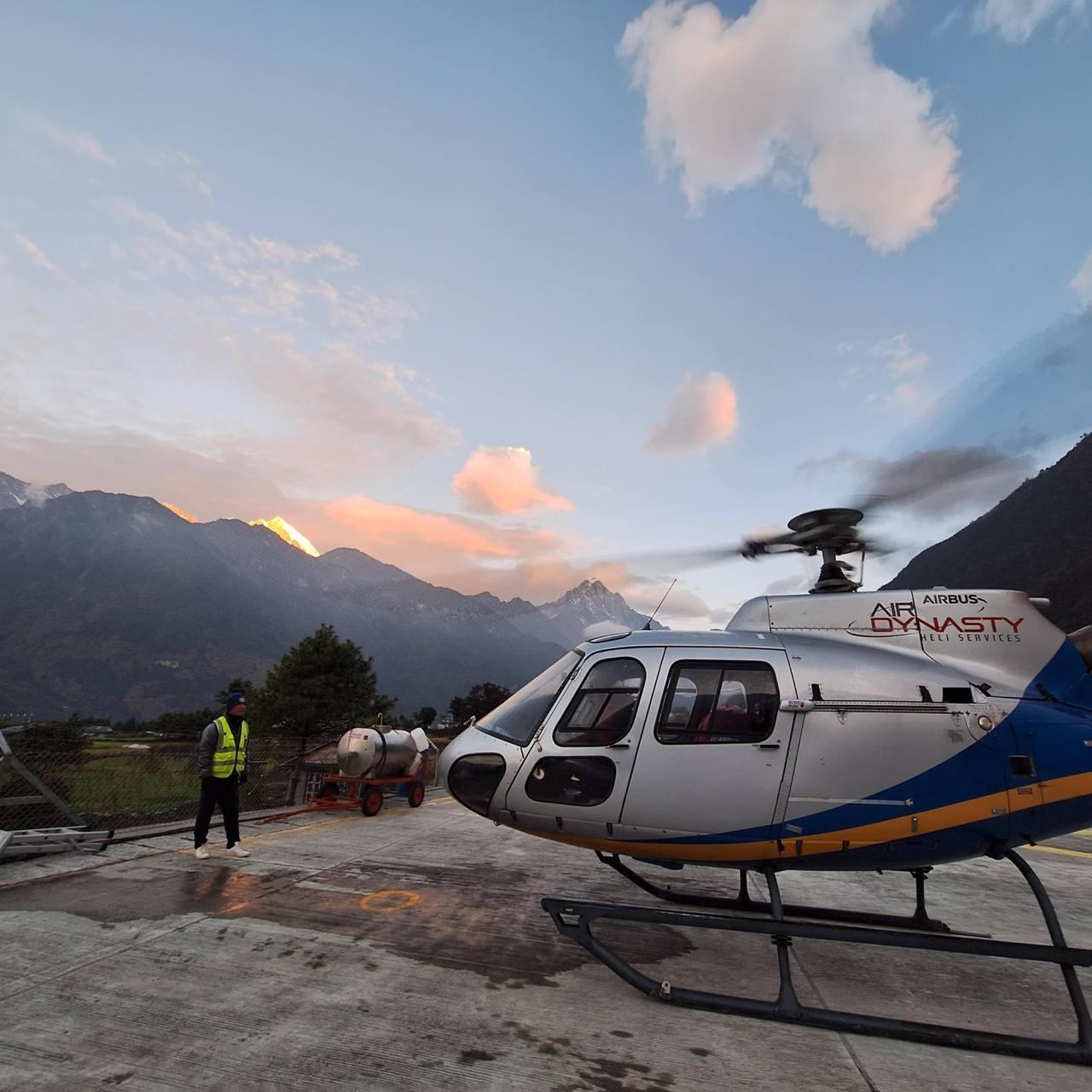
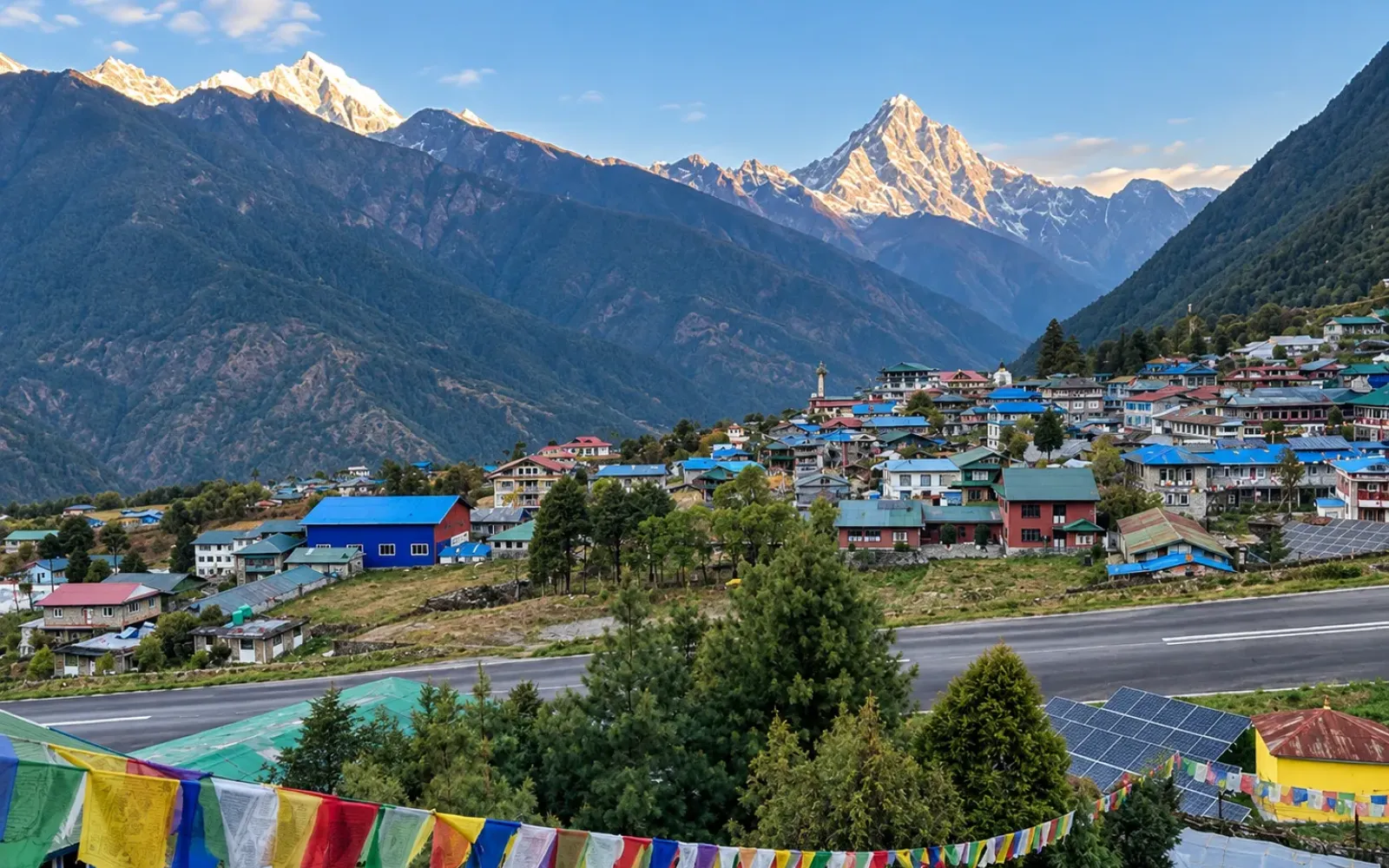
Lukla is still accessible for Everest trekkers after the 2026 monsoon, but travelers should not confuse conditions in the Khumbu with severe flooding in other parts of Nepal. As of October 2, 2026, scheduled Lukla flights are still showing on the Tribhuvan International Airport flight board, but actual departures depend on weather, airport conditions, and operational confirmation.
Nepal has seen serious flooding and landslides during the 2026 monsoon, including major damage along the Rasuwa and Trishuli corridors. That does not mean the Everest Base Camp route is closed. Lukla and the upper Khumbu should be checked separately, and travelers should confirm the latest weather, flight, and local access information before departure.
This guide from Aero Connect Nepal helps you understand the current situation in Lukla and the Khumbu, separate from flood reports in other parts of Nepal. It covers post-monsoon weather, flight operations, trail and infrastructure access, fixed-wing versus helicopter travel, and the checks you should make before leaving Kathmandu.
Lukla is not automatically inaccessible just because other parts of Nepal have had flooding. For Everest trekkers after the monsoon, the main concerns are changing mountain weather, leftover rain and cloud, possible local landslides, flight delays, and checking current access conditions. Fixed-wing flights are the cheaper scheduled option, while helicopters offer more flexibility if weather and aviation rules allow.
The end of the monsoon changes travel conditions in Lukla, but it does not turn them from wet season conditions into perfect flying weather overnight. September is a transition month. Rainfall usually decreases as the monsoon retreats, but clouds, moisture, and unstable mountain weather can still affect flights. October normally brings more settled conditions and is one of the busiest times for Everest trekking. November is generally cooler and drier, although mountain temperatures drop quickly and the weather can still change.
Check out our in-depth blog on: Rasuwa Flood 2026 Helicopter Operations & Emergency Flight Update
A flood can damage a road, bridge, settlement, or power facility without affecting Lukla Airport or the Everest Base Camp trail. This matters in 2026 because some of the country's most serious flood damage occurred along the Bhote Koshi and Trishuli corridors, especially in Rasuwa. Reports from September documented major damage to roads and bridges in Rasuwa, and some infrastructure still needs recovery.
For an Everest trekker, the key question is not simply, “Was Nepal affected by floods?” The key question is, “Was the Lukla and Khumbu access route affected, and can my flight and trekking itinerary operate safely on my travel date?” That is what travelers should confirm before leaving Kathmandu.
The 2026 monsoon caused severe flooding in several parts of Nepal. The Rasuwa-Bhote Koshi disaster was especially serious, damaging roads, bridges, settlements, and hydropower infrastructure. Some nearby highways stayed disrupted into late September. These places are important to Nepal's transport network, but they are not the same as the Kathmandu to Lukla air route used by Everest trekkers.
There was also a separate landslide in eastern Solukhumbu in September, when the Hunga Khola was briefly blocked. Local authorities warned downstream communities, but reporting at the time made clear that this was separate from the main Khumbu and Everest Base Camp corridor. This is why travelers should avoid using a single flood map or social media video to determine whether an Everest trek is possible.
The Everest Base Camp route is mostly an air-and-trail journey after Lukla. There is no normal road trip from Kathmandu to Everest Base Camp like there is to another district.
For most trekkers, the main things to check are:
Is Lukla Airport open?
Conditions can vary even within Solukhumbu. A weather or landslide problem in one area does not automatically mean Lukla or Namche Bazaar is affected. The same idea applies to flood damage elsewhere in Nepal. Someone traveling to Langtang, Rasuwa, or another flood-affected area may face very different access conditions from someone flying to Lukla.
Tenzing-Hillary Airport in Lukla remains the primary aviation gateway for the Everest region. The Civil Aviation Authority of Nepal identifies the airport as the gateway to Mount Everest and lists its operating status as active. For October 2, 2026, Tribhuvan International Airport's published flight information includes multiple scheduled Lukla departures by domestic carriers. That confirms scheduled service is being planned, but it should not be interpreted as a guarantee that every listed flight will depart or arrive. Mountain aviation depends heavily on conditions at the time of operation.
The Lukla airport system also provides its own flight information, but travelers should obtain a current operational confirmation rather than relying on yesterday's status. The practical rule after the monsoon is simple: check close to departure, not several days in advance, and assume nothing has changed. Helicopter operations require the same discipline. A helipad being physically available does not mean a helicopter can operate safely at that moment.
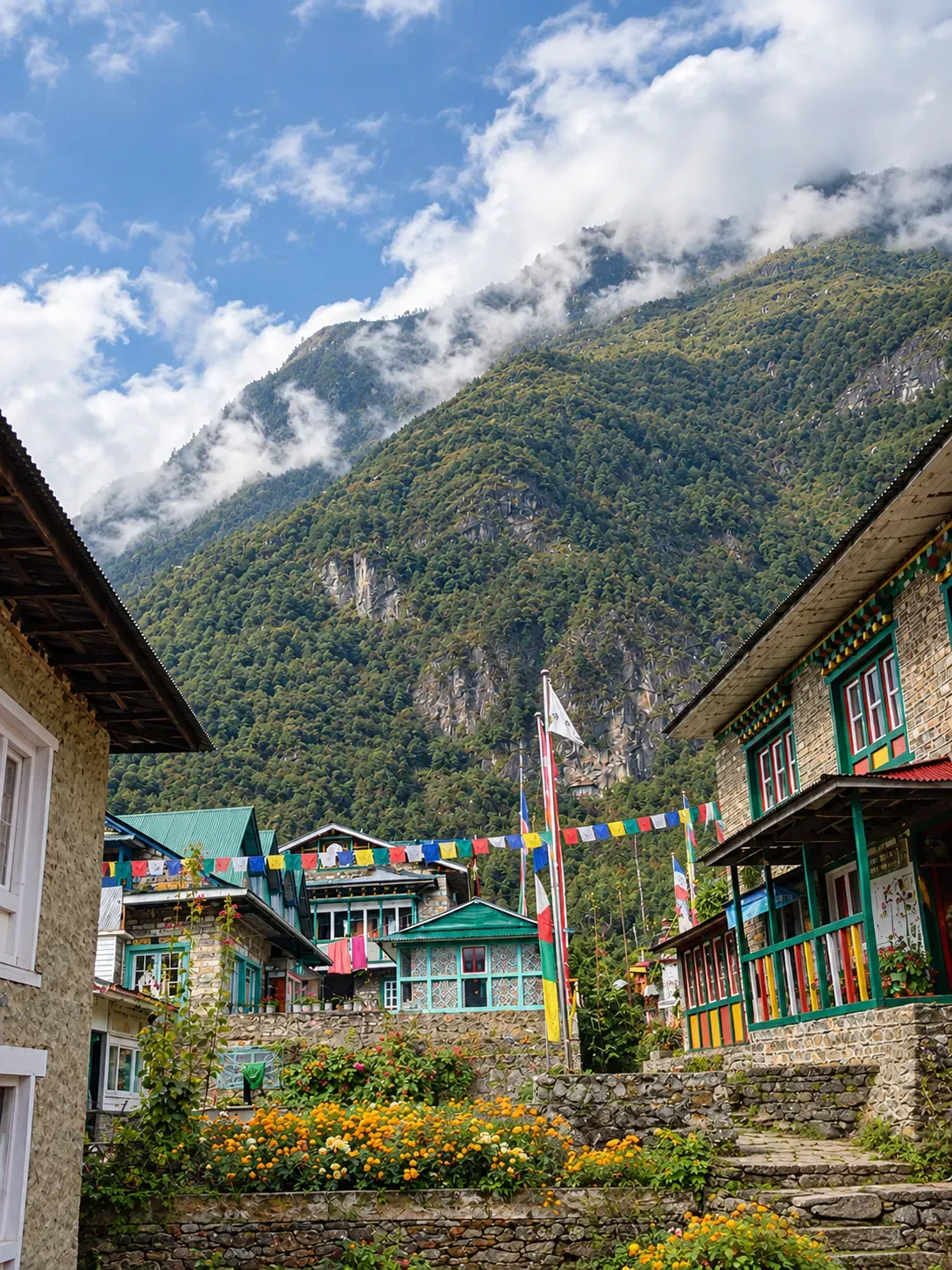
The floods themselves are not necessarily the main cause of flight disruption into Lukla. Weather remains one of the most important variables.
Fixed-wing flights are the standard scheduled option for many Everest trekkers. They are generally cheaper than helicopter travel and work well when weather, airport, and airline schedules align. In autumn, flight activity increases as Everest trekking demand rises, so the aviation network can become busy, especially around morning departures. The practical issue is that a scheduled ticket does not guarantee a specific departure time in mountain weather. Clouds can form over the airport, visibility can drop, rain may return, and winds can shift. A flight can still be delayed or cancelled even when central Kathmandu looks fine. Travelers should therefore build flexibility into their itinerary, especially if a Lukla flight is followed by a fixed-date trek, domestic connection, or international departure.
Check out: Why Helicopters Beat Fixed-Wing + Pilot Training & Navigation Safety
A helicopter provides a different type of travel arrangement. A Kathmandu to Lukla helicopter flight can be particularly useful when travelers have limited time, require a private or shared charter arrangement, or want an alternative to waiting for a scheduled fixed-wing seat when conditions permit helicopter operations. The important qualification is “when conditions permit.”
A helicopter is not a weather-proof substitute for an airplane. Pilots still require appropriate visibility, cloud clearance, wind conditions and other operational parameters. Aviation regulations and airport or helipad requirements also continue to apply. The advantage is flexibility, not immunity from weather.
Post-monsoon weather generally improves, but Himalayan weather can change rapidly. A clear morning can become cloudy. Visibility can deteriorate around mountain ridges. Rain can develop locally even when Kathmandu is dry. Lukla operations are particularly sensitive because pilots must operate according to visual conditions. VFR, or Visual Flight Rules, requires pilots to maintain the visual references necessary for safe flight.
Poor visibility, cloud, and other conditions can therefore prevent an otherwise scheduled flight from operating. This is why a weather forecast should be treated as a planning tool, not a flight guarantee. It is also why travelers should be cautious about anyone promising that a helicopter will “definitely” fly regardless of conditions.
Check out our blog on Nepal Weather in September and October and why it is an ideal time for a helicopter tour to Lukla.
September is after the main monsoon period, so rainfall usually decreases. But the change is not immediate. Moisture, clouds, and occasional rain can still affect Lukla flights. Travelers in September should still allow flexibility. Even a few clear days do not rule out weather delays. The month can be a good choice for those with flexible schedules, but travelers with strict international connections should leave extra time.
October usually offers more stable weather after the monsoon and better mountain visibility. It is also one of the busiest times in the Everest region. That makes it a good month for trekking, but it also means flights and accommodation book up quickly. Travelers should arrange Lukla transport early and have a backup plan for weather delays. October 2026 weather information shows the seasonal shift to cooler, drier conditions, but mountain weather should still be checked close to the flight date. If you are choosing the best time to fly to Lukla, October is usually one of the best months for weather, but clear skies are never guaranteed every day.
November usually stays dry and autumn-like, with cooler temperatures becoming more noticeable. For trekkers, that often means good visibility and relatively dry trails, especially earlier in the month. Higher elevations become much colder, so clothing and sleeping gear should match the conditions. Flight conditions can still get worse. A clear forecast for November does not rule out a local mountain weather problem. The best approach is still to check conditions before departure and stay flexible.
Based on the information available for this October 2 update, there is no indication that the major 2026 flood disaster in the Rasuwa and Trishuli corridor has closed the standard Lukla-to-Everest Base Camp route.
This distinction is particularly important. The Rasuwa-Bhote Koshi flood caused extensive damage to roads, bridges, and infrastructure in Rasuwa. Some road disruption continued after the initial disaster. That affects travelers using those specific corridors, but it does not establish that the Khumbu is closed.
Likewise, the September Hunga Khola landslide in eastern Solukhumbu was a real local hazard, but reports at the time placed it outside the main Everest trekking corridor around Lukla and Namche. Everest trekkers should therefore assess the Khumbu separately.
That does not mean travelers should assume everything is normal without checking. Conditions can change after heavy rainfall, and local trail or weather problems can develop independently of the major flood zones.
A post-monsoon Everest trip deserves a final check shortly before departure.
Check the forecast for Lukla and the nearby mountains, not just Kathmandu. Focus on visibility, clouds, rain, and wind. Mountain weather changes fast, so check again before the flight.
Confirm the latest departure details with your airline or booking agency. A flight listed on a schedule is not the same as a confirmed departure in current conditions.
Do not just search for “Nepal flood.” Look for warnings for Solukhumbu, Lukla, Khumbu, or the exact trekking section you will use. This helps avoid unrelated flood news while still keeping you alert to real local hazards.
Ask your trekking agency or local contacts about recent trail conditions. Heavy rain can affect bridges, slopes, and river crossings even when the route is still open.
Your booking agency should be able to tell you what is confirmed and what depends on the weather. This matters even more if you have an international connection soon after the trek.
Do not wait until a flight is cancelled to learn how the booking works. Check whether the flight can be rescheduled, what happens if weather stops it, and what costs may apply. A clear policy gives you a backup plan when the weather does not cooperate.
Aero Connect Nepal takes a safety-first approach to post-monsoon helicopter bookings. We are a helicopter booking agency, not the helicopter operator. Our job is to help travelers find the right aviation arrangement, coordinate with the operator, and make practical decisions based on current travel conditions. That distinction is important after a major flood season.
A traveler may arrive in Kathmandu after seeing reports of damaged highways, landslides, and flooding across Nepal. The right response is not to cancel an Everest trip automatically, and it is not to assume everything is fine. The right response is to assess the actual route.
For a traveler planning a Kathmandu to Lukla tour, Aero Connect can review the travel need and arrange a suitable helicopter option when conditions allow. If weather or aviation conditions are not suitable, the responsible choice is to wait, reschedule, or adjust the itinerary rather than push for a flight just because of a trekking deadline.
We also recommend that travelers after the monsoon:
This is where an experienced booking agency can add practical value. The goal is not simply to put a traveler on a helicopter. The goal is to help the traveler reach the appropriate destination when the conditions are suitable for safe operation.
If you are traveling to the Everest region after the monsoon, don’t rely on a general Nepal flood headline or an old flight schedule. Contact Aero Connect Nepal to discuss your Lukla travel needs, choose the right helicopter option, and build a practical plan around current weather and operating conditions.
Aero Connect helps travelers arrange suitable helicopter transportation while keeping safety at the center of every decision. When conditions are suitable, we can coordinate the right flight arrangement. When they are not, the correct recommendation is to wait or reschedule.
Safety comes before recovering a lost travel day. Before departure, review Aero Connect's Safety information and Weather Cancellation & Refund Policy, then confirm the latest conditions before leaving Kathmandu.
Yes, Lukla and the Khumbu should be assessed separately from flood-affected areas such as Rasuwa and Trishuli. Current access depends on local trail conditions, airport operations, weather, and any new landslide or infrastructure issues.
Major flooding affected several parts of Nepal, including the Rasuwa and Trishuli corridors, but that does not automatically mean the Everest Base Camp route is closed. Trekkers should check conditions specifically for Lukla, Namche and the Khumbu rather than relying on nationwide flood reports.
Lukla Airport remains an active aviation gateway for the Everest region, with scheduled flights listed during the post-monsoon period. Individual flights can still be delayed or cancelled because of weather, visibility, wind or operational conditions.
October is generally one of the more favorable months for Lukla travel because the monsoon has usually withdrawn and mountain visibility tends to improve. It is also a busy trekking period, so travelers should arrange flights early and keep some schedule flexibility.
Low visibility, clouds, rain, and strong or unfavorable winds can affect Lukla flights. Mountain conditions can change quickly, so a favorable forecast does not guarantee that a particular flight will operate.
Yes. Helicopters also require suitable visibility, cloud conditions, wind, and other operational requirements. A helicopter provides greater scheduling flexibility in suitable conditions, but it cannot safely operate when the weather is unsuitable.
They should monitor it, but they should not assume that flooding in another district makes the Everest region inaccessible. The relevant checks are the condition of the Lukla flight route, the Khumbu trails, local infrastructure, and current weather.
Check the latest Lukla weather, flight status, flood and landslide updates, trail conditions, accommodation access, and your airline or booking agency's confirmation. You should also understand the rescheduling and cancellation policy before departure.
Yes, Aero Connect Nepal can help arrange Kathmandu to Lukla helicopter travel when aircraft availability, weather, airport conditions and aviation requirements permit. The appropriate flight option depends on your travel date, group size and itinerary.
Aero Connect Nepal focuses on helping travelers arrange suitable helicopter transportation based on current operating conditions. The agency can help assess the practical requirements of your trip rather than treating a helicopter booking as a guarantee that a flight will operate in unsuitable weather.
Aero Connect can check available helicopter options when a scheduled flight disruption affects your itinerary. Any alternative flight remains subject to aircraft availability, weather and applicable aviation requirements.
No responsible booking agency should guarantee a flight when weather or aviation conditions are unsuitable. Aero Connect prioritizes safe operating conditions and can help with rescheduling or alternative arrangements according to the applicable booking policy.
The price depends on factors such as shared or private service, group size, travel date, aircraft availability, and operational requirements. Contact Aero Connect Nepal for the current quotation for your specific itinerary rather than relying on an outdated seasonal price.
Yes, private helicopter arrangements can be considered for groups that want dedicated transportation and greater scheduling flexibility. The final arrangement depends on aircraft availability, group requirements, weather, and aviation conditions.
The applicable rescheduling, cancellation or refund process depends on the booking terms for your flight. Aero Connect can help coordinate the next appropriate option, but the flight should not be pushed through unsafe weather simply to protect a trekking schedule.