Need help with booking? Send us a message.
Fly from Kathmandu to Lukla in just 45 to 60 minutes with a comfortable helicopter transfer to the Everest region. Enjoy spectacular Himalayan views while saving valuable travel time for your trek.
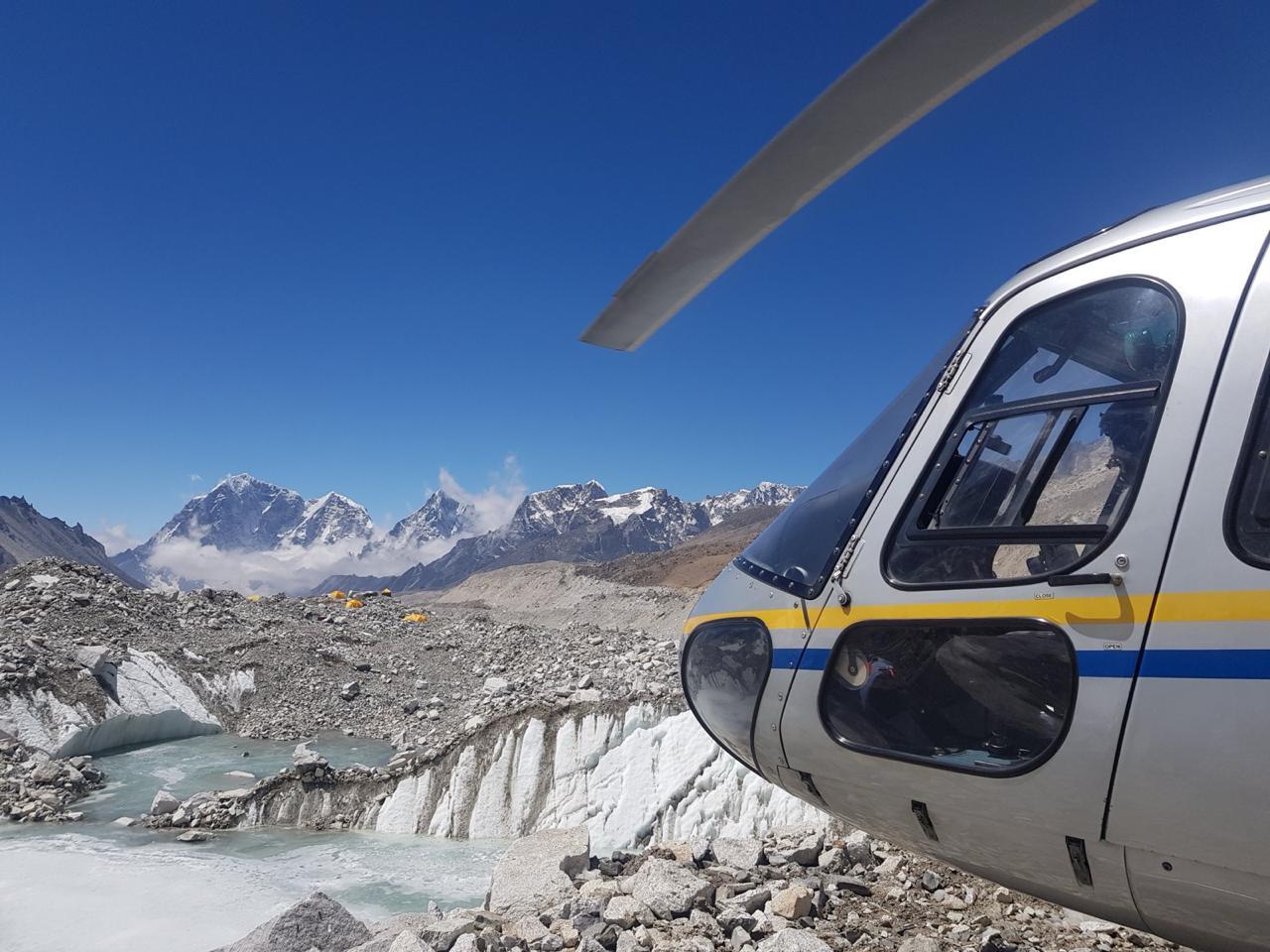
The route starts in Kathmandu and heads northeast through the Solukhumbu and Khumbu region to Lukla. Along the way, the landscape changes from the crowded Kathmandu Valley to hills, deep river valleys, and the rugged Himalayan terrain.
The journey starts at the designated departure airport in Kathmandu. Passengers complete check-in, provide passenger and baggage details, and follow the operator's instructions before boarding. Accurate weight and baggage information is important because helicopter performance depends on total payload, especially in mountain operations. This helps the operator plan the flight properly.
Once airborne, the helicopter heads toward the Everest region. Passengers can watch Nepal's hills and valleys give way to steeper terrain as the aircraft approaches Solukhumbu.The views are one of the main attractions of the flight. Depending on visibility, passengers may see forested hills, river valleys, mountain ridges, and Himalayan peaks during the journey.
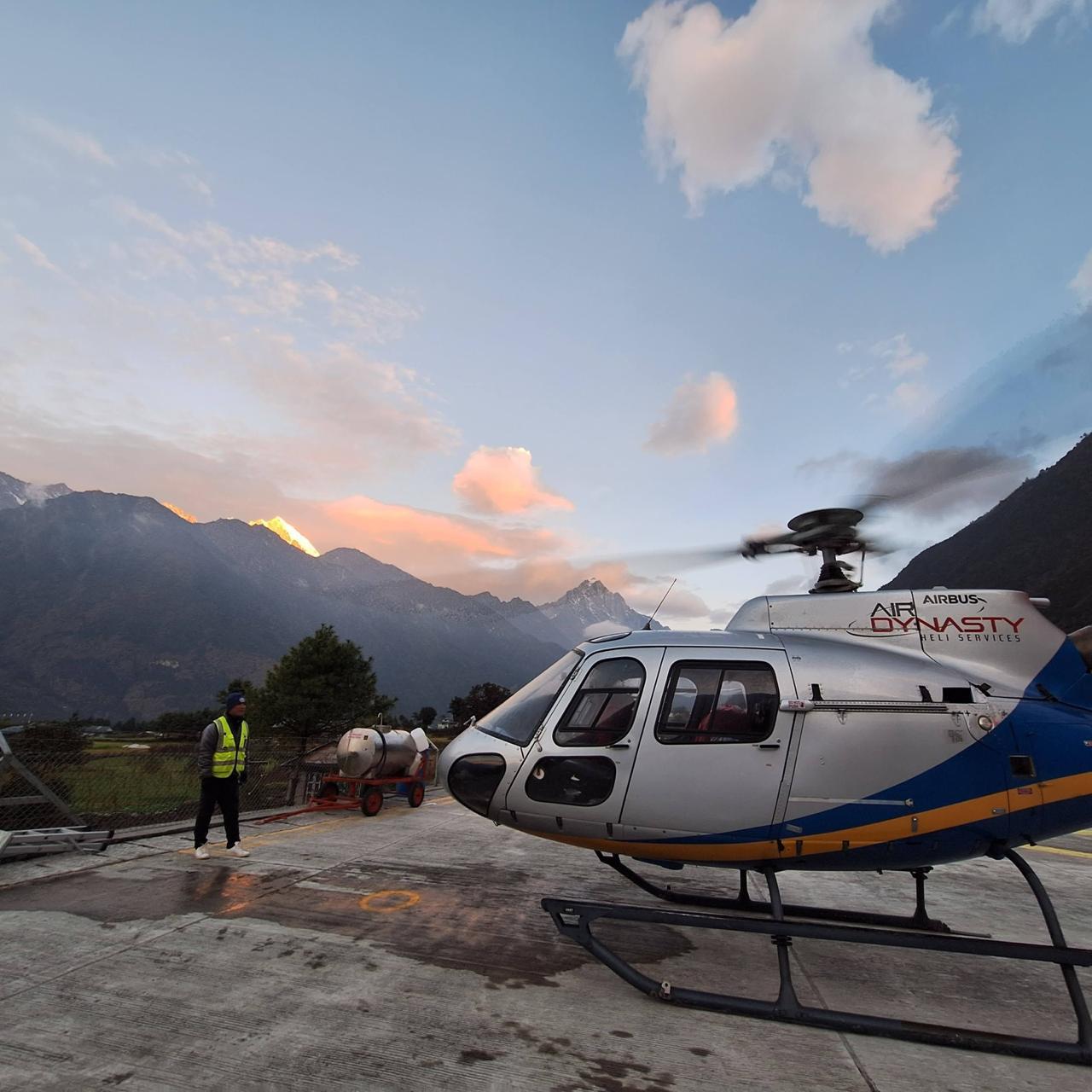
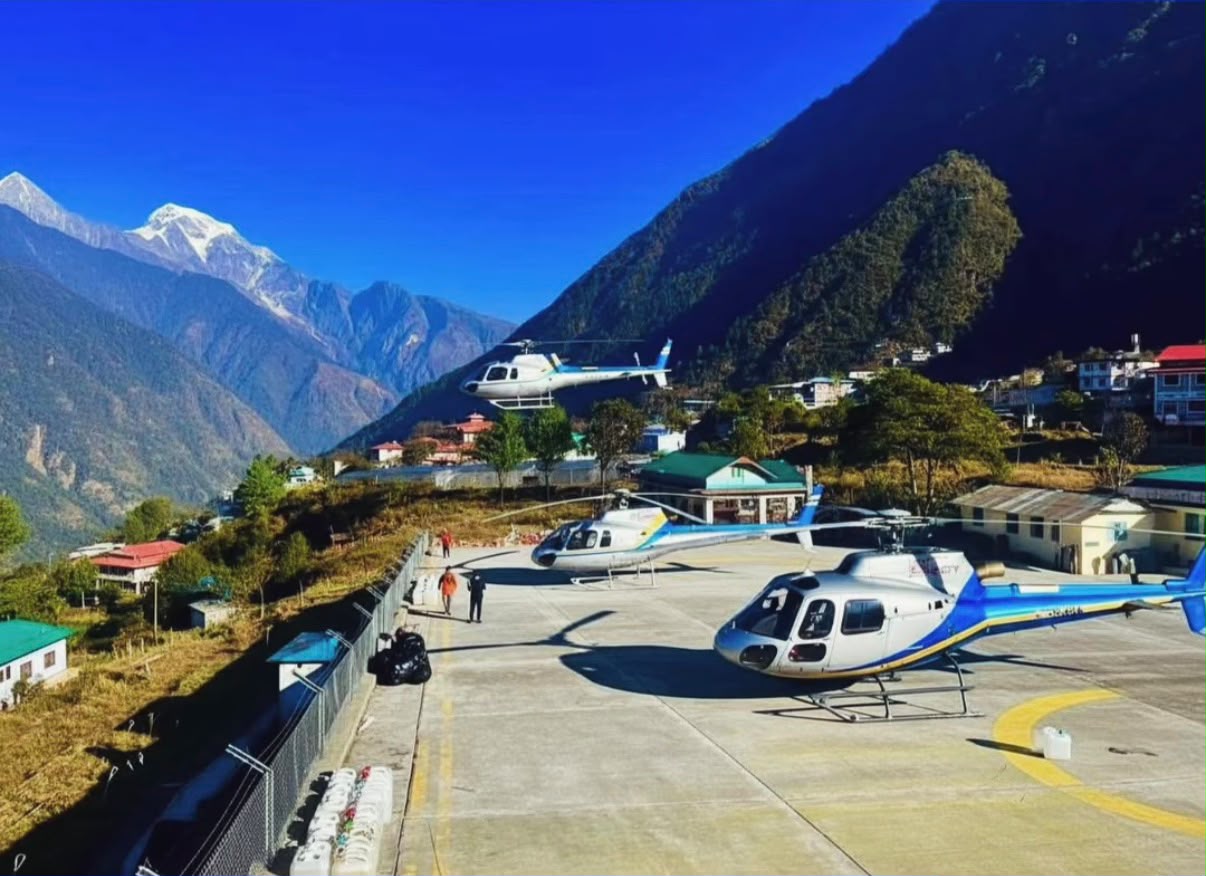
The helicopter lands at Tenzing-Hillary Airport in Lukla, one of the main gateways to the Everest region. CAAN lists it as an operating domestic airport and oversees aviation procedures and safety there. After landing, passengers can collect their baggage and continue their trek or travel plans. For Everest Base Camp trekkers, Lukla is the starting point for the route to Phakding, Namche Bazaar, and the Khumbu region.
The Kathmandu to Lukla helicopter flight connects Nepal's capital with the gateway to the Everest region. Lukla is home to Tenzing-Hillary Airport, which serves as the starting point for many Everest Base Camp treks. Nepal Tourism Board describes Lukla is the gateway to Everest, and most trekkers fly there before starting their trek toward Namche Bazaar and the higher Khumbu region.
Helicopter flights are useful for travelers who want to reach Lukla quickly or arrange a private trip for their group. Unlike road travel, a helicopter avoids a long overland journey through the Himalayan foothills. It also offers aerial views of Nepal's changing landscape as it flies from the Kathmandu Valley toward the Khumbu region.
Flight duration, departure time, and operating arrangements depend on the aircraft, weather, air traffic, and daily operations. So travelers should treat the published flight duration as an estimate, not a guarantee.
The Kathmandu to Lukla helicopter tour is primarily a transportation service for trekkers traveling to the Everest region, offering a direct flight of around 45 to 60 minutes. It is particularly suitable for travelers who prefer a more comfortable and convenient mode of transport or those who do not have a practical overland alternative for reaching Lukla.
The helicopter takes passengers directly from Kathmandu to Tenzing-Hillary Airport in Lukla, avoiding the long road journey and multiple stages of overland travel. It can be a practical choice for luxury travelers, private groups, and trekkers with limited time who want to begin their Everest trek without spending a full day or more traveling by road. The service is still subject to mountain weather, aircraft availability, and operational conditions, so travelers should keep some flexibility in their itinerary.
For an early Kathmandu to Lukla helicopter flight, trekkers usually need to start their morning early because the flight schedule, airport procedures, and mountain weather can affect the exact departure time. A typical morning can look like this:
| Approx. Time | Activity |
|---|---|
| 5:00 AM | Wake up, freshen up, and have a light breakfast. |
| 5:30 AM | Complete final packing and check your passport, permits, phone, camera, and other essentials. |
| 6:00 AM | Leave your hotel for the airport or designated helicopter departure point. |
| 6:15–6:30 AM | Arrive and complete the required check-in and passenger verification procedures. |
| 6:30–7:00 AM | Complete security and wait for the helicopter departure instructions. |
| Around 7:00 AM | Proceed to the helicopter boarding area when instructed by the ground team. |
| 7:00–7:15 AM | Board the helicopter and receive the required passenger safety briefing. |
| 7:15 AM onward | Depart Kathmandu when weather and operational conditions are suitable. |
| 45–60 minutes later | Land at Tenzing-Hillary Airport in Lukla and prepare to continue your Everest region trek. |
Important: These times are only a practical example, not a fixed schedule. The actual reporting and departure time depends on the operator's flight plan, airport procedures, weather, air traffic, and operational conditions.
 Max. altitude 2m / 7ft.
 A helicopter charter or flight from Kathmandu to Lukla usually takes about 45 minutes to 1 hour in normal conditions. It offers a direct connection to Tenzing-Hillary Airport in Lukla, making it a practical choice for travelers heading to the Everest region.
Flight time can vary. Weather, air traffic, aircraft type, route conditions, and other operational factors can affect the schedule, so the stated duration should be seen as an estimate rather than a guarantee.
| Travel Option | Approx. Travel Time | Main Advantage | Main Limitation |
|---|---|---|---|
| Helicopter | 45 minutes to 1 hour | Fast and direct access to Lukla | Higher cost |
| Fixed-wing aircraft | Around 30–40 minutes of flying | Lower cost and regular service | More dependent on scheduled operations and airport conditions |
| Road + local transport | Much longer, depending on route | Can be cheaper for travelers with more time | Long journey and multiple travel stages |
| Trekking approach | Several days | Allows gradual travel through the lower Solukhumbu region | Requires significantly more time and physical effort |
For travelers heading straight to an Everest Base Camp trek, a helicopter mainly saves time and offers more flexibility. However, the departure time and flight duration still depend on the day's weather and operating conditions.
Booking a Kathmandu to Lukla helicopter is simple, but you should confirm the travel date, passenger details, baggage allowance, price, and flight conditions before paying. Mountain weather can change quickly, so keeping your itinerary flexible can also help.
Start by choosing your preferred travel date based on your trekking itinerary and the time needed to reach Lukla. If possible, keep an alternative date in reserve, since poor weather or operational issues can cause delays or rescheduling.
Decide if you want a shared helicopter seat or a private charter. A shared flight costs less per person, while a private helicopter is better for families or groups that want more control over departure times and travel plans.
Provide the operator with the correct number of passengers, their approximate or required weight, and baggage details. This helps calculate the helicopter's total payload and plan the flight safely.
Before making a payment, check the total quotation carefully and confirm what is included in the price. Pay attention to the departure location, airport or ground transfers, baggage arrangements, additional charges, and cancellation or rescheduling conditions.
Once you are happy with the quotation, make the required deposit or payment using the operator's accepted payment method. Keep the booking confirmation and payment receipt, as they include important reservation details and may be needed when communicating with the operator.
Before the flight, confirm your report time, departure point, airport instructions, and the operator's contact details. Keep your phone on because the operator may send weather updates or change the departure time if conditions in Kathmandu, along the route, or at Lukla change.
The best time for a Kathmandu to Lukla helicopter flight is usually during Nepal's main trekking seasons, especially spring and autumn, when conditions are most favorable for mountain travel. Helicopters can also fly in other seasons, but monsoon weather and winter conditions can cause delays, so flexible travel plans are helpful.
Spring is a popular time to travel to the Everest region because trekking conditions are usually better. Mountain views often improve as the season goes on, especially on clear mornings, and temperatures are more comfortable at lower elevations. Kathmandu to Lukla flights can be busy during this time, so it is best to book early.
June through August is Nepal's monsoon season, with more rain, cloud cover, and lower visibility along parts of the route. Helicopter flights can still operate when conditions are good, but travelers should allow extra time for delays or rescheduling. Having an alternative travel date is especially helpful during this season.
Autumn is one of the most popular times to travel in the Everest region because the monsoon ends and mountain visibility usually improves. Clearer skies can offer great views during the helicopter journey, and September through November brings many trekkers. Because demand is high, it is best to book early.
Winter brings colder temperatures to Kathmandu, Lukla, and the higher Everest region, with the possibility of fog, clouds, snow, and other winter weather affecting flight operations. Clear winter days can still provide excellent mountain views, but travelers should be prepared for colder conditions and keep some flexibility in their schedule.
| Feature | Helicopter | Fixed-Wing Flight |
| Flight duration | Short | Short |
| Passenger capacity | Smaller | Larger |
| Shared option | Available | Common |
| Private option | Available | Limited |
| Weather sensitivity | High | High |
| Flexibility | Higher | More schedule-dependent |
| Scenic experience | Excellent | Good |
| Best for | Groups, flexible travel, special arrangements | Regular trekkers |
There is no direct road journey all the way from Kathmandu to Lukla. Overland travel means reaching the nearest practical road access point and then continuing toward the Solukhumbu region, which makes the trip much longer than flying by helicopter. For travelers with limited vacation time, a helicopter saves a lot of time and lets them reach Lukla and start the Everest trek much sooner.
Road travel may still appeal to travelers who want to keep costs lower and have enough time for a longer trip. A helicopter costs more, but its speed, direct access, and convenience can make it a better choice for trekkers with a tight itinerary or those who want to avoid a long road trip before starting the trek.
A Kathmandu to Lukla helicopter is a quick and convenient way to reach the Everest region, saving trekkers time and giving direct access to Lukla. Because mountain weather can change quickly, plan flexibly and choose an experienced, authorized operator, especially in the busy spring and autumn seasons.
Plan your helicopter trip here early and contact a trusted operator to secure your preferred travel date.
Lukla is located in mountainous terrain where clouds, rain, wind, and visibility can change quickly. If conditions are unsuitable for safe flight or landing, the pilot may delay, reschedule
A Kathmandu to Lukla helicopter flight usually takes around 45 minutes to one hour, depending on weather, routing, air traffic, and operational conditions. The total airport time will be longer because passengers must complete check-in, baggage, and pre-flight procedures.
Helicopter flights to Lukla can operate throughout the year when weather and operational conditions are suitable. Monsoon rain, low clouds, winter weather, and strong winds can cause delays or cancellations, so travelers should keep some flexibility in their schedule.
Helicopter travel to Lukla depends on proper aircraft maintenance, experienced pilots, suitable weather, and careful flight planning. Travelers should use an authorized operator that follows Nepal's aviation requirements and established safety procedures.
Spring and autumn are generally popular because they coincide with Nepal's main Everest trekking seasons and often provide favorable mountain conditions. April, May, October, and November are particularly popular, although actual flying conditions still depend on the weather on the day.