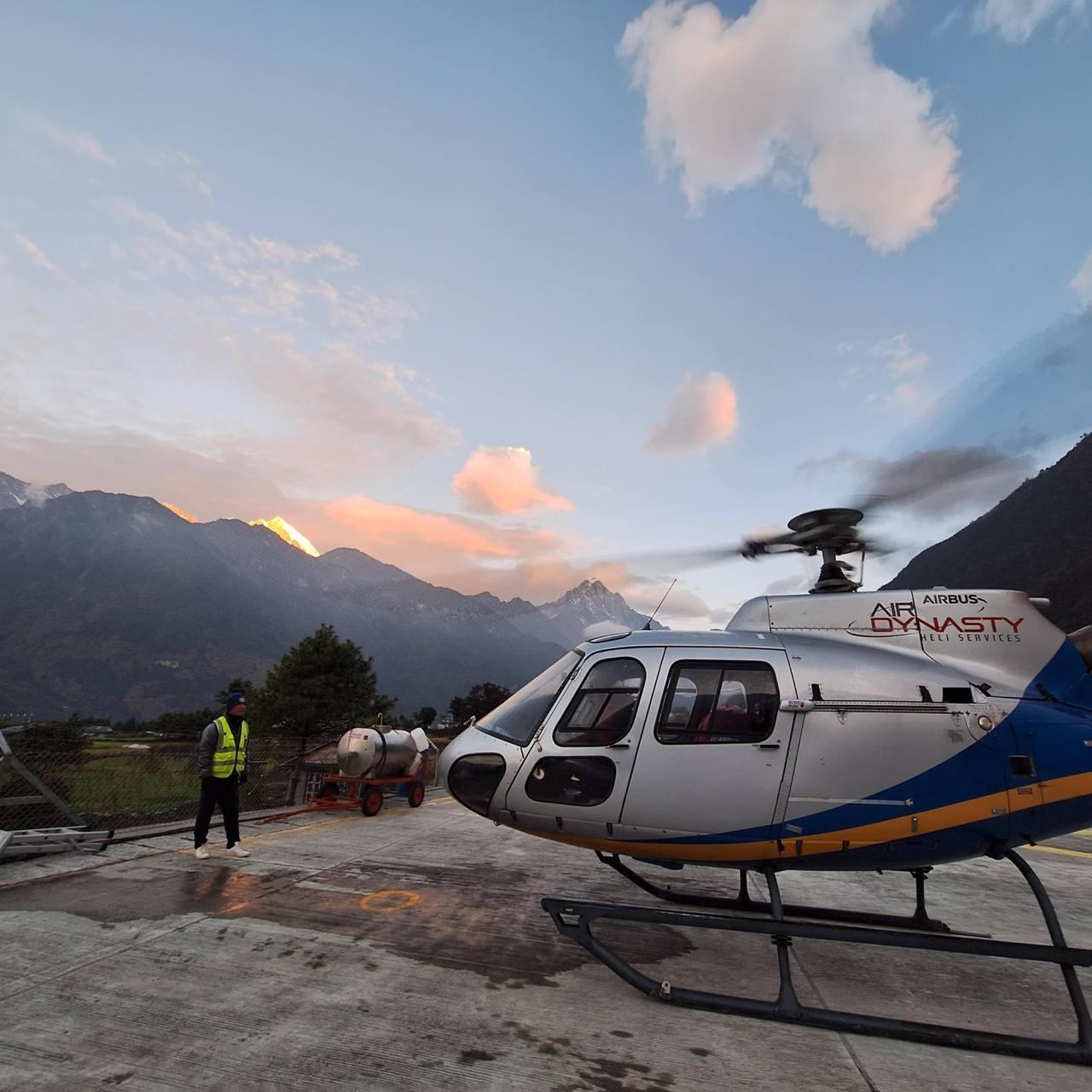
High-altitude helicopter flights in Nepal follow strict Visual Flight Rules (VFR), so pilots must keep constant visual contact with the terrain and cannot rely on instrument landing systems. Private helicopter charters also reduce weather delays by using a single reschedulable window instead of the multi-day backlogs common with fixed-wing planes. At the same time, thin air above 4,000 meters means strict passenger weight limits and careful high-altitude shuttle drops are needed to keep landings safe.
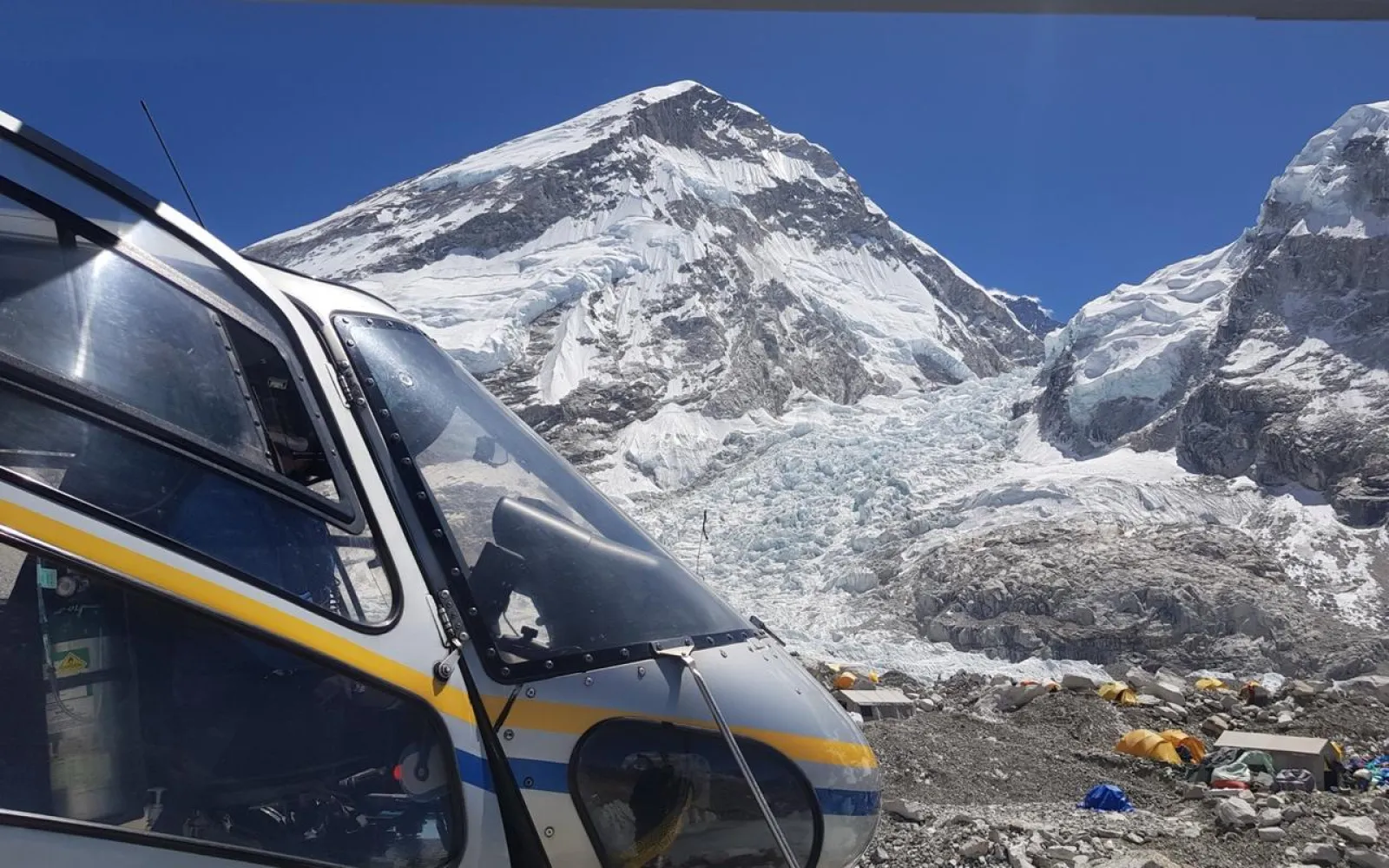
Understanding Nepal's helicopter weather rules and VFR flight regulations is important before booking mountain routes. Because high-altitude flights like one to Everest Base Camp require careful weight balance, operators check passenger payload, fuel loads, and morning temperatures before clearing takeoff.
| Parameter | Value / Metric |
| Typical Shared Charter Rate | $950 – $1,200 per seat (EBC/Kala Patthar) |
| Typical Private Charter Rate | $4,200 – $5,500 per flight |
| Operating Rules | VFR (Visual Flight Rules) only; mandatory early morning windows (6:00 AM – 11:00 AM) |
| High-Altitude Payload Shuttle Limit | 5 Passengers (Kathmandu to 3,800 m) Max 3 Passengers above 4,300 m |
| Weather Risk Compression | Single reschedulable day vs. 10–15 day fixed-wing STOL backlogs |
Himalayan mountain terrain lacks ground-based radar towers, radio beacons, and instrument landing systems, so Instrument Flight Rules (IFR) are not possible in remote valleys. Pilots must rely on Visual Flight Rules (VFR) and navigate by sight, staying clear of ridgelines, peak faces, and cloud walls. The Civil Aviation Authority of Nepal (CAAN) requires at least 5,000 meters of ground visibility along the flight corridor, plus clear separation from clouds, before an aircraft can enter mountain airspace.
Clear, sunny skies in Kathmandu or Pokhara do not guarantee an easy flight into the high valleys of the Khumbu or Mustang. The Himalayas create very local weather, and narrow valleys such as Lukla, Chhomrong, or Ghodatabela can quickly fill with cloud, fog, or strong downdrafts while nearby peaks remain clear. Because VFR requires clear visibility all the way, a cloud bank blocking a key pass can force the pilot to turn back or land at a nearby helipad and wait for conditions to improve.
Civil aviation rules give the Pilot-in-Command (PIC) full authority to assess weather risks and decide whether to delay a departure or divert a flight. Schedules, passenger plans, and tour commitments never override the pilot's safety judgment. If conditions drop below CAAN visual standards during flight, the PIC must prioritize safety by rerouting to a lower valley or returning to base immediately.
Short Take-Off and Landing (STOL) aircraft depend on a few single-runway mountain airfields like Lukla or Jomsom. When crosswinds, low clouds, or fog close these airfields, fixed-wing planes cannot land or take off, grounding flights at their origin airports. Because mountain weather can stay bad for days, one weather event can create 10-to-15-day backlogs, stranding travelers and disrupting trekking itineraries.
Helicopters do not need long paved runways, which gives them useful flexibility in marginal weather. Rotary aircraft can hover, use short 15-minute breaks in cloud cover, or land at lower, clear helipads like Surkhe or Phaplu if the main high-altitude landing zones are blocked. Chartering a helicopter can turn multi-day flight delays into a single flexible day; instead of losing a week to airport backlogs, travelers can wait out minor weather changes at their hotel until a clear flight window opens.
Local municipal authorities in the Khumbu region and the Sagarmatha National Park administration issued a notice to enforce a full ban on commercial helicopter landings beyond Lukla starting January 1, 2025. Officials cited concerns about noise, wildlife disruption, environmental damage to fragile high-altitude ecosystems, and economic shifts away from traditional ground portering.
The Civil Aviation Authority of Nepal (CAAN), Nepal’s national aviation regulator, reaffirmed its authority over national airspace and overruled the local landing ban. Commercial operations have resumed under updated rules. Today, high-altitude commercial flights and private charters operate under clear guidelines, including noise-mitigation flight paths, standardized environmental landing permits, and designated corridors across the Everest region.
As altitude increases, air pressure and oxygen levels drop, creating a thin-air environment where air molecules are spread farther apart. Above 4,000 meters, this reduces both the lift from spinning rotor blades and the efficiency of the turboshaft engine. Because the helicopter must produce much more power to hover in low-density air, its maximum takeoff weight drops, forcing operators to limit payload to maintain safety margins.
To stay safe in thin air near Everest, tour operators use a required staging system at intermediate helipads such as Pheriche (4,371 m) or Syangboche (3,880 m). The helicopter leaves Kathmandu with up to 5 passengers, but at the stop, the pilot checks air density and divides the group. It then carries only 2 or 3 passengers at a time, with a payload limit of about 220–250 kg, to Kala Patthar (5,545 m). The pilot repeats the shuttle flights for the remaining passengers, then the group reunites at a lower elevation for breakfast.
What High-Altitude Safety & Oxygen Protocols Are Used Onboard?
All commercial helicopter flights above 3,000 meters must carry medical-grade oxygen systems, including 4L to 5L emergency cylinders with nasal cannulas or masks. Rapid climbs to high-altitude drop points such as Kala Patthar (5,545 m) or Muktinath (3,710 m) can expose unacclimatized passengers to sudden pressure changes and raise the risk of Acute Mountain Sickness (AMS). To reduce this risk, pilots keep ground time at high-altitude stops to 10–15 minutes and give supplemental oxygen right away if any passenger feels dizzy, short of breath, or nauseous.
Before boarding at the helipad, ground crews weigh each passenger and their daypacks and cameras. The pilot enters these measurements into the weight-and-balance matrix to check that total takeoff weight and center-of-gravity (CG) limits meet CAAN performance standards. Careful weight distribution helps prevent overloading in high-density altitude takeoffs and determines whether the group needs a second shuttle before entering the high mountain passes.
Navigating high-altitude helicopter travel in Nepal requires balancing clear flight expectations with a solid understanding of weather changes, Visual Flight Rules, and high-density altitude weight limits. With transparent guidelines and flexible morning scheduling buffers, travelers can reach high-elevation mountain destinations safely and efficiently.
Contact our flight specialists today to plan your trip, check payload limits, and secure your helicopter charter!
If adverse mountain weather prevents takeoff, your flight is automatically rescheduled for the next available morning window. If you cannot reschedule within your travel dates, you will receive a full refund according to our booking policy.
Cooler morning temperatures provide higher air density for maximum engine lift and rotor performance. By mid-day, solar radiation causes thermal turbulence, valley wind gusts, and cloud cover that make visual mountain flying unsafe.
Shared flights assign an average weight allowance of 80 kg to 80 kg per passenger, including hand baggage. Total group weight is strictly calculated before takeoff, and groups exceeding combined limits require an extra shuttle split.
Standard sightseeing day tours do not require emergency evacuation insurance since the flight returns to the city the same day. However, high-altitude trekking drops or multi-day wilderness charters require insurance that explicitly covers medical evacuation up to 6,000 meters.
Rapid ascent to high viewpoints like Kala Patthar (5,545 m) can cause temporary mild symptoms like lightheadedness or shortness of breath. Because ground stops are capped at 10 to 15 minutes, severe mountain sickness is rare and medical oxygen is kept ready on board.
No, helicopters must stop at intermediate helipads like Lukla for refueling and Pheriche or Syangboche to manage altitude payload splits. These mandatory operational stops ensure the aircraft maintains safe fuel and weight limits for high-altitude landings.
Up to 5 passengers can fly together from Kathmandu to intermediate stops around 3,800 meters. Above 4,300 meters, thin air forces the pilot to split the group into shuttles carrying a maximum of 2 to 3 passengers at a time.
Seating arrangements are assigned strictly by the pilot based on weight and balance calculations rather than booking order. However, aircraft feature wide viewing windows, and shuttle splits allow every passenger clear views during high-altitude loops.
Operators rely on Airbus H125 (AS350 B3e) and Bell 407 helicopters equipped with high-altitude turboshaft engines. These specific models are engineered to operate in extreme elevation and low air density environments.
Yes, a valid original passport is mandatory for airport security screening and national park entry checkpoints. Authorities verify identity details against flight manifests before clearing passengers for takeoff.
Dress in warm, windproof layers, including a down jacket, thermal trousers, gloves, and a fleece hat. High-altitude landing spots feature freezing temperatures and strong winds, even during sunny conditions.
Yes, all commercial charter helicopters operating above 3,000 meters carry emergency medical oxygen cylinders equipped with regulator masks. Pilots and ground personnel can administer oxygen immediately if a passenger feels unwell during high-altitude stops.
You should book 2 to 4 weeks in advance during peak spring (March–May) and autumn (September–November) trekking seasons. Early booking secures preferred morning slots and allows flexibility if weather delays require rescheduling.
Ground staff calculate total combined passenger weight rather than enforcing individual penalties. If group weight exceeds maximum high-altitude takeoff limits, the flight operator arranges an additional shuttle run at a supplementary cost.
Pregnant women in their third trimester and infants under two years old are generally advised against rapid high-altitude ascents above 3,000 meters. Consult a specialized doctor before booking high-elevation mountain flights.
A private charter gives your group exclusive use of the aircraft with flexible ground times and custom flight schedules. A shared flight splits aircraft capacity among individual travelers to lower per-seat costs while following a rigid timeline.
Flights operate selectively during the monsoon (June–August) whenever clear VFR morning windows open. However, cloud cover and heavy rainfall cause frequent flight delays or cancellations during this period.
Landing at 5,545 meters exposes unacclimatized bodies to extremely low oxygen levels that trigger rapid mountain sickness. Short ground stops give passengers time for photos and viewing while protecting them from severe altitude complications.
Aeroconnect partners strictly with CAAN-certified air operators employing veteran mountain pilots with thousands of high-altitude flight hours. All partner aircraft undergo rigorous routine maintenance according to international aviation standards.
Bookings can be secured using major credit cards, international wire transfers, or direct online payment gateways. Clear refund guarantees protect your booking if the weather forces a full cancellation.