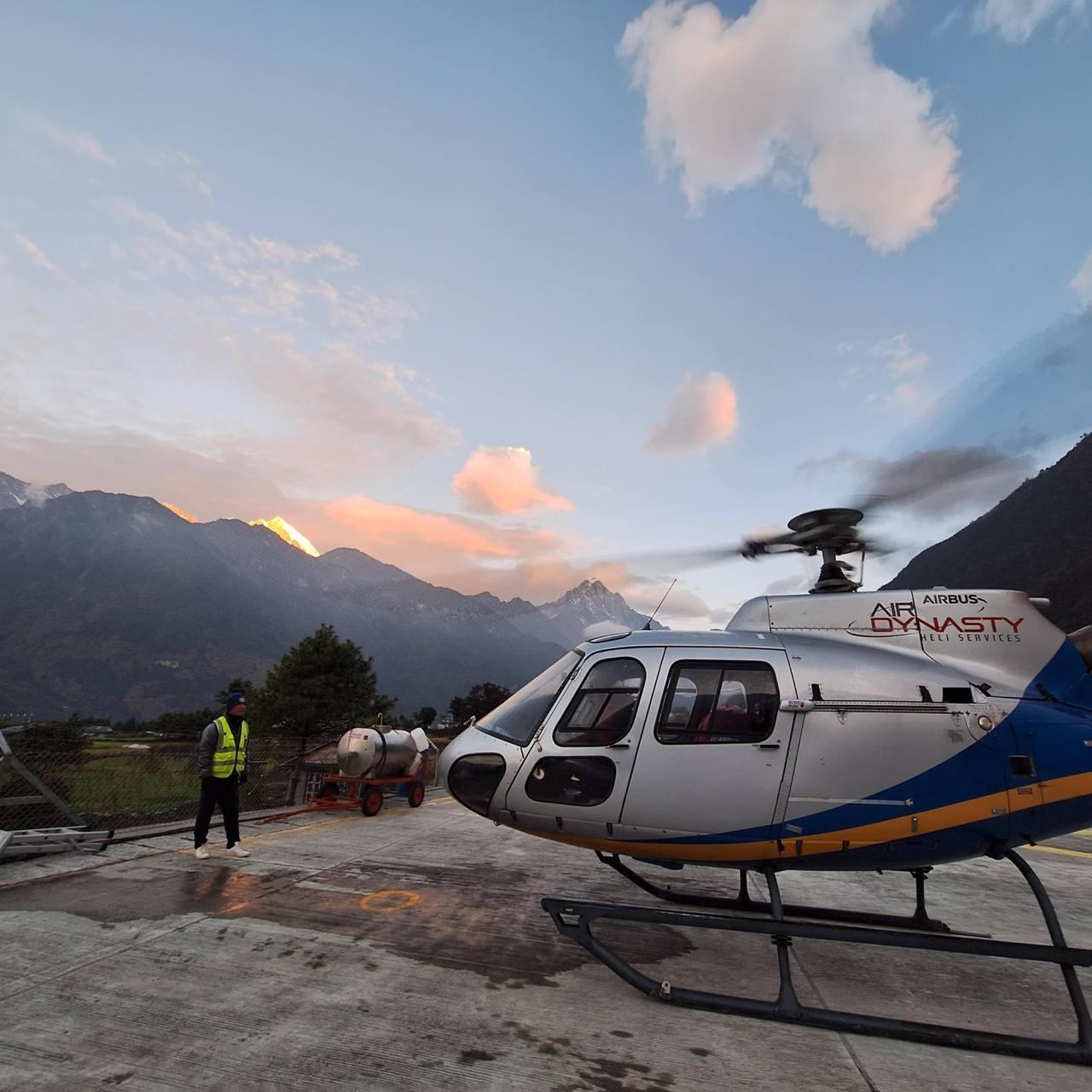
If your mountain flight is grounded in Nepal, stay flexible and check the next available travel option with your airline or trekking operator. Delays and cancellations can happen in mountain areas because of poor visibility, strong winds, changing weather, and other operating conditions, especially when flying to or from Lukla and other high-altitude airstrips.
A grounded flight does not always mean your trek must be canceled. Depending on the situation, you may be able to wait for the next flight, take a helicopter when conditions allow, or use an overland route if practical. Your schedule can also be adjusted if you have enough flexibility, and adding buffer days before or after a trek can help reduce the impact of delays.
Stay in contact with your airline, trekking agency, guide, or helicopter operator so you can understand your options and decide quickly. This guide explains what to do after a flight is grounded, including transportation alternatives, possible extra costs, accommodation, communication, itinerary changes, and emergency planning.
Mountain flights in Nepal can be grounded if weather, visibility, wind, airport conditions, or other operational factors are not safe. Conditions can also differ between Kathmandu and the mountain destination, so a clear morning in the capital does not guarantee that a flight can operate.
Cloud and fog can make mountain airstrips hard to see, especially the terrain and runway during approach and landing. Since mountain airports need good visibility for safe operations, flights may be delayed or grounded when it drops too low.
Strong or changing winds can disrupt operations at mountain airports, especially when crosswinds make takeoff and landing harder. Because wind direction and speed can change quickly in mountainous terrain, pilots and flight operators check current conditions before deciding whether a flight can safely proceed.
Heavy rain during the monsoon can reduce visibility and make flying unsafe, while snow and winter weather can affect some mountain routes and airports. Even if conditions were good earlier in the day, a short spell of rain, cloud, or snow can delay or ground a flight until things improve.
Flights can also be affected by air traffic, airport restrictions, aircraft availability, and required safety checks. These factors are considered along with the weather, so a delay may happen even when the weather seems suitable for flying.
Weather in Kathmandu can be very different from conditions at Lukla or other mountain destinations. Pilots and operators also need to consider weather along the flight route, and mountain conditions can change quickly because of clouds, wind, and poor visibility. So clear skies at Kathmandu airport do not necessarily mean a mountain flight can operate safely.
When a mountain flight is grounded, check the updated flight status first and contact the people managing your trip. Acting quickly can help you avoid delays and protect the rest of your trekking schedule.
Do not leave the airport until you have clear information about your flight. Check with the airline, helicopter operator, or travel company to see whether it is delayed, canceled, or will operate later.
Tell your trekking agency or guide as soon as possible. They can help coordinate changes to your transportation, accommodation, or itinerary if the delay continues.
Ask if your booking can be moved to the next available departure. Before confirming a new flight, check for any extra charges and whether the departure time fits your trekking schedule.
Review your itinerary with your guide or trekking agency to see which trekking days may be affected by the delay. Do not rush or cut planned acclimatization days to make up lost time, since acclimatization is important for high-altitude trekking.
When a mountain flight is grounded, the best option depends on the length of the delay, weather conditions, budget, and how much flexibility you have in your trekking schedule.
| Option | Best For | Main Advantage | Main Limitation |
|---|---|---|---|
| Wait for fixed-wing flight | Short delays | Keeps the original travel plan with minimal changes | Weather may remain unfavorable |
| Helicopter | Time-sensitive trekkers | Can provide faster onward travel when conditions permit | Higher cost and still weather-dependent |
| Overland route | Travelers with flexible schedules | Provides an alternative when flights remain grounded | Much longer journey |
| Reschedule trek | Major disruptions | Allows you to avoid rushing the itinerary | Requires additional time and planning |
Consider how long the delay is, the latest weather forecast, and how many days remain in your itinerary before choosing an alternative. Compare the extra cost of a helicopter or overland journey with the cost of changing your accommodation and trekking plans, but do not rush into an option just to make up time. Safety should come first, so wait for reliable information from your airline, operator, or trekking agency before deciding whether to continue by another form of transport.
A helicopter may be used if a fixed-wing flight is disrupted by aircraft availability or other conditions affecting the scheduled flight, as long as the helicopter has safe operating conditions. Before arranging the flight, passengers should also consider aircraft capacity, passenger weight, baggage limits, and whether the helicopter can safely operate on the intended route.
Helicopters and fixed-wing aircraft have different capabilities. In some cases, a helicopter may be able to reach a different departure point or operate when a scheduled fixed-wing service cannot. However, helicopters also depend on suitable weather, visibility, wind, aircraft performance, and other operational requirements, so they are not an automatic replacement for a grounded aircraft.
Further Reading - Why Helicopters Beat Fixed-Wing + Pilot Training & Navigation Safety
A shared helicopter can lower the cost by splitting the flight among passengers on the same route. A private charter gives a group more control over departure time and may be better when travelers have limited time, although it usually costs more, and the price depends on the aircraft, route, passenger load, and operating requirements.
Do not assume a helicopter can fly just because a fixed-wing flight was canceled. It must still meet the required weather, visibility, aircraft performance, route, and operational conditions before departure, and the final decision should always be based on current flight conditions and the operator's safety assessment.
Overland travel can be an alternative when mountain flights are grounded for a long time. It may suit travelers with flexible schedules, but the longer trip and extra trekking should be considered before changing plans.
There is no direct road to Lukla, so a road trip cannot simply replace a Kathmandu-to-Lukla flight. Roads can reach areas closer to the Everest trekking route, but travelers may still need to continue on foot or use local transport, depending on the route and road conditions.
Overland travel can make sense when flight disruptions are likely to continue and you have enough time for a longer journey. It may also suit budget-conscious trekkers who want to avoid the higher cost of a helicopter and travelers willing to adjust their trekking schedule.
The main drawback is the extra travel time compared with flying directly to Lukla. Road conditions can change, and you may need extra accommodation, transport, and adjustments to your trekking itinerary. Before choosing this option, talk with your trekking agency about the route and expected travel time so you know how it will affect the rest of your trip.
Good communication helps you understand what is happening and gives you more time to adjust your plans. Keep your trekking operator, travel companions, and family informed, and make sure your phone remains usable throughout the disruption.
Keep your guide's phone number and trekking agency contact details saved before your trip. If the agency uses WhatsApp, save that contact too and ask for regular updates on flight status, alternate transportation, accommodation, and any changes to your trekking itinerary.
Check updates from your airline or helicopter operator instead of relying only on other travelers. You can also ask airport staff about the latest conditions and when flights may resume, but confirm any booking changes directly with your airline or travel company.
Let family members or travel companions know if your flight is delayed or canceled, especially if they expect you at a certain time. If the disruption affects your return trip, update your international flight plans and allow extra time for the rest of your journey.
Keep your phone charged during the disruption, as you may need it for calls, messages, booking updates, navigation, or emergencies. Carry a reliable power bank, since charging may be limited while traveling or waiting in mountain areas.
| Situation | What It Means | Recommended Action |
|---|---|---|
| Short Delay | The flight may operate later on the same day. | Wait for updated information from the airline or operator. |
| Weather Hold | Current weather conditions are temporarily unsuitable for safe operations. | Monitor weather conditions and operator updates. |
| Flight Cancellation | The scheduled flight will not operate as planned. | Rebook the flight or consider an alternative transportation option. |
| Multiple-Day Disruption | Unfavorable conditions or operational issues continue for several days. | Consider a helicopter, overland travel, or changes to the trekking itinerary. |
| Airport Closure | Flight operations at the airport have been temporarily suspended. | Follow official instructions and make alternative travel arrangements. |
Flight disruptions are common when traveling in Nepal's Himalayan regions, especially in unstable mountain weather. A delay or cancellation does not always mean your trek has to end, but safety should come before a fixed schedule. Depending on the situation, you can wait for the next flight, arrange helicopter transport when possible, take an overland route, or change your trekking plan to absorb the delay. Do not rush trekking or acclimatization days to make up lost time, especially at high altitude. During the disruption, stay in contact with your trekking operator, guide, airline, or transport provider so you get reliable updates and can decide on the next step.
Flights to Lukla can be canceled because of poor visibility, strong winds, rain, cloud, snow, or other conditions that make flight operations unsuitable. Conditions can change quickly in the mountains, so a flight may be canceled even when the weather looks good in Kathmandu.
First, confirm the latest status with your airline, trekking agency, or guide and ask when the next flight may operate. If the disruption continues, consider a helicopter, overland route, or adjustment to your trekking itinerary.
Sometimes, a helicopter may operate when a fixed-wing flight has been canceled, depending on the reason for the cancellation and current conditions. Helicopters still require suitable weather, visibility, wind, aircraft performance, and other operational conditions.
A delay can last from a few hours to several days depending on weather, airport conditions, aircraft availability, and other operational factors. Keep some flexibility in your schedule rather than assuming the flight will operate later the same day.
Waiting for a flight in Lukla is generally part of mountain travel when departures are delayed by weather or operational conditions. Follow instructions from your airline or trekking operator and avoid leaving the airport without confirming the latest flight information.