Need help with booking? Send us a message.
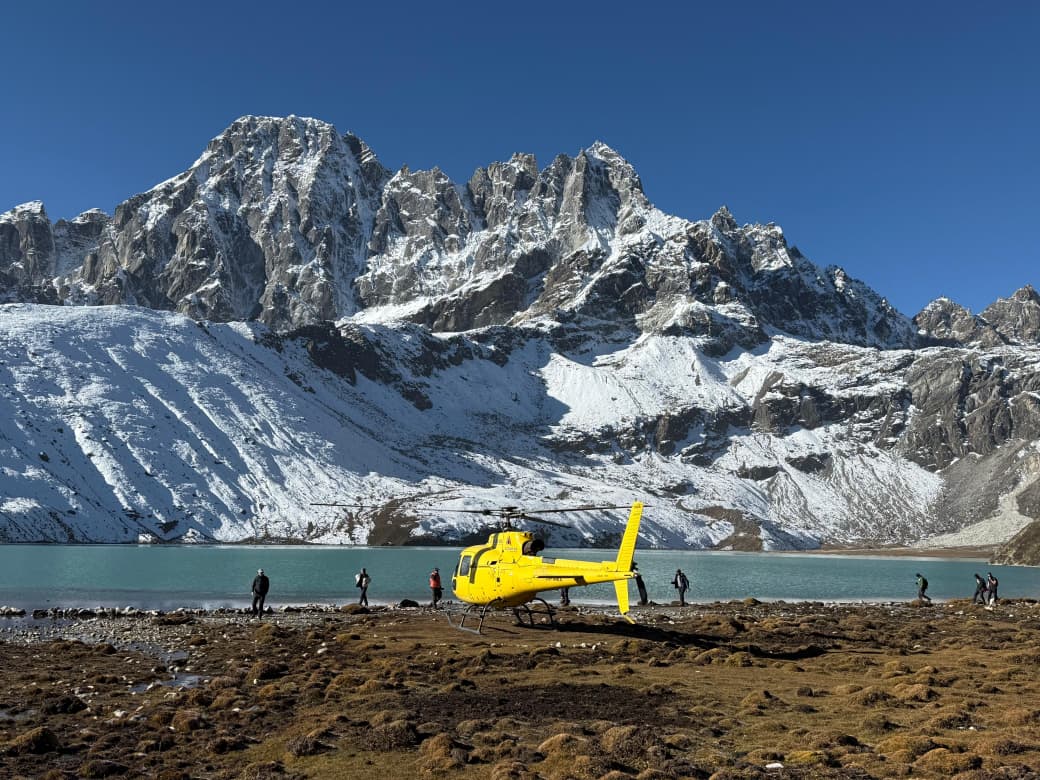
Experience the thrill of a lifetime with our Everest Base Camp Helicopter Tour, offering unparalleled views and an exclusive landing at Kalapathar (5,545m) for close-up panoramas of Mount Everest.
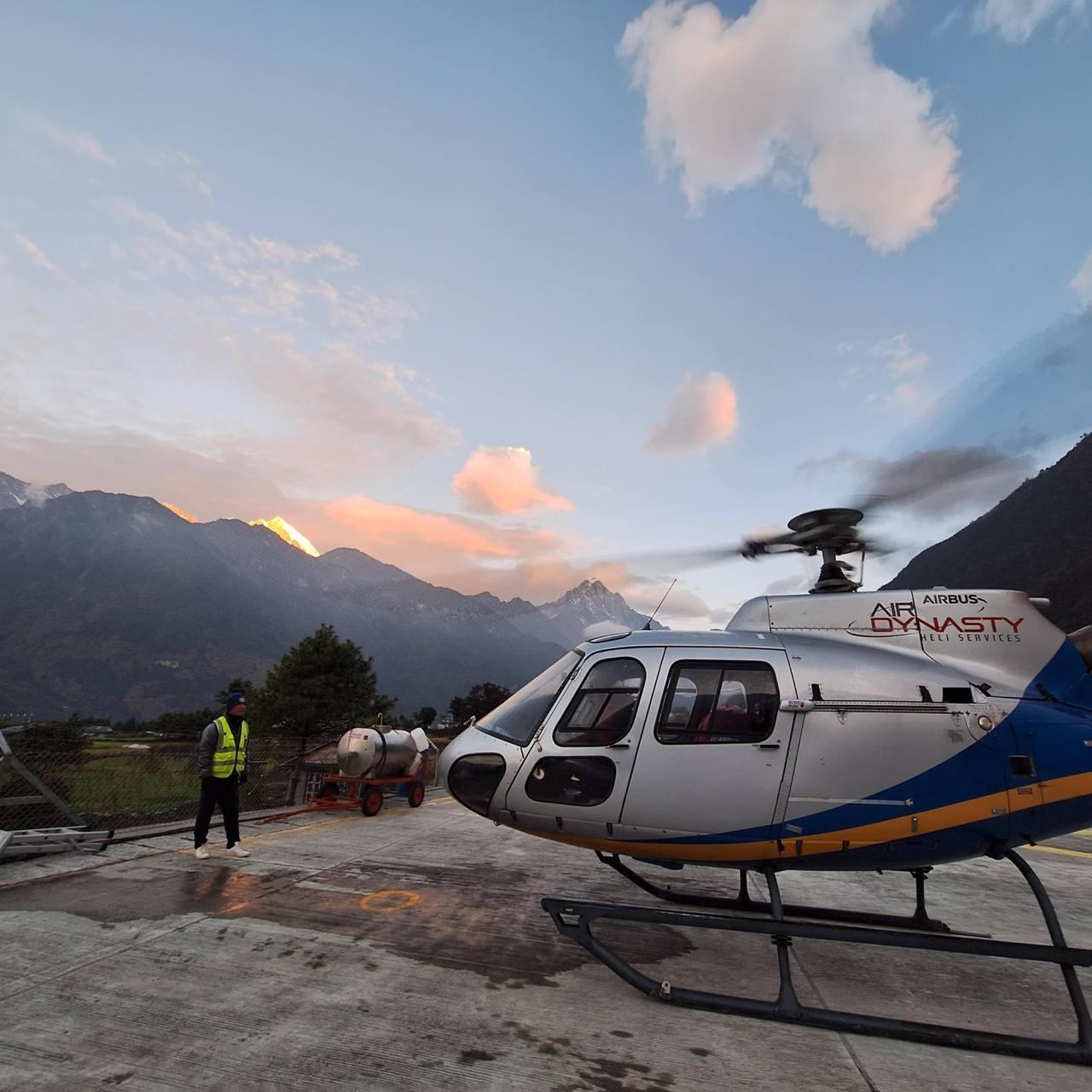
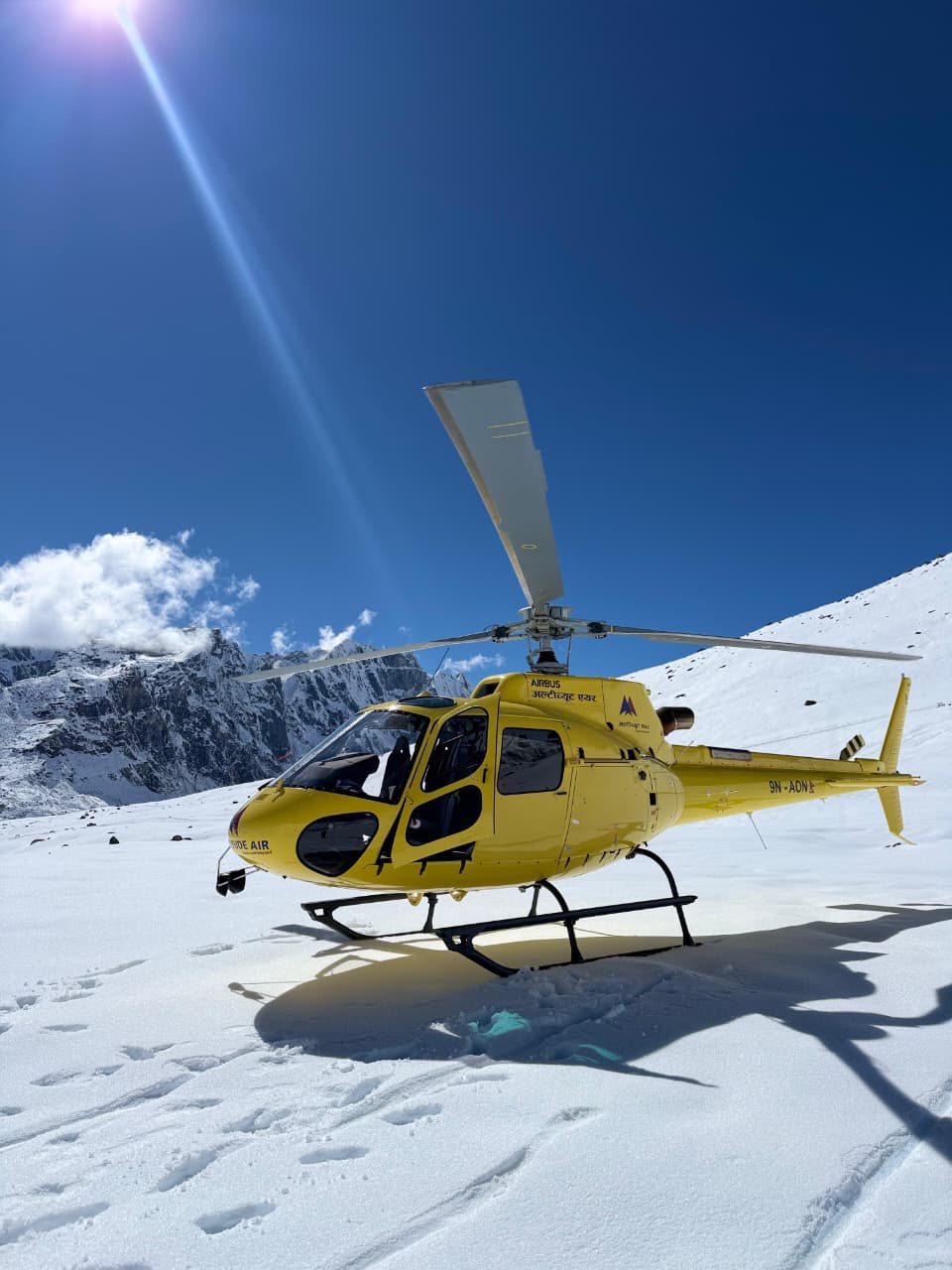
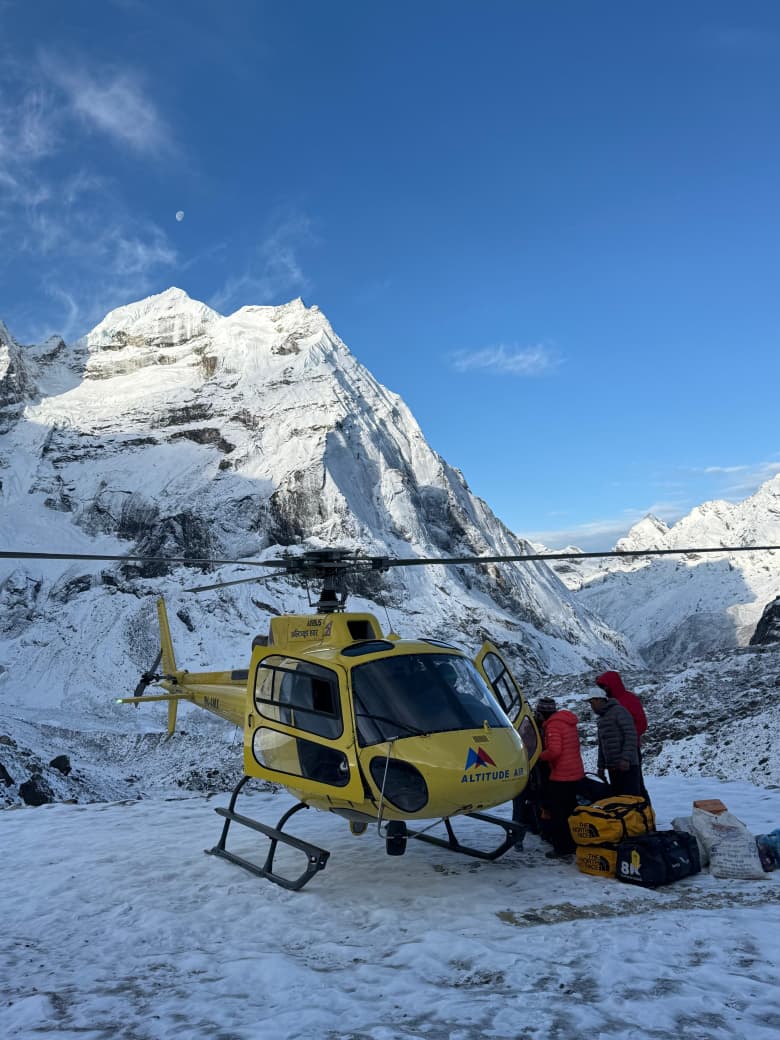
Airbus AS350 B3e
Kathmandu - Lukla - Syangboche/Pheriche (Shuttle Point) - Kalapathar - Lukla - Kathmandu
Some trips in Nepal ask for two weeks, a lot of walking, and a fair bit of patience. This one doesn’t.
Our Everest Base Camp Helicopter Tour with Kala Patthar Landing is designed for travelers who want to experience the Everest region properly, but do not have the time, stamina, or interest to commit to a long trek. In a single morning, you leave Kathmandu, fly deep into the Khumbu, pass over the dramatic glacier landscape around Everest Base Camp, and, when conditions allow land at Kala Patthar (5,545m), the viewpoint most people imagine when they dream about seeing Everest up close.
The Everest Base Camp Helicopter Tour with Kala Patthar Landing is a quick way to see the Everest region without doing the full trek. It includes a scenic helicopter flight and a landing at Kala Patthar, giving travelers high-altitude views of the mountains in a single day.
The flight takes you from Kathmandu to the Everest region, with views of Himalayan peaks, valleys, glaciers, and mountain settlements along the way. After reaching the Everest area, the helicopter continues to Kala Patthar, where passengers can spend a limited time enjoying the scenery before returning.
Because Kala Patthar is about 5,644 meters (18,519 feet) high, the landing depends on aircraft performance, passenger and baggage weight, fuel, temperature, wind, visibility, and other operating conditions. Flight schedules and landing arrangements can change when mountain conditions are not suitable, so weather flexibility and realistic planning are important when booking this high-altitude helicopter experience.
The alternative way of experiencing this adventure is by first taking a helicopter tour from Kathmandu to Lukla, and then trekking the Khumbu region for several days.
A lot of travelers search for an “Everest Base Camp helicopter tour,” but the truth is that Kala Patthar is usually the moment people remember most.
Everest Base Camp itself is important, of course. It carries the name, the history, and the emotional pull. But if you want the classic wide-angle Everest view the kind that feels open, dramatic, and unmistakably Himalayan, Kala Patthar is the place.
That is why this package works so well. It is not just about saying you flew near Everest. It is about reaching the part of the route that actually feels memorable.
The day starts early, because mountain flying rewards early decisions and clear morning conditions.
You leave Kathmandu while the city is still quiet. At first, the landscape below is familiar: hills, villages, rivers, and cultivated terraces. But the deeper you fly east, the more the terrain begins to change. The valleys narrow. The ridgelines sharpen. The snow peaks start appearing not as distant scenery, but as the center of the journey.
After Lukla, the flight begins to feel very different. This is where you start to understand why the Everest region is not just visually beautiful, but operationally serious. Weather can shift quickly here. Wind behaves differently in the valleys. Payload matters. Timing matters. Experience matters.
That is also why a good Everest helicopter tour should never sound casual or overpromised. The magic of the experience comes precisely from the fact that it is real mountain flying, not a staged attraction.
You can also compare our EBC helicopter tour with Kala Patthar landing with a similar but luxurious Everest Base Camp Helicopter Overfly Tour.
This is one of those Nepal experiences that tends to stay with people long after the flight is over.
Not just because you saw Everest, but because of how quickly the world changes once you leave Kathmandu behind. In a matter of hours, you move from city streets to glacier country, from ordinary travel logistics to the kind of landscape that makes people go quiet for a moment.
That is what this package should sell.
Not hype. Not vague luxury language. Just the truth that, for the right traveler, this is one of the fastest and most powerful ways to experience the Everest region properly.
A thrilling one-day helicopter expedition from Kathmandu, flying directly to the Everest region, with a strategic landing at Kalapathar for magnificent views of Mount Everest. The tour includes scenic flights over the Khumbu Valley and a brief stop for optional breakfast.
 Accommodation N/A
  Meals Optional Breakfast
  Max. altitude 5,545m / 18,192ft.
 This is one area where too many package pages become vague.
Weather in the Everest region can change quickly especially around Lukla, Pheriche, and the upper Khumbu. A clear morning in Kathmandu does not automatically mean a clear landing window at Kala Patthar. Cloud can build around ridgelines. Visibility can narrow faster than travelers expect. Winds can shift. Temperatures at altitude affect performance.
That is why mountain pilots do not simply “follow an itinerary.” They continuously reassess the route and the conditions.
The best operators are not the ones who promise everything no matter what. They are the ones who know when to wait, when to adjust, and when to say no.
In the Himalayas, that is not a weakness. It is professionalism.
For seasonal context, readers comparing months can also explore Everest Helicopter Tour in Winter and the broader Everest Region.
One of the things travelers often do not realize is that the helicopter may be physically the same aircraft at Kathmandu and near Kala Patthar, but the air is not the same.
As altitude increases, helicopter performance changes. Temperature matters. Weight matters. Wind matters. That is why high-altitude flights sometimes require careful passenger distribution or shuttle arrangements for the final sector.
This is normal in the Everest region, and it is part of operating responsibly.
Flights are conducted in line with CAAN flight operations requirements, including passenger weight verification, weight-and-balance calculations, route planning, and weather-based go/no-go decision-making. Those details may sound technical, but they affect the experience in practical ways: who flies in which sector, how long a landing lasts, and whether a route remains safe to operate.
It also explains why a page like this should be transparent. Everest helicopter tours are incredible, but they are not fantasy products. They are real mountain operations.
No — breakfast is not included in this package.
Some Everest helicopter products in Nepal build the experience around a breakfast stop, and if that is what you want, the Hotel Everest View Helicopter Tour or the Kongde Helicopter Tour with Breakfast may suit you better.
This particular package is really about the Everest landing experience itself, not a breakfast-led luxury stop.
The current public price for this package is:
US$1,600 per person
That price can be updated later if needed, but for now it remains the right number to display publicly.
If travelers are comparing value, the point of this package is not that it is “cheap.” It is that it compresses one of the world’s most dramatic mountain experiences into a single day, with direct access that would otherwise take many days of trekking.
This tour is a good fit for travelers who:
It is also a strong option for people who want the Everest region to be the centerpiece of their Nepal trip rather than one part of a longer expedition.
A heavy-duty warm/down jacket is essential as temperatures can drop significantly at high altitudes (0 to -10°C).
Layered warm trousers or ski pants for comfort and warmth.
Warm gloves to protect hands during the brief landing at Kalapathar.
UV protection sunglasses are crucial to protect eyes from strong sun glare at high altitudes.
To protect from cold winds during the flight and landing.
High SPF sunscreen to protect skin from intense sun exposure.
Fully charged camera with extra batteries to capture the stunning views.
From exact takeoff schedules in Kathmandu to zero surprise add-ons on arrival, Aero Connect Nepal sets the standard for high-altitude charter transparency and first-rate service.
We booked a private family charter up to Kala Patthar, but right in the middle of planning, we decided we really wanted to stop at Hotel Everest View for breakfast. I was worried it would be a logistical headache or come with crazy hidden fees, but the Aero Connect team adjusted our flight route on the fly!! They laid out the exact cost breakdown immediately with zero hassle. Seeing Everest up close with my family without any stress over logistics was the highlight of our entire trip to Nepal❤️❤️.
Flying into the mountains can make you nervous, especially when mountain weather starts turning. What stood out to me about Aero Connect Nepal during our Muktinath trip was their absolute honesty. They didn't push bad weather or make risky promises just to stick to a schedule. They explained the safety protocols clearly and kept us updated on weather delays without sugarcoating anything. You can tell they put passenger safety above everything else. Hands down the most trustworthy operator in Nepal.
If you've researched helicopter tours in Nepal, you know weight limits and hidden fees are a huge concern for travelers. Aero Connect was totally transparent from day one no vague weight policy, no surprise charges when we stepped on the scale at the airport. On top of that, our pilot was exceptional. Flying near Everest takes insane skill, and watching him navigate the alpine winds made us feel completely safe the entire time. Worth every single penny.
Yes. Our helicopters are maintained to the highest international standards, and our pilots have extensive high-altitude flying experience. We carry oxygen onboard and monitor weather conditions closely.
No trekking is involved—you simply board the helicopter and enjoy the flight. However, the high altitude (up to 5,545 m) may cause shortness of breath. If you have heart or respiratory conditions, consult your doctor first.
Safety is our priority. If weather conditions prevent flying, we will offer you an alternative date or a full refund.
Bring your passport, a camera, sunglasses, warm layers (it's cold at altitude!), and comfortable shoes. No specialized gear is required.
Absolutely. Select the "Private" variant during checkout for an exclusive helicopter experience for you and your group.
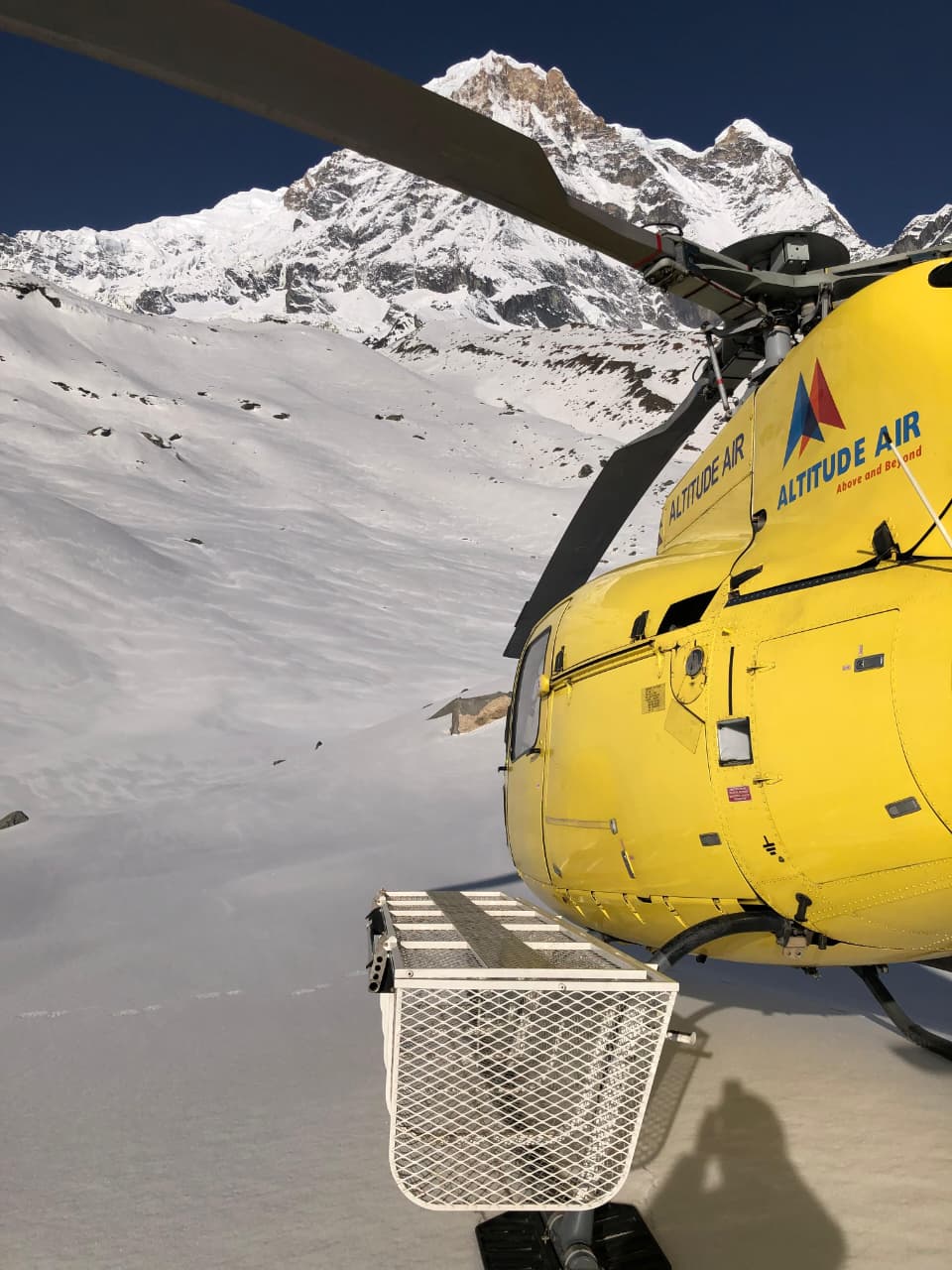
Yes, safety is our utmost priority. All flights are operated by highly experienced and licensed pilots using modern, well-maintained helicopters (AS350 B3e) specialized for high-altitude flights. We adhere to strict safety protocols, including comprehensive pre-flight checks and real-time weather monitoring. For Kalapathar landings, a mandatory safety shuttle protocol is implemented to ensure passenger safety due to reduced payload at extreme altitudes.
While the landing at Kalapathar (5,545m) is brief (10-15 minutes), some individuals might experience mild symptoms of altitude sickness such as headache, dizziness, or shortness of breath due to the rapid ascent. We recommend staying hydrated, avoiding alcohol before the flight, and informing your pilot if you feel unwell. Oxygen cylinders are available on board for emergencies.
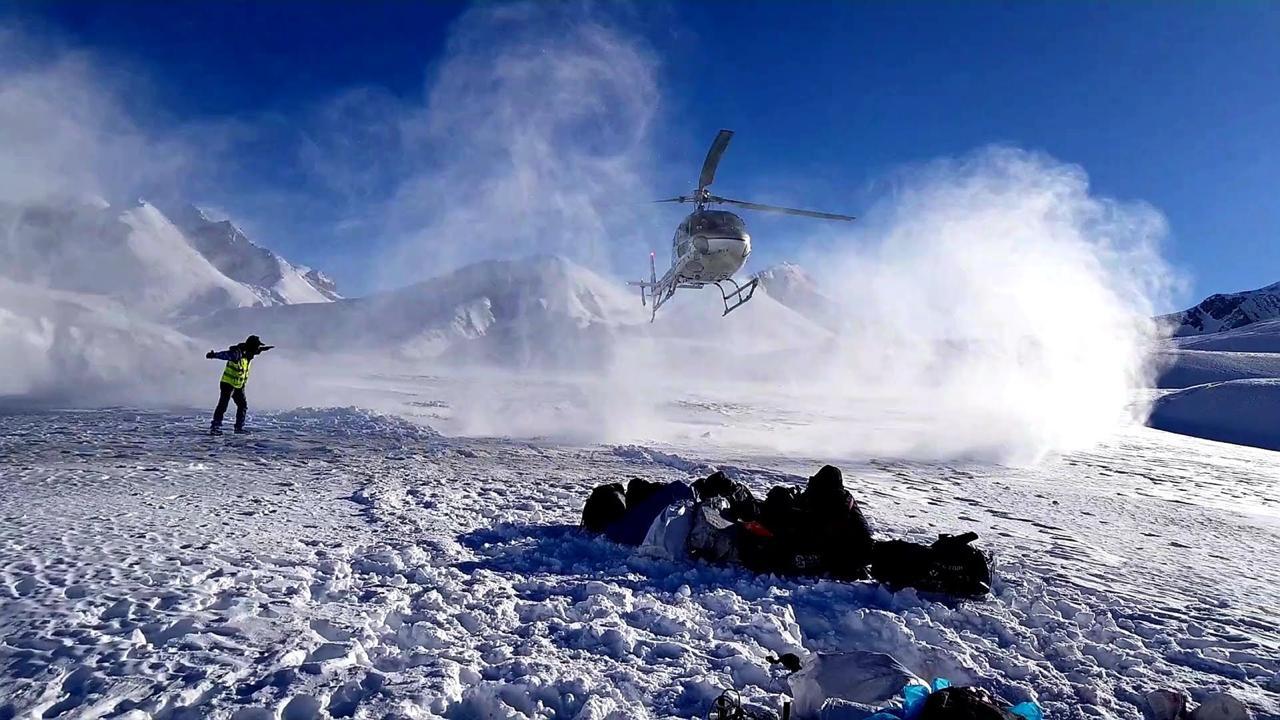
Due to the extreme altitude of Kalapathar (5,545m) and the reduced payload capacity of helicopters in thin air, if your group consists of more than 2-3 passengers, we implement a safety shuttle protocol. This means the helicopter will shuttle passengers from a lower, designated safety point like Pheriche (3,440m) or Syangboche (3,780m) to Kalapathar in multiple rotations, ensuring maximum safety and adherence to aviation regulations.
Due to reduced air density above 4,000 meters, aircraft lift capability decreases. To ensure safety, helicopters land at Pheriche (4,371m) and split passenger groups exceeding 240 kg combined weight into smaller groups of 2–3 passengers for the final flight up to Kala Patthar.
The best seasons are Autumn (September to November) and Spring (March to May). During these months, the weather is generally stable, offering clear skies and excellent visibility for panoramic mountain views. Winter months (December-February) can also be good but are much colder.
Safety is our top priority. If the flight is canceled due to poor weather in Kathmandu, Lukla, or the Everest region, your tour will be rescheduled for the following morning. If you are unable to reschedule, Aero Connect Nepal provides a full refund according to our booking policy.
We recommend wearing warm layered clothing, including a heavy jacket, warm trousers, gloves, a scarf, and a hat. Sunglasses are essential for eye protection from strong sun glare. Comfortable, informal shoes are sufficient. Don't forget your camera, a water bottle, and any personal medications.
To check live flight availability, reserve a group-joining seat, or book a private charter for the Everest Base Camp Helicopter Tour with Kalapathar Landing, contact our 24/7 flight operations center:
This is a full-day tour, typically lasting 4-5 hours from your pick-up in Kathmandu until your return. The actual flight time in the Everest region and ground time at Kalapathar are optimized for an incredible experience.
Helicopters can technically reach the altitude of Mount Everest's summit (8,848.86m), as demonstrated by Didier Delsalle landing an Airbus AS350 B3 on the summit in 2005. However, routine commercial flights do not fly to or land on the summit due to strong jet stream winds, low air density, and strict safety regulations enforced by CAAN. The highest safe commercial touchdown point is Kala Patthar (5,545m).
Helicopter landings directly inside Everest Base Camp (5,364m) are restricted during the spring climbing season to prevent disturbance to glacier ice, climbing teams, and base camp operations. Landings are directed to Kala Patthar (5,545m), which offers superior panoramic views of Mount Everest compared to Everest Base Camp itself (where the view of the summit is blocked by Nuptse).