Helicopter Tour vs. trekking in Nepal are two ways of visiting the remote but beautiful landscapes of Nepal. Some travelers spend two weeks trekking through mountain villages, crossing suspension bridges, and slowly climbing toward places like Everest Base Camp or Annapurna Base Camp.
Others reach the same area in just a few hours by helicopter, enjoying wide views of snow-covered peaks without the demands of a long trek. Both offer beautiful views of the Himalayas, but they give travelers very different experiences.
Choosing between an Everest Base Camp helicopter Overfly tour and EBC trekking comes down to what suits you best. It depends on how much time you have, your budget, your fitness level, and the kind of experience you want.
If you enjoy hiking, meeting local people, and spending several days in the mountains, trekking is a rewarding journey. If you have limited time or want more comfort, a helicopter tour lets you see the same famous landscapes in just a few hours.
This guide compares helicopter tours and trekking in Nepal across key factors like cost, travel time, physical effort, mountain views, safety, accessibility, and overall experience. By the end, you will know which option is better for your next adventure in Nepal.
| Feature | Helicopter Tour | Trekking |
| Time Required | Usually completed within 3–5 hours, making it ideal for travelers with limited time. | Typically takes 10–16 days, depending on the route, pace, and acclimatization schedule. |
| Cost | Higher upfront cost, especially for private charters, though shared flights reduce expenses. | Generally more affordable, but total costs increase with guides, porters, permits, accommodation, and meals. |
| Physical Effort | Minimal walking, with short walks only during landing stops. | Requires sustained physical endurance with daily hikes of 5–8 hours over varied terrain. |
| Altitude Exposure | Rapid ascent to high elevations with limited time spent at altitude. | Gradual altitude gain allows proper acclimatization over several days. |
| Mountain Views | Offers sweeping aerial views of multiple Himalayan peaks in a single flight. | Provides close-up mountain scenery that changes daily as you walk through different landscapes. |
| Accessibility | Suitable for seniors, children, and travelers with limited mobility or tight schedules. | Best suited for physically fit individuals who can manage long days of hiking. |
| Wildlife Opportunities | Limited wildlife sightings due to short flight duration and high altitude. | Greater chances of spotting Himalayan birds, yaks, musk deer, and other native wildlife along the trails. |
| Photography | Excellent for panoramic aerial photography and capturing vast mountain ranges. | Ideal for landscape, cultural, wildlife, and close-up photography throughout the journey. |
| Luxury Level | High level of comfort with premium services and minimal physical demands. | Basic to moderate comfort, with overnight stays in mountain tea houses. |
| Adventure Level | Exciting aerial adventure with breathtaking landings at remote locations. | Immersive adventure that combines hiking, local culture, and personal achievement. |
| Flexibility | Flight schedules depend heavily on weather conditions and aviation regulations. | Itineraries can often be adjusted with extra acclimatization or rest days if needed. |
| Risk Factors | Weather-related flight delays and rapid altitude exposure are the primary considerations. | Includes risks such as altitude sickness, fatigue, changing weather, and trail-related injuries over an extended journey. |
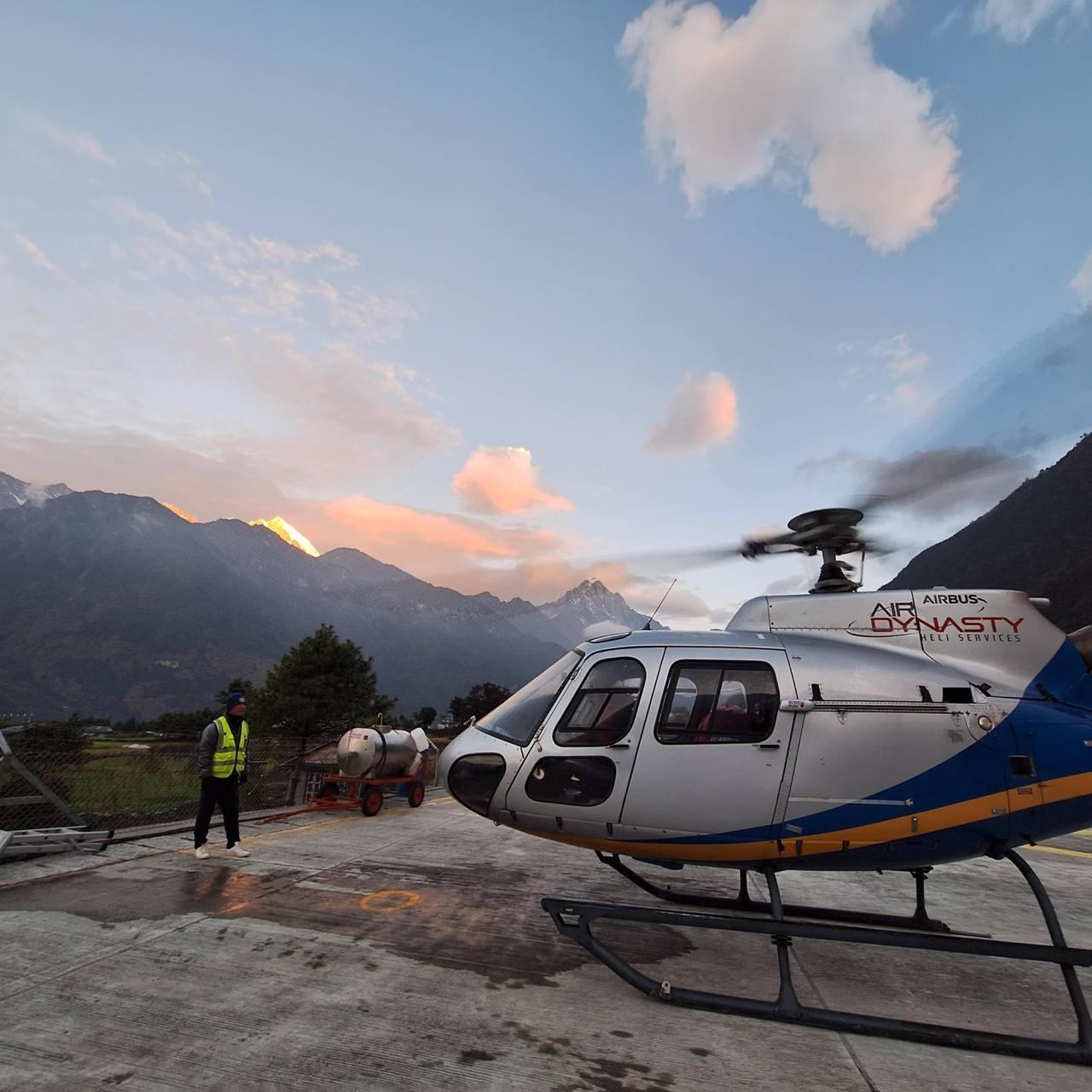
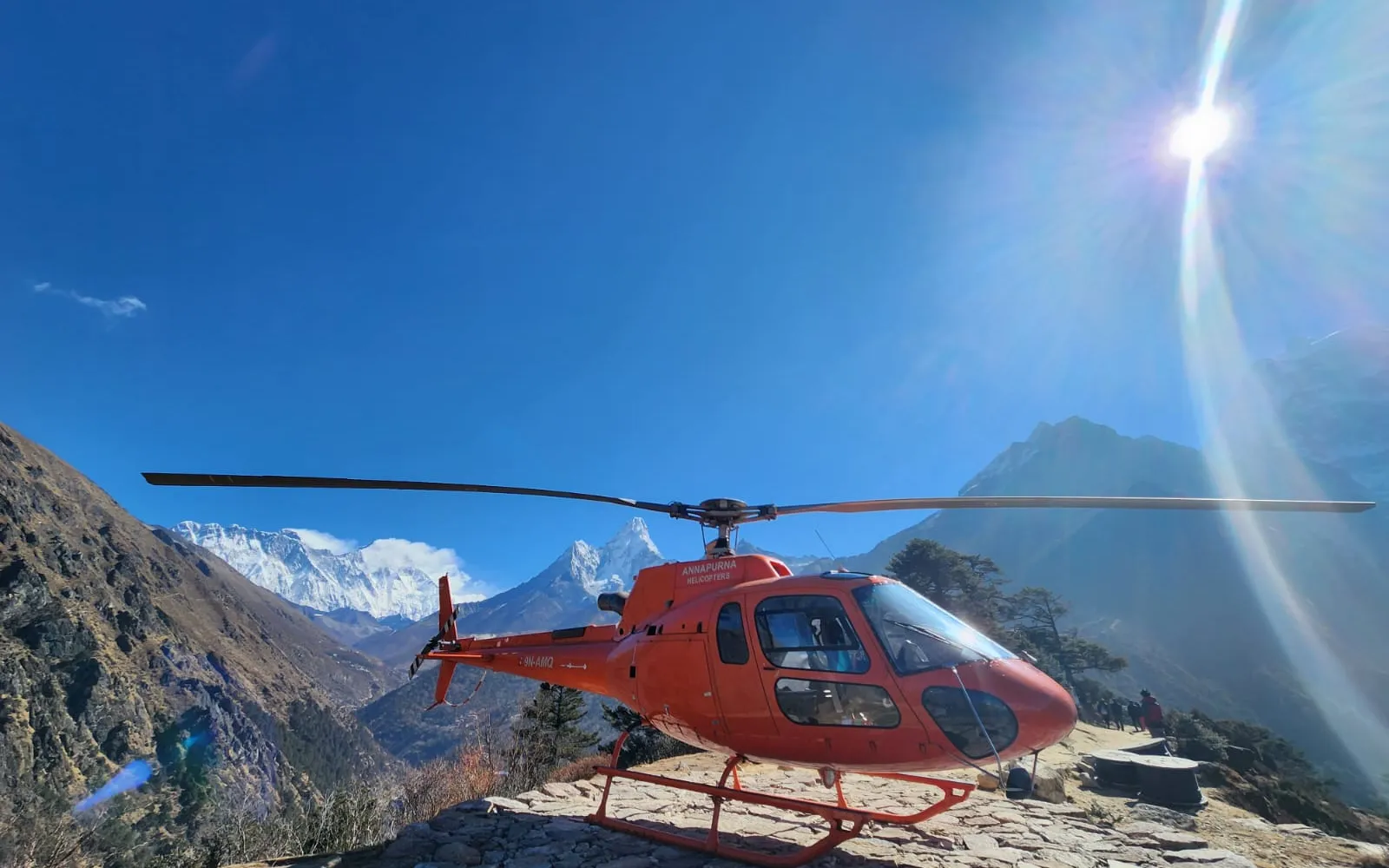
A helicopter tour is a quick and comfortable way to see Nepal's Himalayan landscapes without doing a multi-day trek. Depending on the route, flights usually last one to five hours and visit some of the country's best-known mountain areas, including Everest Base Camp, Annapurna Base Camp, Langtang Valley, and Mardi Himal.
Most tours include scenic flying and one or more landings, so passengers can get out, look around, and take photos before heading back. Everest helicopter tours often stop at Hotel Everest View, while Annapurna flights usually land at Annapurna Base Camp for a short visit.
Travelers can choose between private charter and shared helicopter tours based on their budget and travel plans. A private charter reserves the entire helicopter for your group, giving you greater flexibility with departure times and the option to customize the itinerary where operationally possible.
Shared helicopter tours divide the cost among several passengers traveling to the same destination, making them a more affordable alternative while following the same flight route and safety standards. Both options are operated by licensed helicopter companies, and the choice usually comes down to whether you value privacy and flexibility or lower travel costs.
Nepal's geography makes it possible for helicopter tours to reach places that can take days or even weeks to visit on foot. Some flights focus on mountain views, while others land at remote villages, pilgrimage sites, or high viewpoints. Whether you want to see the world's highest peaks or a peaceful alpine lake, there is a helicopter route for you.
The Everest Base Camp Helicopter Tour is one of Nepal's most popular mountain flights. It flies through the Khumbu Valley, passing Sherpa villages, glaciers, and high peaks before reaching the Everest region. Most tours also stop at Hotel Everest View, where passengers can enjoy close-up views of Mount Everest without doing the two-week trek.
Kala Patthar sits at an elevation of 5,545 meters (18,192 feet) and offers one of the clearest viewpoints of Mount Everest. Helicopters may land here briefly when weather, altitude, and aircraft weight permit, giving passengers enough time to enjoy the scenery and capture photographs before returning to lower elevations
Annapurna Base Camp is surrounded by a natural amphitheater of snow-covered peaks, including Annapurna I, Machapuchare, Hiunchuli, and Annapurna South. A helicopter flight reaches the base camp in about 30 to 40 minutes from Pokhara, making it an excellent choice for travelers who want spectacular mountain views without a multi-day trek.
Gosaikunda is a sacred alpine lake located within Langtang National Park at an elevation of about 4,380 meters. A helicopter tour provides a convenient way to visit this important Hindu and Buddhist pilgrimage site while enjoying aerial views of forests, rugged ridges, and nearby Himalayan peaks.
Muktinath Helicopter Tour is one of the beautiful tours in Nepal to reach a sacred place of Muktinath. It is one of Nepal's most significant pilgrimage destinations for both Hindus and Buddhists. Helicopter tours allow visitors to reach the temple quickly, avoiding the long road journey through Mustang while still offering impressive views of the Annapurna and Dhaulagiri mountain ranges.
A helicopter tour to Langtang showcases glacier-carved valleys, alpine meadows, and traditional Tamang settlements within Langtang National Park. The route is shorter than Everest flights, making it a popular option for travelers with limited time who still want to experience Nepal's Himalayan scenery.
Upper Mustang is a restricted region where private helicopter charters offer access to one of Nepal's most distinctive landscapes. The flight crosses deep canyons and barren cliffs before reaching the former Kingdom of Lo, where ancient monasteries, centuries-old cave dwellings, and the walled city of Lo Manthang reflect the region's rich Tibetan Buddhist heritage.
Trekking is the traditional way to explore Nepal's remote and iconic landscapes. You'll spend several days walking through forests, villages, river valleys, and mountain landscapes. The trek happens at a steady pace, giving you time to adjust to the altitude while enjoying the culture, scenery, and daily life of the Himalayan region.
Trekking in Nepal means walking for several days on mountain trails that link remote villages and popular viewpoints. Most treks use a tea house system, where hikers stay in local lodges with simple rooms and freshly prepared meals each night.
Depending on the area, you may trek with a licensed guide, hire a porter, or travel independently where rules allow. Some regions, such as Everest and Annapurna, allow independent trekking under current rules, while restricted areas like Manaslu require a licensed guide and special permits.
Nepal has trekking routes for all experience levels and travel plans. The Everest Base Camp Trek is known for Sherpa culture and close views of the world's highest mountain, while the Annapurna Circuit combines mountain passes, village life, and varied scenery in one trip.
The Annapurna Base Camp Trek leads hikers into the Annapurna Sanctuary, and the Langtang Valley Trek offers glacier views near Kathmandu. Mardi Himal is a favorite for those looking for quieter trails and wide mountain views, while the Manaslu Circuit offers a more remote trek around the world's eighth-highest mountain.
In Nepal, there are different trekking routes with different lengths, so you can pick and choose according to your available time.
Short treks of 3 to 5 days, such as Poon Hill or short Mardi Himal itineraries, suit travelers with limited schedules. Moderate treks of 6 to 10 days, including Langtang Valley and Annapurna Base Camp, balance adventure and time commitment. Long expeditions of 12 to 20 days or more, such as the Everest Base Camp Trek, Annapurna Circuit, and Manaslu Circuit, require more planning, acclimatization days, and physical endurance.
How much time you have in Nepal often decides whether a helicopter tour or a trek is the better choice. Both take you to some of the country's most famous mountain regions, but they follow very different schedules. A helicopter tour can be done in a single day, while trekking usually takes several days or even weeks.
A helicopter tour is a good choice for travelers who want to see the Himalayas without spending many days on the journey. Most popular flights, including Everest Base Camp and Annapurna Base Camp, start in the morning and return the same day. Even with hotel transfers, safety briefings, and landing stops, the whole trip usually takes only a few hours.
This makes helicopter tours a practical option for business travelers, families with limited vacation time, older visitors, and anyone combining Nepal with a longer trip across Asia. Instead of walking for days to reach a destination, you can enjoy mountain views and return to Kathmandu or Pokhara before evening.
Trekking takes much more time because getting to the mountains is only part of the journey. Popular routes like Everest Base Camp usually take 12 to 14 days, while Annapurna Base Camp and Langtang treks often take 7 to 12 days, depending on the plan.
The plan also needs acclimatization days, rest stops, domestic flights or road transfers, and enough flexibility for changing mountain weather. The itinerary should not be rushed, especially on high-altitude routes where a gradual ascent helps reduce the risk of altitude sickness.
If you only have a few days in Nepal, a helicopter tour is the easiest way to see the Himalayas without using much of your trip. If you have two weeks or more and want to experience mountain villages, local culture, and reaching your destination on foot, trekking gives you a deeper connection with the landscape. Neither option is best for everyone. The right choice depends on how many days you have for your trip.
Physical ability is a major difference between a helicopter tour and a trek in Nepal. A helicopter can take you to high mountain destinations with very little effort, while trekking requires steady walking over several days at higher elevations. Knowing what each option involves will help you choose the one that best fits your fitness level and travel plans.
A helicopter tour requires very little physical effort, making it suitable for many travelers. Most passengers only need to walk short distances between the helicopter and the viewpoints or landing areas. Families with young children, senior travelers, and visitors with limited mobility often choose this option because it offers access to the Himalayas without long hikes or steep trails. While passengers may briefly experience high altitude during some landings, the time spent there is usually limited before returning to lower elevations.
Trekking is much more demanding because it means walking for several hours each day on rough mountain trails. Depending on the route, you may climb thousands of meters, cross suspension bridges, and handle long uphill and downhill walks over many days. Good fitness, strong legs, and stamina make the trip easier, though hiring a porter can reduce the load by carrying your main backpack. Even so, you still need enough energy to complete the daily walking schedule.
A helicopter tour is the better choice if you want to see Nepal's mountains without much physical effort. It suits travelers with limited mobility, older adults, families, or anyone on a tight schedule. Trekking is better for people who enjoy hiking, can handle several days of activity, and want to experience the Himalayas at a slower pace. If you value the journey as much as the destination, trekking offers a deeper experience than a helicopter tour.
Both helicopter tours and trekking reveal the beauty of Nepal's Himalayas can be seen in two very different ways. A helicopter tour gives you a broad view from above, while trekking lets you experience the mountains slowly from the ground. The best choice depends on whether you want to see many landscapes quickly or spend several days enjoying them.
A helicopter tour gives you views that are not possible on foot. As it flies over ridges and valleys, you can see wide mountain ranges across the horizon, including peaks that trekking trails may not reach. Flights to the Everest region offer clear views of Mount Everest, Lhotse, Nuptse, and Ama Dablam, while routes over Annapurna and Langtang show glaciers, rivers, and remote valleys from above. Early morning flights often have the clearest skies, and the sunlight on the snow-covered peaks can create a memorable scene.
Trekking gives a slower and more personal way to experience the Himalayas. As you walk, the scenery changes from forests and rivers to alpine meadows, rocky trails, and high viewpoints. Places like Poon Hill, Kala Patthar, and Gokyo Ri are especially rewarding at sunrise, when the peaks change color. Along the way, you may see Himalayan wildlife, pass through traditional villages, and spend nights under clear mountain skies filled with stars. Each season also brings a different feel, from blooming rhododendrons in spring to clear autumn views and snowy winter trails.
If you want to see many mountains in a single day, a helicopter tour offers wide views from the air. If you prefer watching the landscape change step by step and reaching viewpoints on foot, trekking gives you a closer connection to the mountains. Each offers a different way to experience the Himalayas.
Both helicopter tours and trekking are generally safe if planned well, but each has different risks. Helicopter flights depend on weather and aviation rules, while trekking requires good fitness and careful altitude management. Knowing these differences makes it easier to choose the option that best fits your comfort level and travel style.
| Safety Factor | Helicopter Tour | Trekking |
| Weather | Flights operate only when visibility, wind, and cloud conditions meet aviation safety requirements. Bad weather may delay or cancel departures. | Weather can change quickly on the trail, bringing rain, snow, or strong winds that affect walking conditions. |
| Primary Risk | Weather-related flight delays are more common than in-flight incidents because operators follow strict flying limits. | Altitude sickness is the biggest concern, especially on routes above 2,500 meters. |
| Safety Professionals | Flights are conducted by licensed mountain pilots trained to operate in Nepal's challenging terrain. | Experienced guides monitor pace, weather, and altitude while assisting trekkers throughout the journey. |
| Regulations | Commercial helicopter operators must comply with Civil Aviation Authority of Nepal (CAAN) regulations covering pilots, aircraft, and operations. | Trekking routes require permits, and some restricted regions also require licensed guides under government regulations. |
| Equipment and Maintenance | Helicopters undergo scheduled maintenance, routine inspections, and pre-flight safety checks before every departure. | Trekking safety depends on proper equipment, suitable clothing, and reliable navigation on the trail. |
| Passenger Preparation | Every flight begins with a safety briefing covering seatbelts, boarding procedures, and emergency instructions. | Trekkers receive route briefings, altitude guidance, and daily safety advice from their guide. |
| Emergency Response | Pilots maintain communication with air traffic services, and helicopters can return or divert if conditions change. | Helicopter evacuation is available for serious illness or injury, provided weather conditions allow flying. |
Neither option is clearly safer because each has different risks. A helicopter tour is better for travelers who want to avoid long hikes and high-altitude walking. Trekking can be safe for those who plan well, acclimatize properly, and travel with experienced guides. In both cases, choosing a reputable operator and following professional advice matters most.
Helicopter tours and trekking each offer a unique way to experience Nepal's Himalayas, and the right choice depends on your time, budget, fitness level, and travel goals. Whether you prefer the convenience of a scenic flight or the satisfaction of reaching the mountains on foot, both journeys showcase the landscapes and culture that make Nepal one of the world's greatest adventure destinations.
Ready to experience the Himalayas from above? Plan your helicopter tour in Nepal today and let our team help you choose the perfect flight for your schedule and travel style.
A helicopter tour is ideal if you have limited time and want to see the Himalayas without a long hike. Trekking is a better choice if you want to experience mountain villages, local culture, and life on the trail.
Yes. Shared flights divide the cost among several passengers traveling on the same route, making them more affordable than booking an entire helicopter.
Yes, a helicopter tour requires very little walking, making it suitable for many senior travelers who want to enjoy the mountains without a strenuous trek.
Families with young children often find helicopter tours more convenient because they can be completed in a single day. Older children who enjoy hiking may also find shorter treks rewarding.
A helicopter tour makes better use of a short itinerary because you can visit famous mountain destinations and return on the same day. Trekking usually requires at least a week, even on shorter routes.
Yes, an Everest Base Camp helicopter tour takes you into the Everest region in just a few hours and includes spectacular mountain views without the physical demands of the trek.
Private helicopter charters can often be tailored to your group's schedule and destination, subject to weather and operational approvals. Shared tours generally follow a fixed itinerary.
A helicopter tour offers greater comfort, faster travel, and access to remote destinations in a single day. Many luxury itineraries also combine helicopter flights with premium lodges and private services.
A guide can improve your experience by handling logistics, explaining local culture, and helping you manage altitude and trail conditions. Some trekking regions also require licensed guides under current regulations.
Booking a few weeks ahead is recommended during the spring and autumn trekking seasons when demand is highest. Early reservations also give you more flexibility in choosing dates and services.
A helicopter tour reaches mountain destinations by air within a few hours, while trekking takes several days of walking through Himalayan trails. Both visit remarkable places, but the experience is completely different.
Everest Base Camp, Annapurna Base Camp, Langtang, and Mardi Himal are among the destinations that can be explored by either method. The choice depends on your available time and preferred style of travel.
Most helicopter tours are completed within a single day, with actual flight times varying by destination. The itinerary may also include short landing stops for sightseeing and photography.
Short treks can take three to five days, while longer routes such as Everest Base Camp often require 12 to 14 days or more. The itinerary includes time for acclimatization and rest.
No, the passengers usually walk only short distances during landing stops before returning to the helicopter.
Yes, most trekking routes involve walking for several hours each day over uneven mountain trails and at increasing elevations.
A helicopter tour is excellent for capturing wide aerial views of peaks, glaciers, and valleys. Trekking creates opportunities for landscape, wildlife, village, and sunrise photography throughout the journey.
Yes, the flights operate only when weather conditions meet aviation safety requirements, so delays or cancellations are sometimes necessary.
Altitude sickness is the most common concern on high-elevation routes. Following a gradual itinerary and taking acclimatization days helps reduce the risk.
Yes. Many travelers trek one way and return by helicopter, allowing them to enjoy the trail while saving time on the return journey. This combination is especially popular in the Everest region.