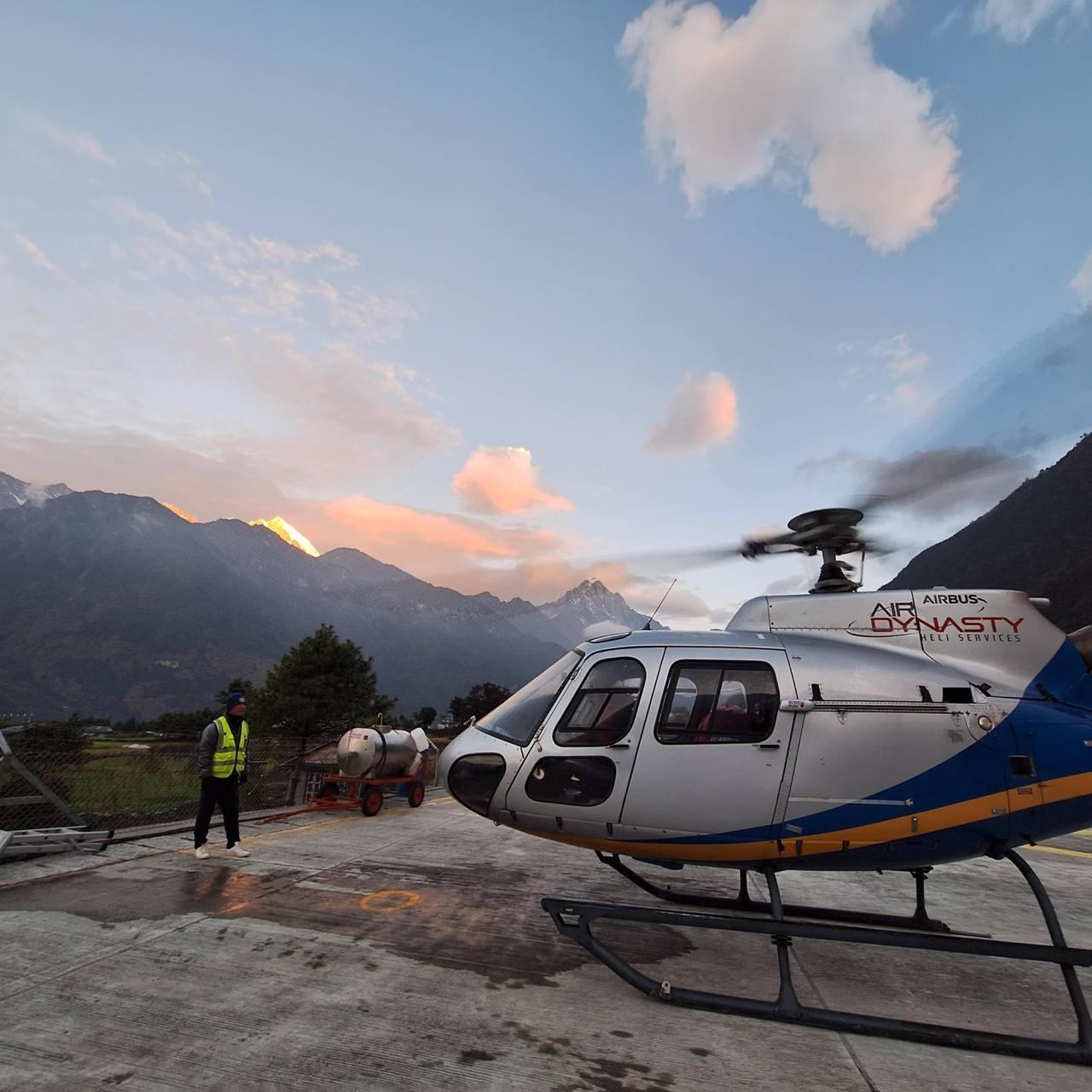
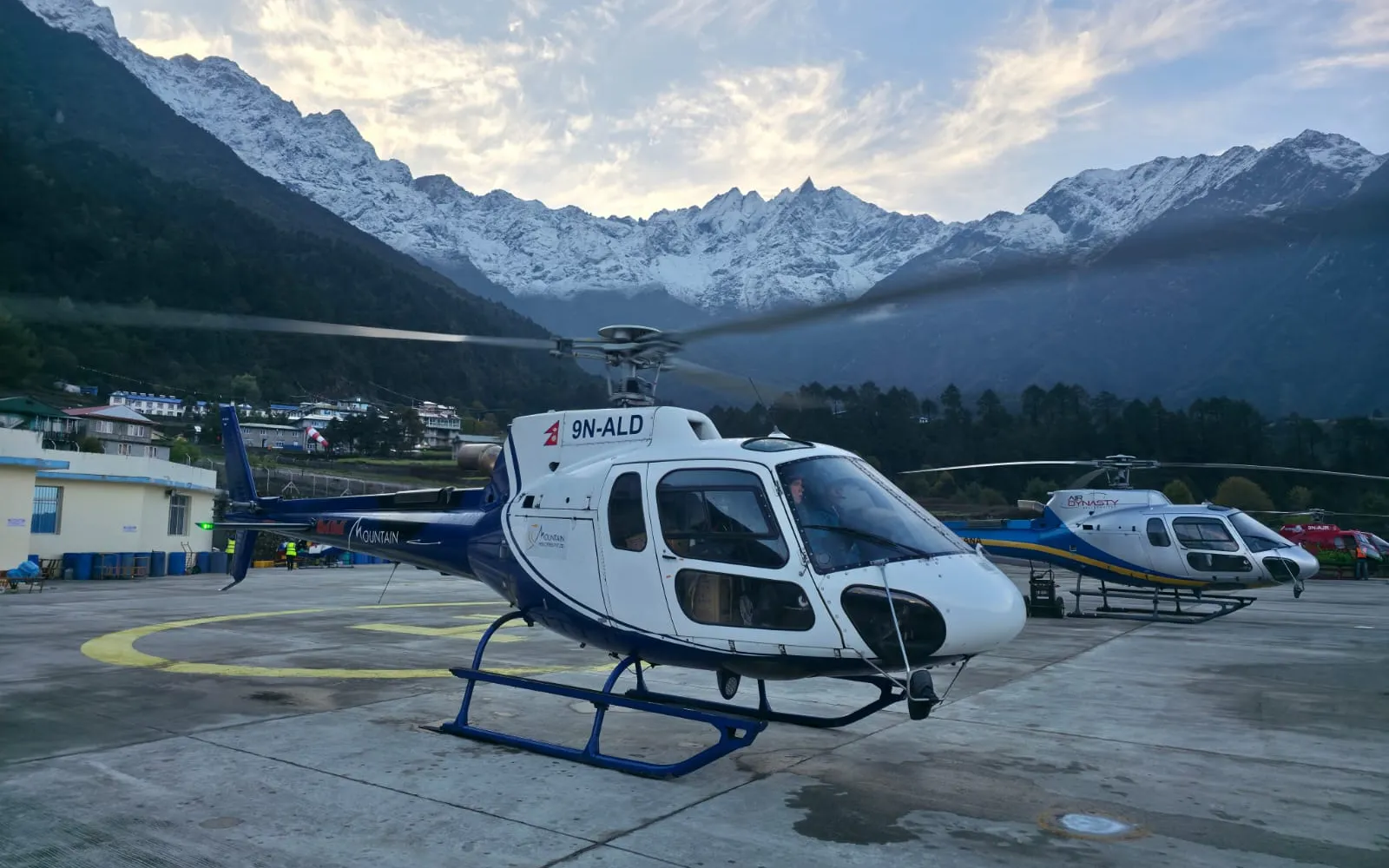
A Kathmandu to Lukla helicopter tour price ranges from $540 per person. The flight time typically ranges from 45 to 60 minutes. However, you have to be involved in some airport formalities, which might take longer time mainly because of check-in, baggage, procedures, weather, air traffic, and operational requirements.
| Detail | 2026 information |
| Current price | US$540 per person |
| Pricing basis | Shared, per person |
| Flight time | Approximately 45 to 60 minutes |
| Route | Kathmandu to Lukla |
| Arrival | Tenzing-Hillary Airport, Lukla |
| Duration shown on package | 4 hours |
| Difficulty | Easy |
| Best suited for | Trekkers traveling to the Everest region |
The price is a starting point for the listed shared service. Before paying, your final booking should confirm the travel date, passenger details, baggage, departure point, and any cancellation or rescheduling conditions.
The current price is US$540 per person for the Kathmandu to Lukla Helicopter Flight. This is a shared service, not a private charter. The regular price is US$650, so the offer saves US$110. Since helicopter rates can change based on travel dates, availability, and operating arrangements, it is best to check the live rate when booking. US$540 is a per-person price, not the cost to charter the entire helicopter.
The published package is for transportation from Kathmandu to Lukla by helicopter. The flight takes passengers directly to Tenzing-Hillary Airport in Lukla, where they can collect their baggage and continue toward destinations such as Phakding, Namche Bazaar , and Everest Base Camp. Before paying, confirm the exact quotation and ask about:
The helicopter flight from Kathmandu to Lukla usually takes 45 minutes to 1 hour in normal conditions. Aero Connect uses this as the expected flight time, and the package is listed as lasting four hours to allow for airport procedures and operational requirements.
| Approx. time | Activity |
|---|---|
| 5:00 AM | Wake up and have a light breakfast |
| 5:30 AM | Final packing and document check |
| 6:00 AM | Leave hotel for the departure point |
| 6:15 to 6:30 AM | Check-in and passenger verification |
| 6:30 to 7:00 AM | Security and departure procedures |
| Around 7:00 AM | Proceed to boarding area |
| 7:00 to 7:15 AM | Boarding and safety briefing |
| From around 7:15 AM | Depart when conditions are suitable |
| 45 to 60 minutes later | Arrive at Lukla |
These times are an example rather than a guaranteed schedule. The actual departure can change according to the operator's flight plan, airport procedures, weather, air traffic, and other operational conditions.
The route begins in Kathmandu and heads northeast toward the Solukhumbu and Khumbu region before landing at Tenzing-Hillary Airport in Lukla. As the helicopter leaves the Kathmandu Valley, the landscape changes from developed areas and lower hills to deeper valleys, forested slopes, and Himalayan terrain.
The main route is:
Kathmandu → Solukhumbu → Lukla
Lukla is the practical starting point for many Everest-region treks. After landing, trekkers can continue toward Phakding and Namche Bazaar before heading deeper into the Khumbu. The flight also provides aerial views during the journey. Depending on visibility, passengers may see hills, river valleys, mountain ridges, and Himalayan peaks.
However, the primary purpose of this service is transportation, not a dedicated Everest sightseeing tour. If your main goal is mountain sightseeing rather than reaching Lukla, Aero Connect Nepal also offers dedicated Everest helicopter products, including its Everest Base Camp Overfly Tour.
A shared helicopter is usually the simpler option if you only need one or a few seats from Kathmandu to Lukla. Since the current Aero Connect Nepal rate is quoted per person, you pay for your seat instead of the full helicopter.
Solo travelers: You only pay for one seat, so there is no need to cover the cost of an entire aircraft.
Couples: Two travelers can book individual seats without arranging a private charter. Small trekking groups: If your group is small and does not need exclusive use of the helicopter, shared seating can keep the transport cost more predictable.
Travelers without strict schedule requirements: Shared flights follow available arrangements, so they suit travelers who can adjust to the confirmed departure instead of needing a specific time. Point-to-point trekkers: If your main requirement is simply getting from Kathmandu to Lukla to begin an Everest-region trek, a shared seat provides a direct transportation option without paying for a private aircraft. The main trade-off is flexibility. You are booking a seat on a shared trip, so the departure is not set up entirely around your itinerary. Check the departure time, passenger limit, baggage allowance, and weather policy before payment.
A private helicopter charter has a different pricing model. Instead of paying for individual seats, your group pays for the aircraft and divides the cost among passengers. As more people fill the seats, the cost per person can go down.
Groups traveling together: A larger trekking group can divide the charter cost among its members instead of purchasing separate shared seats. Families: Families who want to travel together can use the same aircraft rather than arranging individual seats. Trekking agencies: Agencies arranging transportation for several clients can request a charter quotation based on group size and itinerary.
Groups with additional equipment: A private aircraft can make group baggage coordination easier, although total passenger and baggage weight remains subject to aircraft limits and operational requirements.
Travelers with a specific itinerary: A private charter can provide greater control over the departure arrangement, subject to weather, aircraft availability, air traffic, and aviation regulations. The key point is that private does not always mean cheaper. For one or two passengers, a shared seat may cost less overall. For a larger group, dividing a private charter among several passengers can lower the cost per person.
Before comparing the two, ask for the total private charter price, confirmed passenger capacity, baggage allowance, and operating conditions. Then divide the charter price by the number of travelers to calculate the actual cost per person.
The price of a Kathmandu to Lukla helicopter flight can vary because the final quotation depends on more than the distance between the two airports. Aircraft availability, passenger numbers, travel season, operating conditions, and the type of booking can all affect the amount you pay. The current Aero Connect Nepal shared rate is quoted per person, while private charter pricing is calculated differently.
Yes. Different helicopter models have different passenger capacities, operating costs, payload limitations, and operational requirements. Aircraft availability on your requested date can therefore affect the quotation. For a high-altitude route such as Kathmandu to Lukla, the operator also has to consider the combined weight of passengers and baggage when determining whether a particular aircraft can operate the flight. For this reason, provide accurate passenger and baggage details when requesting a quote rather than assuming every helicopter has the same capacity or price.
Group size can make a significant difference depending on whether you book shared seats or a private charter. With a shared helicopter, the price is normally calculated per passenger, so a solo traveler pays for one seat and a couple pays for two. A private charter is quoted per flight, meaning the total aircraft cost can be divided among the passengers in your group. As the number of passengers increases, the effective cost per person can decrease, although the final calculation depends on the aircraft's approved passenger capacity and operating requirements.
Demand and availability can vary throughout the year. Spring and autumn are major trekking seasons in the Everest region, so travelers may encounter higher demand for helicopter seats and limited availability on popular dates. Monsoon can bring more cloud, rain, and visibility-related disruption, while winter can bring cold temperatures and changing mountain weather. These conditions can affect flight availability, but a seasonal surcharge should not be assumed unless it is included in the current quotation. Always confirm the rate for your specific travel date.
Weather can cause delays, rescheduling, or changes to the planned operation. If a flight cannot operate as scheduled, travelers may need to adjust accommodation, ground transportation, or trekking arrangements, depending on how long the disruption lasts. Any additional costs depend on the circumstances and the terms of your booking, so check the Weather-Cancellation & Refund Policy before payment. The helicopter fare itself and any secondary expenses caused by a delay should be treated as separate costs unless your booking terms specifically state otherwise.
Yes, the booking structure is different. A Kathmandu to Lukla booking covers the outbound journey, while a Lukla to Kathmandu booking covers the return journey. If you need both directions, ask whether the return flight is being quoted separately or as part of a round-trip arrangement. Do not assume that booking both directions automatically provides a discount. The applicable price should be confirmed for your travel dates and passenger numbers.
Yes, Helicopter departure arrangements may change according to current aviation and airport operating requirements, so travelers should confirm the actual departure airport when receiving their quotation. If a ground transfer to another airport is required, check the transfer time, transportation cost, and whether that transfer is included in the helicopter price. Airport arrangements have changed in the past, so it is better to confirm the current departure point at the time of booking rather than relying on an older itinerary or assuming that every Kathmandu to Lukla helicopter departs from the same location.
A Kathmandu to Lukla helicopter flight usually takes about 45 to 60 minutes. Aero Connect Nepal lists it at roughly 45 minutes to 1 hour. The trip takes longer overall because passengers also need time for check-in, baggage, boarding, and possible delays.
Helicopter pricing is not based simply on flight duration multiplied by an hourly rate. The quoted cost also includes aircraft positioning, crew, fuel, airport and operational requirements, and the extra challenges of flying in mountainous and high-altitude areas. An aircraft may also need to be positioned for the flight or managed around other operational commitments. Because of this, a 45- to 60-minute Kathmandu to Lukla flight can cost much more than a conventional short-haul airline ticket, even though the flying time is relatively short.
The Kathmandu to Lukla helicopter rate can change based on demand, availability, and operating conditions, but do not assume a seasonal price increase unless the current quotation confirms it. Spring and autumn are the main trekking seasons, while monsoon and winter usually bring different weather and availability conditions. For your exact travel date, confirm the current per-person rate before booking.
| Season | Typical demand | Pricing consideration | Booking consideration |
|---|---|---|---|
| Spring (March to May) | High during the main trekking period | Confirm current rate | Book ahead for popular trekking dates |
| Monsoon (June to August) | Lower | Confirm current rate | Allow flexibility for rain, cloud, and weather-related delays |
| Autumn (September to November) | High during the main trekking period | Confirm current rate | Early booking is advisable during peak trekking dates |
| Winter (December to February) | Generally lower | Confirm current rate | Check weather and flight availability before departure |
October falls within Nepal's main autumn trekking season, when demand for transportation to the Everest region is typically high. The current helicopter rate should therefore be confirmed for your specific October travel date, along with seat availability and the applicable cancellation or rescheduling conditions.
Weather does not necessarily change the quoted helicopter fare, but a delay or rescheduling can create additional travel expenses. For example, an extended disruption could require extra accommodation, meals, or ground transportation. These costs depend on the circumstances and your booking terms, so review the Weather-Cancellation & Refund Policy before paying for your flight.
The current rate is US$540 per person for a shared helicopter flight; a separate private charter rate is not currently published and must be confirmed by quotation.
The current US$540 rate is per person for a shared helicopter seat. A private charter is priced per helicopter, with the total cost divided among the passengers in the group.
A private charter rate is not currently published as a fixed price by Aero Connect Nepal, so you need to request a current quote. The final charter price and passenger capacity depend on the aircraft available and the group's passenger and baggage requirements.
Yes, generally. A helicopter seat usually costs more than a fixed-wing Lukla flight, although exact airline fares vary by travel date, availability, and airline.
If weather prevents safe operation, the flight may be delayed or rescheduled. Any refund, cancellation, or rebooking arrangement depends on the applicable booking terms, so review the weather and cancellation policy before payment and keep flexibility in your trekking schedule.
The rate can vary according to demand and availability, but a fixed seasonal surcharge should not be assumed. Spring and autumn are the main trekking seasons, so travelers should confirm the current rate and availability for their specific travel date.