Essential packing and altitude tips for a Muktinath Helicopter Tour can make your trip safer, more comfortable, and more enjoyable, even though it only lasts a few hours. Muktinath is 3,710 meters (12,172 feet) above sea level, so it is cooler and has less oxygen than Pokhara or Kathmandu.
Weather in the Himalayas can change quickly, with sunny mornings turning into strong winds or cloud cover later in the day. Even though a helicopter tour avoids the long trek to the temple, visitors still spend time at high altitude, so proper clothing, hydration, and basic preparation are important.
Unlike trekking, a Muktinath helicopter tour involves only a short walk from the helipad to the temple, making it a good option for families, senior travelers, and those with limited time. Even so, the quick rise in altitude means you should be ready for cooler temperatures and mild altitude discomfort, such as light breathlessness or a slight headache.
If you want to learn which is better, helicopter tour vs trekking, click the link.
Packing light but smart helps you stay comfortable without carrying extra items. In this guide, you'll learn what to pack for each season, how to prepare for Muktinath's high altitude, common symptoms to watch for, and practical tips for a safe, smooth, and memorable helicopter pilgrimage.
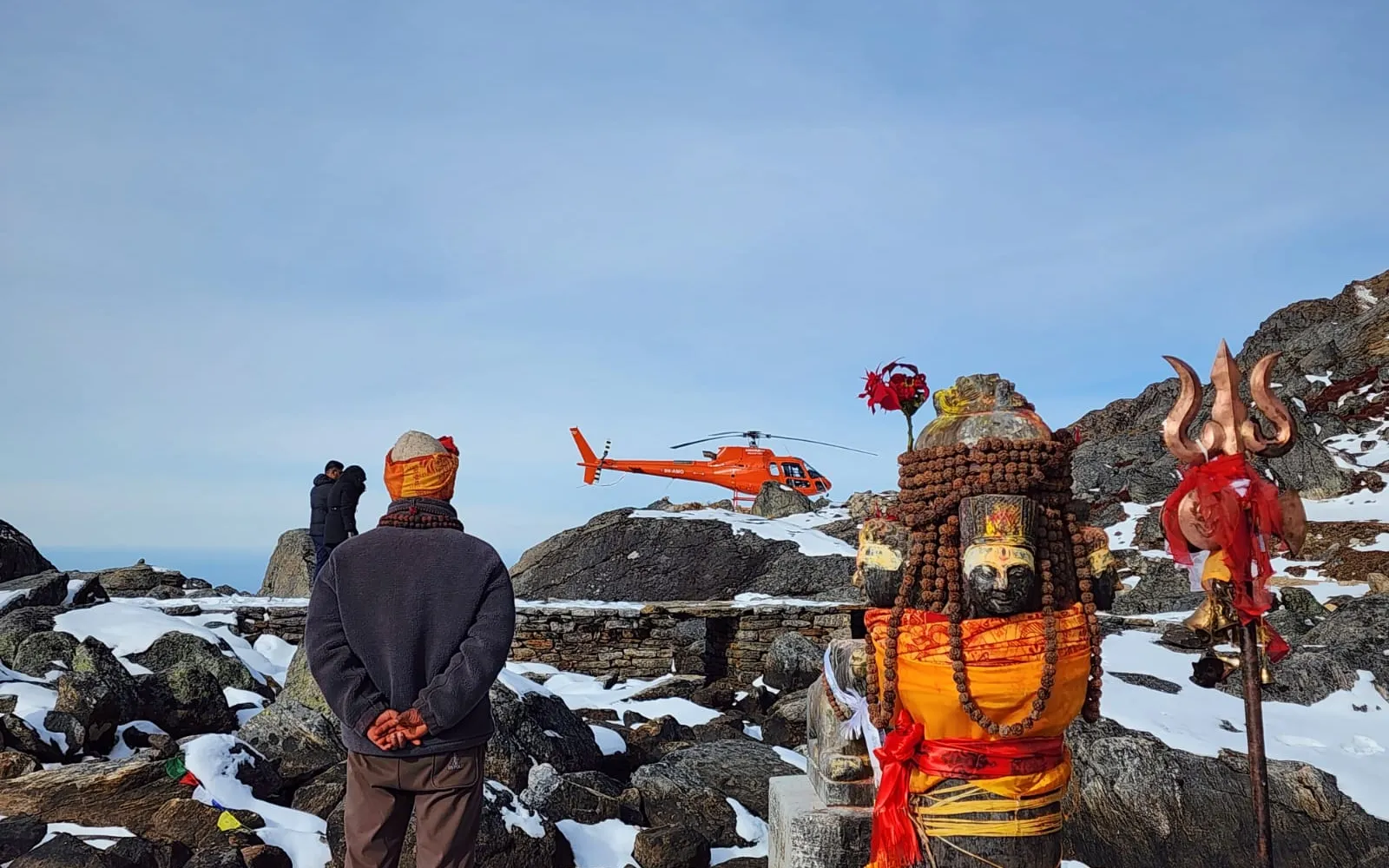
Muktinath Temple is located at an elevation of 3,710 meters (12,172 feet) in Nepal's Mustang district. Although helicopters fly at much higher altitudes during the journey, passengers land at the temple's elevation and usually spend around 30–60 minutes there before returning, reducing the amount of time spent at high altitude.
Altitude affects people differently, regardless of age or fitness level. Some visitors may notice mild symptoms like shortness of breath or a slight headache, while others feel fine. Since helicopter tours only involve a brief stay at Muktinath, most healthy travelers complete the visit without major altitude problems.
The air at Muktinath has less oxygen than at lower elevations, so physical activity may feel more tiring than usual. Drinking plenty of water, walking slowly, and avoiding extra exertion can help your body adjust during your short visit.
Packing the right clothing helps you stay comfortable as temperatures at Muktinath can feel much cooler than in Pokhara or Kathmandu. Dressing in layers is the best approach, allowing you to adjust easily to changing mountain weather.
| Clothing Item | Why You Need It |
| Base Layer | Wicks away sweat and keeps your body dry and comfortable throughout the trip. |
| Fleece Jacket | Provides warmth during the cool morning flight and while visiting the temple. |
| Down Jacket | Recommended during autumn, winter, and early spring when temperatures can drop below freezing. |
| Windproof Jacket | Protects against the cold winds that are common around Muktinath throughout the year. |
| Comfortable Trekking Pants | Offer flexibility, warmth, and comfort while walking between the helipad and the temple. |
| Warm Hat/Beanie | Helps retain body heat and protects your head from chilly mountain winds. |
| Gloves | Keep your hands warm, especially during early morning flights and winter visits. |
| Sunglasses | Shield your eyes from strong UV rays and glare reflected by snow and bright mountain terrain. |
| Warm Socks | Keep your feet warm and comfortable in cooler temperatures at high altitude. |
| Comfortable Walking Shoes | Provide good grip and support for the short walk on uneven stone paths around Muktinath Temple. |
A Muktinath Helicopter Tour does not require heavy luggage, but bringing a few essentials can make your trip more comfortable. Since you will be traveling to a high-altitude destination with cool temperatures and strong sunlight, packing light and carrying the right personal items will help you stay prepared throughout the journey.
Although you'll only spend a short time at Muktinath, the high altitude can still affect how you feel. A few simple precautions will help you stay comfortable and make the most of your helicopter tour.
Drink plenty of water before and during your trip so your body can adjust to the thinner air. Staying hydrated may also help lower the chance of mild altitude discomfort, such as headaches or fatigue.
Have a light, balanced meal before your helicopter flight instead of a heavy breakfast. Eating too much may make you uncomfortable during the flight or at high altitude.
Walk slowly between the helipad and Muktinath Temple. A relaxed pace helps conserve energy and reduce shortness of breath.
Avoid drinking alcohol the day before and on the day of your tour. Alcohol can contribute to dehydration and may make altitude symptoms feel worse.
Your pilot and guide are experienced in high-altitude travel and will provide important safety instructions. Follow their guidance on walking routes, timing, and weather conditions throughout the visit.
Most helicopter tours are planned with a short stay at Muktinath to reduce prolonged exposure to high altitude. Returning to a lower elevation soon after your visit helps minimize the risk of altitude-related discomfort.
Although most visitors finish a Muktinath helicopter tour without problems, it helps to know the early signs of altitude discomfort. If symptoms become severe or get worse, tell your guide or pilot right away and follow their instructions.
Although most visitors complete a Muktinath helicopter tour without any problems, it's helpful to recognize the early signs of altitude-related discomfort. If symptoms become severe or worsen, inform your guide or pilot immediately and follow their instructions.
| Symptom | What You Should Do |
| Mild Headache | Drink water, rest for a few minutes, and avoid rushing around the temple. |
| Shortness of Breath | Slow your walking pace, breathe steadily, and avoid unnecessary physical effort. |
| Light Dizziness | Sit down, rest, and stay hydrated until you feel better before continuing your visit. |
| Fatigue | Take short breaks and avoid overexertion while exploring the temple area. |
| Nausea | Sip water slowly, avoid heavy meals, and let your guide know if the feeling continues. |
| Loss of Appetite | Eat a light meal before the flight and continue drinking water even if you don't feel hungry. |
Muktinath has stunning views of the Himalayas, ancient temples, and the rugged Mustang landscape, making it a great place, especially for a helicopter wedding photography in Nepal. Bringing a few essential camera accessories will help you take good photos and protect your equipment from dust, wind, and changing mountain weather.
A modern smartphone can take excellent photos during the tour, especially in bright daylight. For higher image quality, better zoom, and more creative control, a DSLR or mirrorless camera is the better choice.
Cold weather at high altitude can drain camera batteries faster than expected. Bring at least one fully charged spare battery so you do not miss important photo opportunities.
A wide-angle lens is ideal for photographing Muktinath Temple, surrounding mountains, and sweeping Himalayan landscapes. It also makes it easier to capture group photos and dramatic scenery in a single frame.
Dust and wind are common in the Mustang region and can quickly leave marks on your camera lens. A microfiber lens cleaning cloth helps keep your photos sharp by removing dust, fingerprints, and moisture.
A waterproof camera bag helps protect your equipment from rain, dust, and bumps during the trip. It also makes carrying your camera more comfortable on the helicopter tour and temple visit.
A Muktinath Helicopter Tour is a short journey, so there's no need to pack like you're going on a multi-day trek. Bringing only the essentials makes your trip more comfortable, keeps within helicopter weight limits, and leaves you free to enjoy the experience without carrying unnecessary items.
You won't need trekking poles, crampons, gaiters, or other heavy trekking gear because the tour involves only a short walk between the helipad and Muktinath Temple. Comfortable walking shoes are usually all that's required.
Sleeping Bag
A sleeping bag isn't necessary since a standard helicopter tour is completed in a single day. Unless you're extending your trip with an overnight stay elsewhere, this item only adds unnecessary weight.
There is no need to carry cooking equipment, portable stoves, or utensils on a helicopter tour. Food and refreshments are available before or after your flight, depending on your itinerary.
Large hiking backpacks take up valuable space and add extra weight to the helicopter. A small daypack is sufficient for carrying your water bottle, camera, documents, and other personal essentials.
Avoid packing multiple heavy jackets or several changes of clothes for a day trip. Wearing layered clothing and carrying one extra warm layer is usually enough to stay comfortable in Muktinath's changing mountain weather.
A Muktinath Helicopter Tour lets you visit this sacred Himalayan destination without a long trek, but you should still wear proper clothing, stay hydrated, and be aware of the altitude. Packing light, preparing for changing mountain weather, and following your pilot or guide's advice can help you stay safe and enjoy your time at Muktinath.
Plan your Muktinath Helicopter Tour today and prepare for an unforgettable journey to one of Nepal's most remarkable high-altitude destinations.
Pack warm layered clothing, comfortable walking shoes, sunglasses, sunscreen, water, and any personal medication you need. A small daypack is usually enough because the tour does not require heavy trekking equipment.
Muktinath sits at 3,710 meters (12,172 feet), so some visitors may experience mild altitude-related symptoms. Staying hydrated, walking slowly, and limiting your time at high altitude can help you remain comfortable.
Heavy trekking boots are generally unnecessary for a helicopter tour because you only walk a short distance around the temple. Comfortable walking shoes with good grip are usually sufficient.
Muktinath is considerably cooler than Kathmandu and Pokhara, particularly during the early morning and winter months. Layered clothing, a warm jacket, gloves, and a hat can help protect you from cold mountain winds.
Most healthy travelers do not normally need personal oxygen for a short Muktinath visit. However, oxygen availability should be confirmed with your helicopter operator before departure, particularly if you have a medical condition or have previously experienced altitude problems.
Yes, helicopter tours can be a convenient option for senior travelers because they avoid the long trek and require minimal walking. Seniors should still consider their individual health and consult a doctor if they have heart, lung, or other conditions affected by high altitude.
The exact ground time depends on the itinerary and flight schedule. Most tours allow enough time for passengers to visit the temple before returning by helicopter.
Spring and autumn generally offer favorable conditions, with clearer mountain views and more stable weather. Helicopter flights can operate in other seasons too, but weather conditions may affect the schedule.
Yes, photography is a major part of the experience, especially around the surrounding Himalayan landscape and Mustang scenery. Follow any photography restrictions that apply around religious areas and temple premises.
Helicopter operations depend on visibility, wind, cloud cover, and other weather conditions. If conditions become unsuitable, the flight may be delayed, rescheduled, or adjusted according to the operator's safety procedures.
Many travelers choose to store unnecessary luggage in Pokhara before flying to Muktinath. Ask your tour operator or hotel in advance whether secure luggage storage can be arranged.
Luggage allowances depend on the helicopter, passenger numbers, and aircraft weight limitations. Confirm the permitted baggage allowance with your operator before the flight.
Oxygen availability depends on the aircraft and the operator's operational arrangements. Confirm this before booking if you are concerned about altitude or have a medical requirement.
Yes, private helicopter charters can be arranged for travelers who want greater privacy and flexibility. Private flights can also be useful for families, groups, and customized itineraries.
Many operators can customize the itinerary based on your departure point, schedule, group size, and additional destinations. Discuss your requirements with the operator before confirming the booking.
Inclusions vary by operator but may cover helicopter transportation, airport transfers, permits, and ground assistance. Always check the package details carefully to see whether meals, temple transfers, taxes, and other expenses are included.
The price depends on whether you choose a shared flight or private charter, your departure location, group size, and the season. Contact the operator for a current quotation based on your preferred travel date.
Booking several days or weeks in advance is recommended during busy travel seasons. Early booking gives you a better chance of securing your preferred departure time and aircraft arrangement.
Yes, families can arrange shared or private helicopter flights depending on passenger capacity and aircraft weight limitations. The operator can recommend the most suitable arrangement based on the number of travelers.
Yes, customized helicopter itineraries may allow you to combine Muktinath with destinations such as Pokhara or other locations, depending on flight permissions, weather, aircraft availability, and available flight time. Discuss the proposed route with your operator before booking.