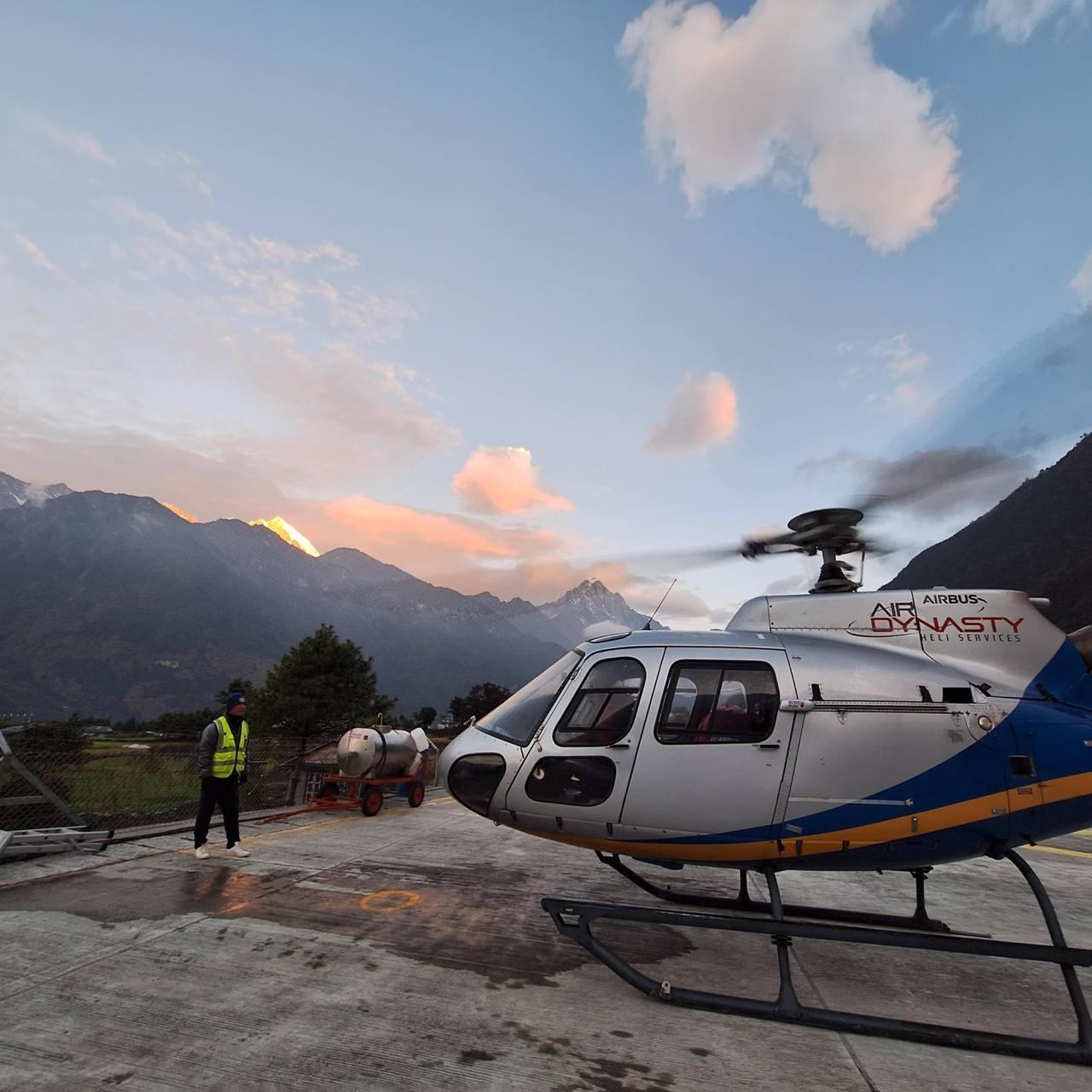
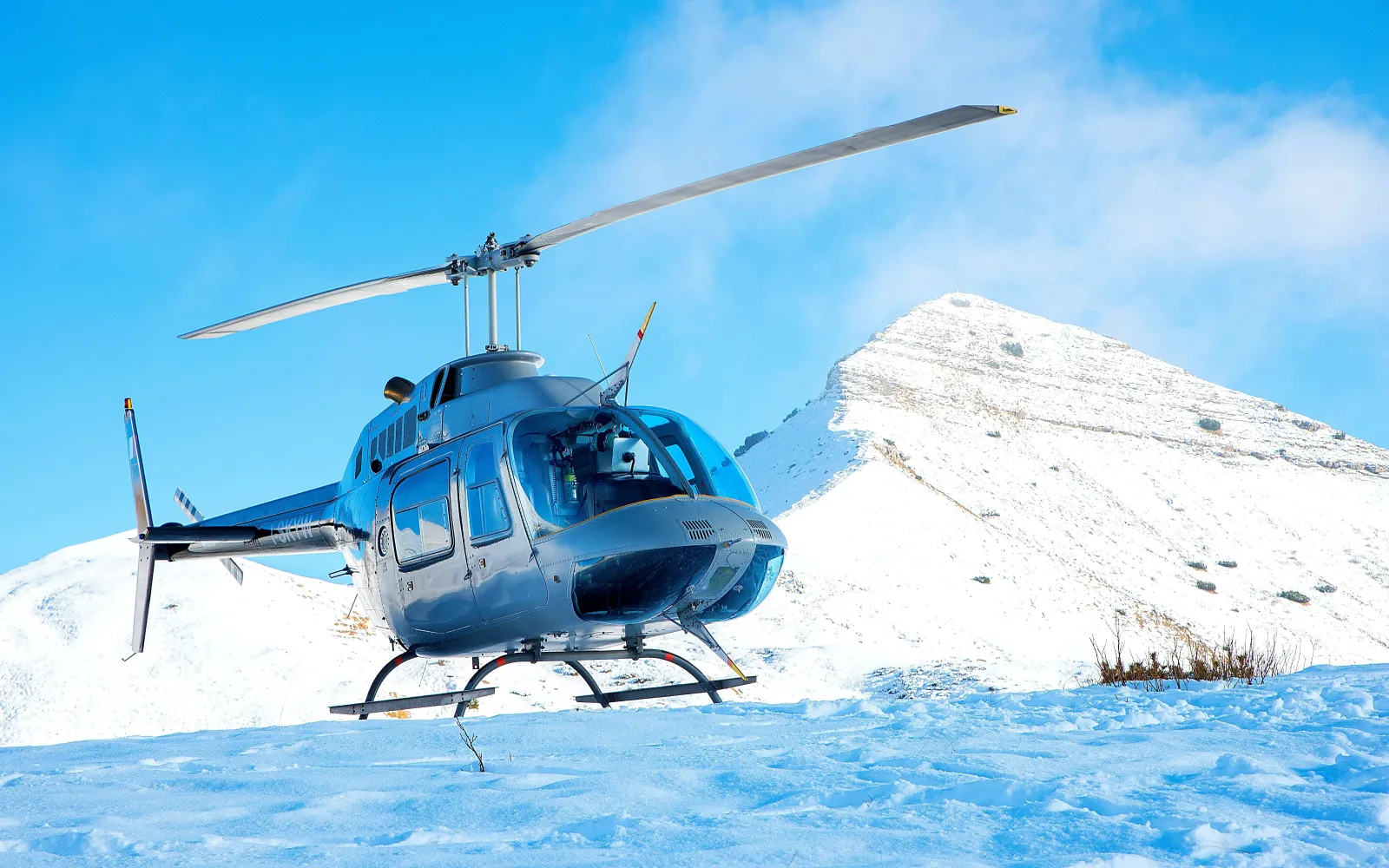
An Everest Base Camp helicopter tour is a same-day trip from Kathmandu to the Khumbu region and back, usually following Kathmandu → Lukla → Everest region → Kala Patthar → Lukla → Kathmandu. The day typically starts early at Kathmandu airport, with a flight to Lukla, a stop at Kala Patthar when conditions allow, and the return to Kathmandu.
The exact departure time, flight order, landing time, and return time are not fixed. Weather, visibility, aircraft conditions, air traffic, refueling needs, and other operational factors can change the schedule. This guide follows the current Aero Connect Nepal Everest Base Camp Helicopter Tour itinerary and explains each stage, what to expect on the ground, and where the actual day may differ from the planned schedule. The goal is simple: to give you a realistic view of the tour before you book.
| Stage | What happens | Approx. timing |
|---|---|---|
| Kathmandu | Airport preparation and check-in | Early morning |
| Kathmandu → Lukla | Helicopter flight toward the Khumbu | Morning |
| Lukla | Refueling and operational coordination | Short stop |
| Everest region | Scenic flight toward the high mountains | Morning |
| Kala Patthar | High-altitude landing and Everest views | Short ground stop |
| Everest region → Lukla | Return flight | Late morning |
| Lukla → Kathmandu | Refueling/operational stop, then return | Afternoon depending on conditions |
Everest Base Camp helicopter tours usually operate early in the morning, when visibility and flying conditions are often better. Your airport transfer or arrival plan depends on your confirmed departure time, so leave enough time to get to Kathmandu airport, check in, and attend the operational briefing. At the airport, passenger details and IDs are checked, and baggage and passenger weights may also be checked because helicopter operations are sensitive to total payload, especially at high altitudes.
Keep your baggage light and bring only what you need for the day. Carry your passport or required identification, warm layers, sunglasses, sunscreen, a camera or phone, gloves, a hat, and water. Kala Patthar can be much colder than Kathmandu, even in the main trekking seasons. If you usually take motion sickness medication, bring it with you. A compact day bag is more practical than bulky luggage.
Before departure, the crew completes the required checks and gives passengers flight instructions. The decision to depart depends on weather, visibility, aircraft condition, air traffic, and other operating requirements. If conditions are not suitable, the flight may be delayed, or the itinerary changed. This is why the confirmed schedule should be treated as an approximate operating plan rather than a fixed timetable.
The first flight sector takes you from Kathmandu toward the Everest region. As the helicopter gains altitude, the scenery changes from the Kathmandu Valley to hills, terraced farmland, river valleys, and then rugged mountain terrain. Farther into the Khumbu, the Himalayan foothills become more prominent. Flight time is approximate because the route can change with weather, visibility, air traffic, and other operational conditions.
Lukla is an important operational stop on the Everest Base Camp helicopter itinerary. The helicopter may land here to refuel, and the crew may also use the stop to coordinate the next part of the flight and complete other required tasks. The stop length is not fixed and depends on the day's conditions and the aircraft’s needs. Travelers should see Lukla mainly as part of the flight operation, not as a guaranteed sightseeing stop with a set duration.
After leaving Lukla, the helicopter flies deeper into the Khumbu region, where the scenery becomes more mountainous. The lower hills and valleys turn into rugged Himalayan terrain, with views of peaks, steep slopes, and high-altitude landscapes. As the helicopter climbs, the air becomes colder, so it is useful to keep a warm layer within reach. The flight may also change depending on weather, visibility, aircraft performance, passenger load, and other operating conditions.
Lukla is mainly an operational stop on this itinerary, not the main sightseeing destination. Depending on the day's needs, the helicopter may stop there for refueling and crew coordination before continuing to the Everest region. The main sightseeing takes place farther into the Khumbu, especially around the high-altitude areas and Kala Patthar. Because helicopter operations at higher elevations are affected by aircraft performance, weather, and total passenger weight, the route and timing can vary from one flight to another.
As the helicopter flies through the Everest region, travelers get a view of the high Khumbu and the area around Everest Base Camp. It is important to note the difference between seeing Everest Base Camp from the air and landing there. The Aero Connect Nepal itinerary goes into the Everest region, but it does not guarantee a physical landing at Everest Base Camp. The main high-altitude landing is at Kala Patthar, depending on weather, visibility, aircraft performance, and other operating conditions.
From the helicopter, you can see the Khumbu Glacier, the Everest region, surrounding Himalayan peaks, trekking routes, and settlements when visibility allows. You may also see the Everest Base Camp area from above, which gives a wider view of the glacier and surrounding terrain than a single ground viewpoint. Visibility depends heavily on weather and cloud cover, so specific peaks or clear summit views cannot be guaranteed. The crew may also adjust the route or viewing time if conditions require it.
Kala Patthar is the main high-altitude landing point on the current Everest Base Camp helicopter tour. It sits at about 5,450 to 5,545 metres above sea level, depending on the reference and operating conditions. A helicopter landing at this height gives travelers access to one of the best viewpoints in the Everest region without a multi-day trek. Landings still depend on weather, visibility, aircraft performance, and other operational factors.
After landing, travelers can leave the helicopter when conditions and crew instructions allow and use the limited ground time for photos and mountain views. From Kala Patthar, you can see Everest and the surrounding Himalayan peaks when visibility is good, along with the dramatic high-altitude Khumbu landscape. The time on the ground is not fixed. Altitude, weather, aircraft needs, and safety considerations all affect how long the helicopter can stay at the landing site.
The experience at Kala Patthar is very different from being at lower elevations. The air is thin; it can be extremely cold, and strong sunlight can make conditions feel intense even when the temperature is low. Because of the altitude, ground time is limited, so travelers should be ready to make the most of a short stop rather than expect a long visit.
Everest View Hotel may be included depending on the selected package and its current inclusions. Breakfast at the hotel should not be assumed to be included in every booking, so travelers should confirm the package details before departure. If breakfast or a stop at Everest View Hotel is added as an option, the timing and ground arrangements may also depend on the day's weather and operational conditions.
The hotel offers a more comfortable setting than the high-altitude Kala Patthar landing, with lower elevation and clear views of the Himalayan peaks. A stop here can be a chance to relax and have refreshments or breakfast if included. However, it is an optional add-on, not a guaranteed part of every EBC helicopter tour. Always check the package details when booking to confirm whether the Everest View Hotel stop and breakfast are included.
From Lukla, the helicopter makes the final flight back to Kathmandu. As it leaves the Khumbu and descends to lower elevations, the scenery changes from high Himalayan peaks and rugged mountain valleys to hills and, eventually, the Kathmandu Valley. The return flight offers one last aerial view of the changing landscape, though the exact route and visibility depend on conditions that day.
Your arrival time in Kathmandu can vary because of weather, air traffic, refueling, routing, and delays earlier in the itinerary. For this reason, the tour should be planned as a full-day activity rather than around a fixed return time. Even so, the EBC helicopter tour is designed as a same-day Kathmandu-to-Everest-region-and-back experience, with a Kala Patthar landing when conditions permit, followed by a return to Kathmandu without an overnight stay.
An Everest Base Camp helicopter tour is a same-day trip from Kathmandu, with the flight and sightseeing usually finished in several hours. The schedule is not fixed, since departure, landing, refueling, and return times can change because of weather, visibility, air traffic, aircraft performance, and other operational needs. The timeline below shows the typical sequence, not guaranteed clock times.
| Stage | Typical timing |
|---|---|
| Kathmandu airport preparation | Early morning |
| Kathmandu to Lukla | Morning |
| Lukla operational/refueling stop | Short stop |
| Flight toward Everest region | Morning |
| Kala Patthar landing | Short high-altitude stop |
| Return toward Lukla | Late morning |
| Lukla refueling/operations | Short stop |
| Flight to Kathmandu | Later in the day |
| Total experience | Same day, typically several hours |
Weather can affect nearly every part of an Everest Base Camp helicopter tour. Poor visibility or changing conditions can delay departure from Kathmandu, shorten a sightseeing stop, change the order of the trip, or prevent a high-altitude landing. Even if the flight goes ahead, cloud cover can reduce views of Everest and nearby peaks. If conditions are not safe, the flight may need to be rescheduled or cancelled instead of continuing as planned.
Helicopter flights in the Everest region depend heavily on visibility because many operate under VFR, or Visual Flight Rules. Pilots need clear conditions to fly safely along the planned route and through mountainous terrain. Weather can change quickly at higher elevations, so the flight crew and operator check conditions before and during the journey. As a result, the itinerary may change from the original schedule as the crew responds to current conditions.
If weather prevents the tour from operating, Aero Connect Nepal follows its cancellation and rescheduling policy rather than treating the original departure time as guaranteed. Travelers should review the Weather-Cancellation & Refund Policy before booking and check the latest flight-status updates when available. For more information about the regulatory and operational framework behind helicopter flights in Nepal, see CAAN Helicopter Regulations in Nepal.
An Everest Base Camp helicopter tour is a series of flight legs and operational stops, not just a direct flight from Kathmandu to Everest. Travelers should expect an early start, operations at Lukla, a flight deeper into the Khumbu, a high-altitude landing at Kala Patthar when conditions allow, and the return to Kathmandu. Weather, visibility, aircraft performance, air traffic, and other operational factors can change the timing or sequence during the day. Understanding how the itinerary works before booking helps you prepare for the altitude, cold, limited ground time, and possible schedule changes, so you know what to expect from arrival at Kathmandu airport until the tour ends.
Plan your Everest Base Camp helicopter tour with Aero Connect Nepal and get a clear itinerary, current availability, and support from booking to return.
An Everest Base Camp helicopter tour is a same-day experience that typically takes several hours from Kathmandu and back. The exact duration can vary depending on weather, visibility, refueling at Lukla, air traffic, routing, aircraft performance, and other operational conditions. Travelers should keep their schedule flexible because delays can extend the overall tour time.
Everest Base Camp helicopter tours generally depart early in the morning because mountain visibility and flying conditions are often more suitable earlier in the day. The actual departure time depends on the confirmed flight schedule, weather, air traffic, and operational requirements. Your booking confirmation should be treated as the working schedule rather than a guaranteed fixed departure time.
The current itinerary does not guarantee a physical landing at Everest Base Camp. The helicopter flies into the Everest region, allowing passengers to view the Base Camp area from the air, while the principal high-altitude landing is at Kala Patthar when conditions permit. This distinction is important when comparing Everest helicopter tour itineraries.
The current Everest Base Camp helicopter itinerary includes a landing at Kala Patthar, at an elevation of more than 5,400 metres above sea level. The landing is subject to weather, visibility, aircraft performance, passenger load, and other operating conditions. If conditions are unsuitable, the crew may need to change or omit the planned landing.
The ground stop at Kala Patthar is intentionally limited because the landing site is above 5,400 metres and conditions can be cold and physically demanding. The exact ground time is not a fixed guarantee and depends on weather, aircraft requirements, passenger condition, and operational considerations. Travelers should expect a brief sightseeing and photography stop rather than an extended stay.
Breakfast at Everest View Hotel should not be assumed to be included in every EBC helicopter tour booking. It depends on the selected package and its current inclusions. If an Everest View Hotel breakfast is arranged as an optional addition, the stop and timing remain subject to weather and operational conditions, so travelers should confirm the inclusions before booking.
Yes. Lukla is an important operational point on the current Everest Base Camp helicopter itinerary. The helicopter may stop there for refueling, where required, as well as for other operational arrangements before continuing toward the Everest region or returning to Kathmandu. The duration of the Lukla stop is not fixed and can vary according to the day's operating requirements.
Yes. Weather can affect the departure time, flight route, mountain visibility, landing at Kala Patthar, ground-stop duration, and return schedule. Poor visibility or unsuitable conditions can also require the flight to be delayed, rescheduled, or cancelled. Helicopter operations in the Everest region depend heavily on suitable visual conditions, particularly at higher elevations.
No. Trekking experience is not required because the tour is completed by helicopter rather than through a multi-day trek. However, travelers should be prepared for a brief landing at Kala Patthar above 5,400 metres, where the air is thin and temperatures can be very cold. Ground activity is kept limited because of the altitude and operating conditions.
Bring your passport or required identification, warm clothing, sunglasses, sunscreen, a camera or phone, water, and any personal medication you normally need while traveling. A warm jacket, gloves, hat, and comfortable footwear are particularly useful for the Kala Patthar landing. Keep your baggage compact because passenger and baggage weight can affect helicopter operations at high altitude.