Everest Base Camp vs. Kala Patthar: Which Offers the Better Everest View?. This is the question that many travellers in the Everest region often ask their guide.
Both Everest Base Camp and Kala Patthar can be used as helicopter landing or viewing stops in the Everest region, depending on the weather, flight conditions, and landing conditions. If your main goal is a clear view of Mount Everest, Kala Patthar is usually the better viewpoint because it is higher and has a better angle toward the mountain.
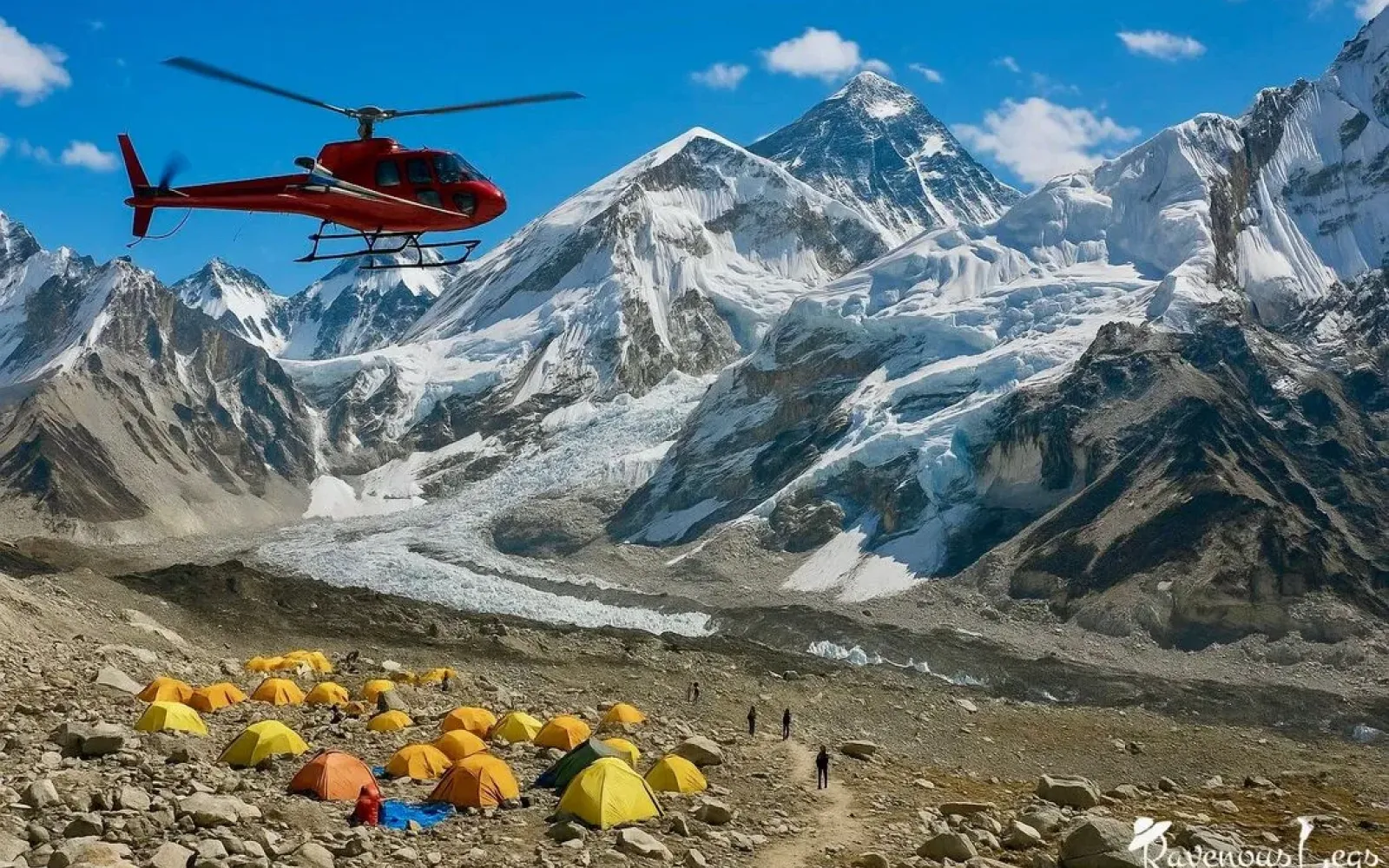
Everest Base Camp offers a different experience. Instead of focusing only on the Everest summit, it takes you to the famous trekking destination, with views of the Khumbu Glacier, expedition terrain, and peaks like Nuptse and Pumori. Choose Kala Patthar for a better Everest panorama, Everest Base Camp for the experience of reaching Base Camp, or a combined itinerary if you want both.
Explore the Everest Base Camp Helicopter Tour with Kala Patthar Landing and book your Everest experience today.
If your main goal is to see Mount Everest as clearly and directly as possible, Kala Patthar usually offers the better view. Its high position gives you a better angle of Everest, making it a great choice for travelers who want a mountain-focused panorama or a photography spot.
Everest Base Camp offers a different experience. Its appeal is standing at one of the world's most famous trekking destinations, with the Khumbu Glacier, the Base Camp area, and the surrounding Himalayan peaks in view. Both locations can be impressive in clear weather, but they serve different purposes: Kala Patthar is better for the Everest view itself, while EBC is better for experiencing the iconic Base Camp.
| Factor | Everest Base Camp | Kala Patthar |
| Direct Everest view | Strong, but the viewing angle is less favorable | Generally stronger |
| Everest summit visibility | Good in clear weather | Excellent in clear weather |
| Surrounding peaks | Extensive Himalayan scenery | Extensive Himalayan scenery |
| Glacier and terrain | Khumbu Glacier and Base Camp surroundings | High-altitude mountain terrain |
| Photography | Strong destination-focused photographs | Strong Everest-focused photographs |
| Main appeal | Reaching the iconic Base Camp | Viewing Everest from an elevated viewpoint |
| Best for | Travelers who want the EBC experience | Travelers prioritizing Everest views |
The main difference between Everest Base Camp and Kala Patthar is the view. Everest Base Camp puts you on the Khumbu Glacier among the expedition scenery, while Kala Patthar is higher and gives a clearer view of Mount Everest. In clear weather, Kala Patthar is the better choice if your main goal is to see and photograph Everest itself.
From Everest Base Camp, the view is shaped as much by the surrounding landscape as by Everest itself. You can see Mount Everest along with major peaks such as Nuptse, Lhotse, and Pumori, while the Khumbu Glacier and the rugged terrain around Base Camp provide the foreground.
The important point is that Everest Base Camp is not positioned as a dedicated panoramic viewpoint of Everest. The mountain can appear less dramatic from here because of the surrounding ridges and the angle from which Everest is viewed. This can surprise travelers who expect Base Camp to offer a close, unobstructed view directly toward the summit.
That does not make the view from EBC less significant. You are experiencing the actual Base Camp landscape, with the Khumbu Glacier and the mountains that surround the trekking and expedition route. For travelers who value the destination itself as much as the mountain view, this setting is a major part of the experience.
Kala Patthar provides a more direct visual relationship with Mount Everest. Its elevated position gives you a stronger perspective toward Everest's summit and upper mountain, while the surrounding peaks add depth to the panorama.
On a clear day, the view can include Everest, Nuptse, Lhotse, Pumori, the Khumbu Glacier, and the surrounding valleys. The combination of elevation, open terrain, and mountain orientation is why Kala Patthar is widely recognized as one of the principal Everest viewpoints.
For photography, this difference matters. If Everest is the main subject you want in the frame, Kala Patthar generally gives you more favorable compositions. The surrounding peaks and high-altitude terrain can also provide a stronger sense of scale.
The difference comes primarily from where each location sits in relation to Everest and the surrounding mountains. Everest Base Camp is situated within the Khumbu Glacier area and is surrounded by high mountain terrain. Nearby ridges and peaks influence the line of sight toward Everest, so the mountain does not dominate the view in the same way it can from Kala Patthar. Kala Patthar is positioned at a higher elevation with a more favorable orientation toward Everest. From this elevated viewpoint, the summit and upper slopes have a more prominent position in the overall panorama.
It is useful to distinguish physical proximity from visual proximity. Being at Everest Base Camp does not mean you are directly beneath the summit, or that Everest will look closest from there. A viewpoint farther away can sometimes give a more open and dramatic view because of its elevation and angle. If you want the best view of Mount Everest, Kala Patthar is usually the better choice. If you want the full Base Camp experience, including the Khumbu Glacier and expedition scenery, Everest Base Camp is the better option.
The better photography stop depends on what you want the photograph to communicate. Everest Base Camp is stronger for destination-focused images, with the Khumbu Glacier, Base Camp environment, prayer flags, and surrounding peaks creating a recognizable Everest-region setting. Kala Patthar generally works better when Mount Everest itself is the main subject, offering a more open mountain-focused perspective.
Photography at Everest Base Camp is more about capturing the surroundings than isolating Mount Everest itself. The Khumbu Glacier creates a clear foreground, while the rugged terrain and surrounding mountains show the scale of the Everest region. When Base Camp structures are present, they can add useful context to photographs, especially when combined with expedition equipment, tents, or trekking activity.
Prayer flags can add colorful foreground detail against the high-altitude landscape. Depending on the season and activity, expedition scenery can make the photos feel more connected to the experience of reaching Base Camp.
The surrounding peaks, such as Nuptse, Lhotse, and Pumori, add depth to wider views. For travelers who want photos that show where they were, not just the mountain they saw, EBC offers plenty of visual context.
Kala Patthar is usually better for photos focused on Everest. Its higher position and good angle toward Everest let the mountain stand out more in the frame. The view can include Mount Everest, Pumori, Nuptse, Lhotse, the Khumbu Glacier, and the surrounding Himalayan landscape, creating wider scenes with several layers of mountains.
The high-altitude terrain also works well in the foreground. Rocky ground, ridges, and the valley help show scale while keeping Everest as the main subject. For photographers looking for a strong Everest composition, this mix of viewpoint, mountain orientation, and open terrain is one reason Kala Patthar is often preferred.
If Mount Everest is the main subject, many photographers prefer Kala Patthar because it offers a stronger mountain-focused composition. If you want photos of the Base Camp experience, EBC may be better. The glacier, prayer flags, trekking route, and Base Camp surroundings add more context for destination photography.
The altitude difference matters when comparing the two experiences. Everest Base Camp is about 5,364 m (17,598 feet), while Kala Patthar is about 5,545 m (18,192 feet), making Kala Patthar the higher of the two. At both heights, the air is very thin, and temperatures can be very cold, especially in the wind.
Travelers arriving by helicopter also have less time to adjust than trekkers who reach these elevations gradually, so ground time is limited, and passengers should follow the crew's instructions carefully. The landing experience is also different. At Everest Base Camp, helicopter landings depend on current permissions and operating conditions, so travelers should not assume every EBC tour includes a direct landing at Base Camp.
Kala Patthar is a dedicated high-altitude landing stop on Aero Connect Nepal's current EBC package, with only a short ground time because of the extreme elevation. If your main goal is to see the Everest region, an EBC overfly avoids the need for a high-altitude landing. If you want to step onto a high viewpoint near Everest, the Kala Patthar itinerary offers that experience, subject to weather and aircraft operating conditions.
| Factor | Everest Base Camp | Kala Patthar |
| Elevation | Verify current operational figure before publication | Verify current operational figure before publication |
| Environment | Glacier, moraine and Base Camp terrain | Rocky high-altitude viewpoint |
| Cold | Severe | Severe |
| Air density | Very thin | Very thin |
| Ground time | Package-dependent | Package-dependent |
| Main experience | Standing at EBC | Viewing Everest from altitude |
This is where the name Everest Base Camp can be confusing. Base Camp is an important place for expeditions and trekking, but it is not right next to the summit. Everest rises above glaciers, ridges, and high-altitude terrain. Kala Patthar is not simply "better" because it is closer in every physical sense. Its main advantage is the view. Its height and position give a wider perspective toward Everest.
That is an important difference for helicopter travelers. You are choosing a viewpoint, not just the closest point on the mountain. If you want Everest with the summit as the main focus, Kala Patthar usually makes more sense. If you want to experience Base Camp, seeing EBC from the air is still a valuable part of the journey.
The best Everest helicopter experience depends on what you want to do in the Everest region. Some travelers want to see Everest from the air, while others want to visit Base Camp or land at a high-altitude viewpoint with a clear view of Everest. Aero Connect Nepal currently offers three main options: the Everest Base Camp Helicopter Overfly Tour, the Everest Base Camp Helicopter Tour with Kala Patthar Landing, and customized helicopter arrangements for travelers who want a more private itinerary.
For a first-time visitor to the Everest region, the Everest Base Camp experience is often the most recognizable choice. Base Camp is one of the world's best-known trekking destinations, so reaching the area by helicopter gives travelers a strong sense of arrival without requiring the days of walking normally associated with the classic Everest route. The surrounding Khumbu Glacier, high mountain terrain, expedition landscape, and views toward the surrounding peaks make the destination immediately recognizable.
There is an important difference between seeing Everest from the air and visiting the Everest Base Camp area. An overfly provides a continuous aerial view of the Khumbu, Everest Base Camp, Kala Patthar, and the surrounding peaks, while the Kala Patthar package includes a high-altitude landing and ground time at 5,545 meters, subject to aircraft performance, passenger weight, weather, and other operating conditions.
Book this if: your priority is to experience the famous Everest region rather than simply maximize the amount of time spent looking directly at Everest. Next step: If you want the full experience, book the Everest Base Camp Helicopter Tour with Kala Patthar Landing. If you prefer sightseeing without a high-altitude landing, book the Everest Base Camp Helicopter Overfly Tour.
If Mount Everest is the main subject, Kala Patthar is the better landing option. Its high position gives a clear view of Everest, and the Himalayan scenery adds depth to wide mountain shots. From the landing area, travelers can also photograph nearby peaks and high-altitude terrain, including Lhotse, Nuptse, and the Khumbu landscape. Aero Connect lists the Kala Patthar landing at about 5,545 meters, with a short ground time because of the extreme altitude.
The Everest Base Camp Helicopter Tour with Kala Patthar Landing includes a pass over Everest Base Camp and the Khumbu Glacier, giving photographers two kinds of images in one trip: aerial views of Base Camp and the glacier, followed by mountain photos from Kala Patthar. Photographers who want more control over departure dates, passenger numbers, or itinerary details can also ask about a private helicopter charter, which is useful when photography needs matter more than a standard shared itinerary.
Choosing between Everest Base Camp and Kala Patthar depends on what you want from your helicopter experience. The EBC Overfly is better for travelers who want a quicker aerial view of the Everest region, while the EBC Helicopter Tour with Kala Patthar Landing includes a high-altitude landing and a more focused Everest view. For travelers who want a more personalized experience, a private charter offers greater flexibility, depending on weather and operational conditions.