Recent severe weather events have triggered critical conditions along the Marsyangdi River basin, leading to significant concern regarding the Manang flood Nepal. For travelers, locals, and stranded tourists currently in the affected region, obtaining real time data is paramount. According to the Kathmandu Post, intense cloudbursts and localized heavy rainfall have destabilized vulnerable terrain, causing sudden flash floods and severe mudflows. This developing Marsyangdi update requires immediate attention from anyone navigating or planning travel through central Nepal.
On this page:
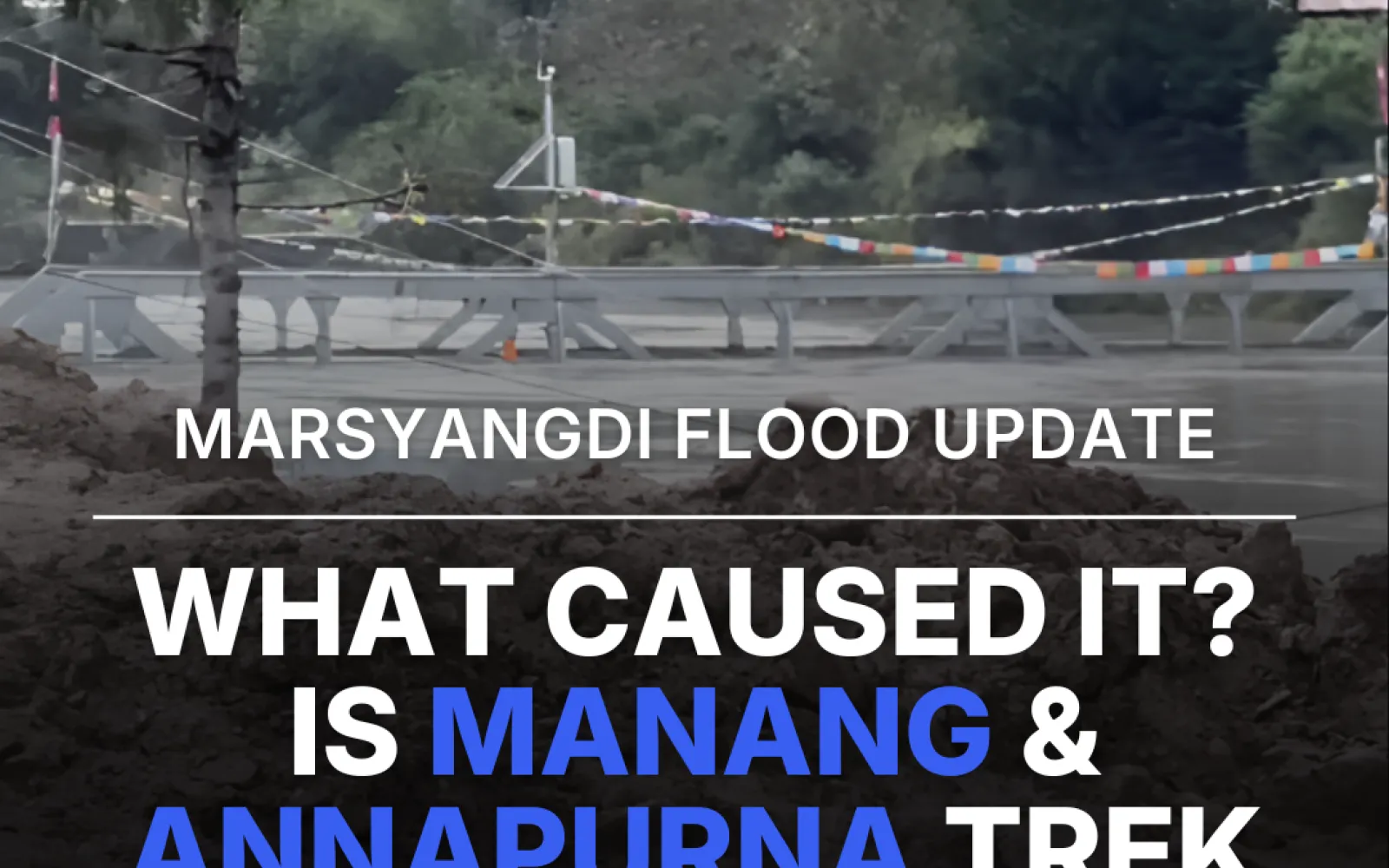
A fresh flood and debris flow has struck the Marsyangdi River near Chame, the district headquarters of Manang, blocking the river channel with mud and debris from the Ghatte Khola. Manang Chief District Officer Mukti Prasad Khanal confirmed the obstruction, warning that the river flow was increasing and that the risk was rising as a result, according to OnlineKhabar English News. A warning siren installed along the Marsyangdi River is currently sounding as authorities monitor the situation for a possible breach.
This follows an earlier flood event in Chame in which flash floods from local streams and the swollen Marsyangdi River swept away five houses, destroyed two key wooden bridges, and severed road links. No casualties were reported, though displaced locals, children, elderly residents, and stranded trekkers sheltering in government offices faced shortages of food and warm clothing, as reported by Nepal News.
It is worth keeping this separate from the Rasuwa flood of August 26, 2026, which struck the Bhote Koshi and Trishuli river system further east and was linked to a glacier collapse on Langtang Lirung. The Manang flood is on the separate Marsyangdi system, with a different trigger and a different affected population. See the FAQ section below for a direct comparison.
The primary driver behind the sudden surge is prolonged monsoon precipitation combined with steep, geologically fragile mountain topography. Meteorologists note that excessive rainfall saturates the upper soil layers, triggering slope failures. Debris carried down side streams like the Ghatte Khola can dam the main river channel, and these temporary natural dams can breach unexpectedly, creating high energy torrents downstream along the Marsyangdi corridor, consistent with the debris blockage currently being monitored near Chame.
For a broader look at how this fits into Nepal's monsoon river systems, see the Further Reading links to ICIMOD and the Department of Hydrology and Meteorology below.
This is the question most people searching for Manang flood news actually want answered.
The Annapurna Circuit runs through the Marsyangdi and Kali Gandaki valleys, climbing through Chame and Manang before crossing Thorong La. Current reportings describe the trail itself as untouched by the flood, noting that the upper valleys around Manang and Mustang sit in a rain shadow that keeps them among the driest trekking country in Nepal, which is part of why the Circuit typically stays walkable through the tail of the monsoon.
The flood damage so far has concentrated on road access, bridges, and lower settlements along the river corridor rather than the high trekking trail itself. That said, road transport and local infrastructure disruption near Chame is real and current, so anyone with a trip through lower Manang in the coming weeks should confirm road and bridge status directly with a local operator before departure. If you need to reach or leave the area quickly while ground routes are disrupted, see the evacuation section below.
If you are currently trapped or stranded in the Manang or Marsyangdi region, immediate action is required to ensure personal safety:
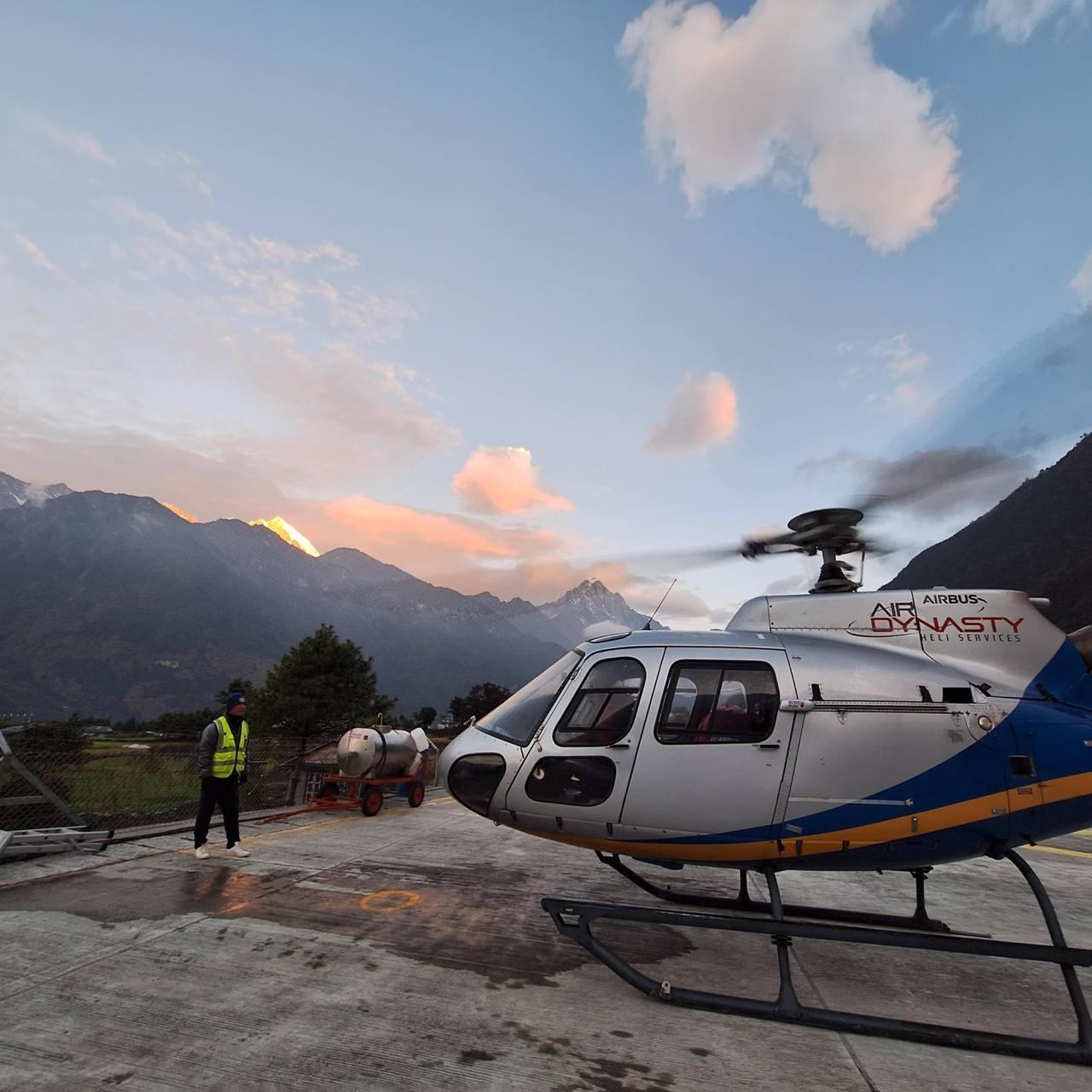
Navigating logistical hurdles during a natural disaster can be overwhelming, especially for foreign nationals unfamiliar with local terrain. If you require swift extraction and want to book a helicopter safely, Aero Connect Nepal offers dedicated emergency evacuation services. Our coordination team works closely with local aviation authorities to secure flight permissions, manage on site visits if required, and execute rapid extractions. Review our comprehensive helicopter safety guidelines to understand boarding protocols and weight limits before your flight.
Last updated: September 27, 2026
Written by the Aero Connect Nepal
Yes. As of this update, the Marsyangdi River near Chame is blocked by debris from a landslide at Ghatte Khola, and local authorities have a warning siren active while they monitor for a possible breach.
No deaths have been reported in the Chame flooding so far. Local officials say residents moved to safety after noticing rising water levels.
No. The Rasuwa flood of August 26, 2026 struck the Bhote Koshi and Trishuli river system further east. The Manang flood is on the separate Marsyangdi system.
No. Current reporting indicates the Circuit trail itself is unaffected, though road access and bridges in the lower Marsyangdi valley have been damaged. See the trekking status section above.
Move to higher ground away from the riverbank, avoid active landslide zones, ration food, water and battery power, and monitor official channels for evacuation and weather clearance updates. Full guidance is in the safety protocols section above.