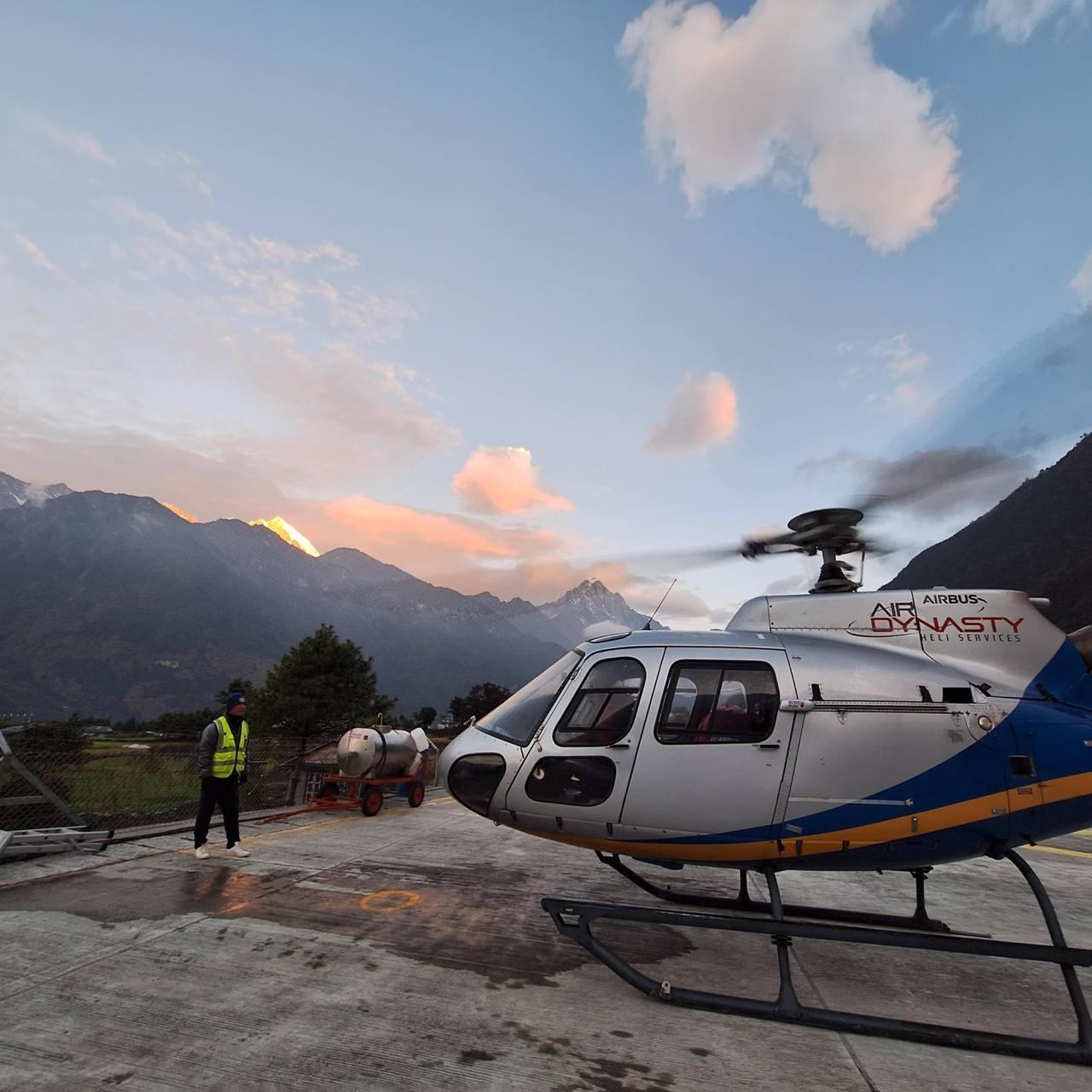
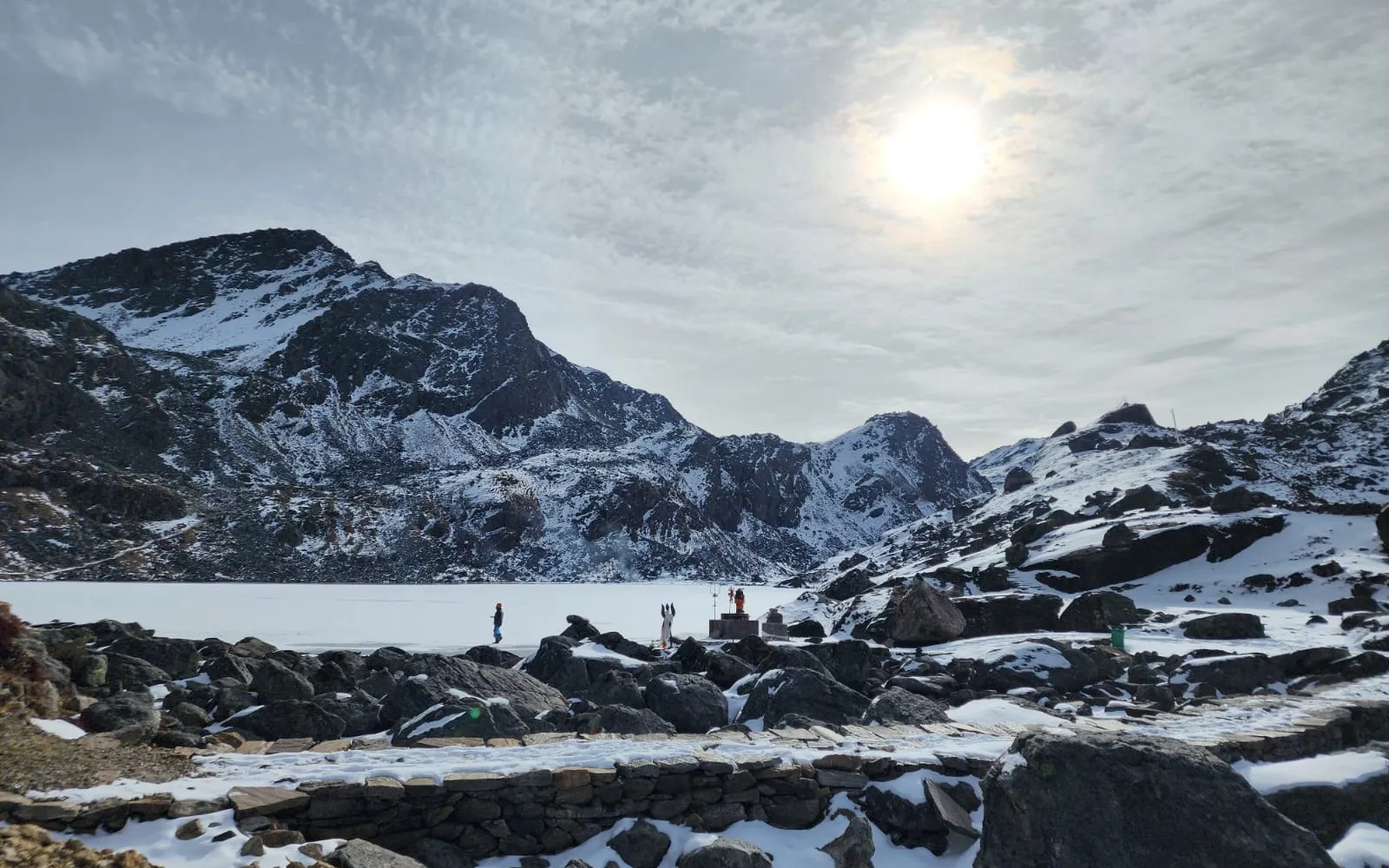
Spring in Nepal from the sky is quite special; however, many people only know about trekking. The months of March, April, and May are some of the most popular and best seasons for helicopter tours in Nepal. The season is warmer at lower elevations, with blooming rhododendron forests and clear mountain views when the weather is good. Helicopter tours also make it possible to reach high-altitude destinations without spending several days trekking.
A trek lets you see Nepal on foot, while a helicopter gives you a broader view of mountains, valleys, glaciers, villages, and forests in a short time. This guide covers the best spring helicopter tours in Nepal, weather, mountain visibility, packing, safety, photography, and practical flight planning advice.
Spring, from March to May, is a popular time for helicopter tours in Nepal. The weather improves, it gets warmer at lower elevations, daylight lasts longer, and mountain views are often good when flying conditions allow.
Spring often brings more suitable flying conditions than the colder winter months in many parts of Nepal. Stable weather periods can provide better visibility and fewer weather-related disruptions, although conditions vary by location and altitude.
As winter ends, visibility often improves in the mountain regions. On clear days, passengers can see Himalayan peaks, glaciers, valleys, and villages from the helicopter, especially when there is little cloud cover along the route.
Temperatures are warmer at lower elevations in spring, making travel more comfortable before and after the helicopter flight. High-altitude destinations are still cold, so passengers need suitable clothing for mountain landings.
Spring offers great mountain views when the sky is clear. Fresh snow at higher elevations and good visibility can make peaks like Everest, Annapurna, and Machhapuchhre look especially striking from the air.
Spring has longer daylight than winter, giving operators more time to schedule suitable flights. This can make sightseeing and travel plans more flexible, although actual departure times still depend on the route and daily conditions.
Spring is also a busy trekking season in Nepal, with popular routes like Everest Base Camp and Annapurna drawing many trekkers. Helicopter tours can complement these trips by offering access to mountain destinations or a quicker return from high-altitude areas.
Good spring weather does not always mean good conditions every day. Mountain weather can change quickly, so passengers should check the latest forecast and be flexible with their schedule. The pilot and flight operator decide whether a flight can operate safely.
From a helicopter, Nepal's spring scenery changes with altitude. The high Himalayan peaks stay covered in snow, while the lower hills and valleys turn greener as temperatures rise. Rhododendron forests add bright color during the blooming season, and rivers and waterfalls carry more water from melting mountain snow.
From above, you can see mountain villages, terraced fields, winding trails, and hillside settlements. During a spring helicopter flight, the contrast between low and high elevations is especially clear. One part of the route may show green forests and farmland, while the next reveals steep rocky slopes, glaciers, and snow-covered peaks.
As the helicopter climbs and descends, the view changes from forests and farmed hills to high mountain terrain. This lets travelers see different parts of Nepal's geography in one flight.
Spring is a good time to see Nepal's mountains by helicopter. March, April, and May usually offer good weather and visibility for mountain sightseeing, and flights to Everest, Annapurna, Langtang, and Manaslu let travelers see the Himalayas without trekking for days.
The Everest Base Camp Helicopter Tour usually leaves from Kathmandu and flies to Lukla before continuing through the Khumbu region. Along the way, you can see Everest, Lhotse, Nuptse, Ama Dablam, glaciers, and mountain valleys. Depending on the itinerary and conditions, the helicopter may land at Kala Patthar or another approved sightseeing location. After the stop, it returns to Kathmandu.
The Annapurna Base Camp Helicopter Tour can depart from Pokhara or Kathmandu, depending on the package you choose. The helicopter flies to the Annapurna Sanctuary, where passengers can view Annapurna I, Machhapuchhre, Hiunchuli, and other nearby peaks. If weather, landing conditions, and operational requirements allow, it may land at or near Annapurna Base Camp. After the visit, the helicopter returns to the departure point.
Langtang Helicopter Tour
The Langtang Helicopter Tour usually starts in Kathmandu and flies over the hills and valleys north of the capital. As the helicopter nears the Langtang region, passengers can see Langtang Lirung and other Himalayan peaks, as well as forests, valleys, and mountain settlements. Landing spots depend on the package selected and current conditions. The helicopter then returns to Kathmandu after the sightseeing flight.
The Muktinath Helicopter Tour can start from Kathmandu or Pokhara and flies toward Mustang through the Kali Gandaki area. Along the way, passengers can see high mountains, deep valleys, and the unique Himalayan landscape before arriving at Muktinath. They can visit the sacred site during the scheduled stop and then return by helicopter to the departure point.
The Manaslu Helicopter Tour offers aerial views of Mount Manaslu and the surrounding mountains in the Manaslu region. It is a good choice for travelers with limited time who want to see the area without doing the full Manaslu Circuit trek. The route, landing point, and duration vary depending on the itinerary, weather, and operating conditions.
| Factor | Helicopter Tour | Spring Trekking |
| Duration | Usually completed within a few hours or one day | Takes several days or weeks, depending on the route |
| Physical Effort | Requires little physical effort | Requires regular walking at different elevations |
| Mountain Views | Offers wide aerial views of mountains, glaciers, and valleys | Provides close views from trails, villages, and viewpoints |
| Cost | Higher cost per person | Generally more affordable |
| Accommodation | Usually, no overnight stay is required for day tours | Requires accommodation along the trekking route |
| Accessibility | Reaches remote and high-altitude areas quickly | Requires walking to reach destinations |
| Experience | Focuses on aerial sightseeing and quick access | Offers a deeper trail experience with local villages and landscapes |
| Weather Dependence | Flights depend heavily on visibility, wind, and other flying conditions | Treks can continue in a wider range of conditions, depending on the route and safety |
| Best For | Travelers with limited time, families, and those avoiding long treks | Travelers who enjoy walking and want to spend more time in the mountains |
| Flexibility | Depends on helicopter availability and flight conditions | Greater control over daily walking distance and stops |
Spring is generally a favorable period for helicopter tours in Nepal, with conditions gradually becoming warmer and mountain visibility often improving after winter. However, weather still varies by altitude and location, so passengers should check the latest forecast and remain flexible, particularly for high-altitude flights.
March is still a winter-to-spring transition, so cold conditions can still be expected, especially at higher elevations. Visibility usually improves as the month goes on, but morning cloud, wind, and lingering winter weather can still affect some flights. Early spring can be a good time to travel for those who want fewer crowds and clear Himalayan views.
April has warmer weather at lower elevations and is one of the most popular months to travel in Nepal. Rhododendrons bloom in many mountain areas, adding color to the landscape, and clear weather can offer excellent mountain views from a helicopter. Trekking also increases in April, so it helps to book early for popular helicopter routes and destinations.
May is usually warmer, especially at lower elevations, but the weather becomes more active before the monsoon. Afternoon clouds and occasional rain can affect visibility and flight schedules, while early mornings may offer better mountain views. Travelers planning helicopter flights in May should check the latest forecast and stay flexible if conditions change.
Good visibility is important for helicopter sightseeing because the main attraction of a mountain flight is the view of peaks, glaciers, valleys, and villages from above. Spring often brings clearer weather after winter, and morning flights can sometimes have better visibility before clouds and haze build later in the day. Fresh snow on higher peaks can also stand out against the blue sky, while sunlight helps show the details of glaciers and mountain ridges.
Clouds and haze can quickly make it harder to see, especially in high mountain areas. Before departure, pilots check the weather, visibility, wind, clouds, and route to decide whether the flight is safe. Clear weather in Kathmandu does not mean conditions are clear around Everest, Annapurna, or other high-altitude destinations, because mountain weather can change from place to place.
Check out our best-selling helicopter tour, and experience once in a once-in-a-lifetime opportunity.
| Feature | Shared Tour | Private Tour |
|---|---|---|
| Cost | Lower per person | Higher overall |
| Passengers | Shared with other travelers | Private group |
| Privacy | Limited | Full privacy |
| Schedule | Based on available flights | More flexible |
| Best for | Solo travelers and couples | Families, groups, and VIP travelers |
| Customization | Limited | Greater flexibility |
A shared helicopter tour is a good choice for travelers who want to keep costs down. The helicopter serves the same route, so departure times depend on flight availability and passenger arrangements. It is a good option for solo travelers and couples who do not need a private aircraft. Passenger capacity and baggage allowance depend on the helicopter type and operating conditions, so seats and luggage limits should be confirmed before booking.
A private helicopter charter gives your group exclusive use of the aircraft. It costs more because your group pays for the flight instead of sharing it with other passengers, but it offers more privacy and flexibility for departure arrangements. A private charter is often a better fit for families, larger groups, VIP travelers, photographers, or anyone with a specific schedule. Even with a private flight, the route and departure time still depend on weather, visibility, aircraft availability, and aviation requirements.
Spring is a great time for mountain or helicopter wedding photography in Nepal, especially when the air is clear. You can get wide views of snow-covered Himalayan peaks, glaciers, valleys, mountain villages, and rhododendron forests in bloom. The contrast between white slopes and colorful forests can make spring flights especially good for photos.
In bright mountain light, use a faster shutter speed to reduce blur and keep the ISO as low as you can while still exposing the image well. Taking photos through helicopter windows takes a little care. Hold the camera close to the window without touching it, and do not use flash because it can create reflections. A polarizing filter may help in some cases, but it can also cause uneven results through aircraft windows.
Store cameras, lenses, and phones safely when not in use, especially during takeoff and landing. A smartphone can also be useful for quick aerial shots because its wide-angle lens captures large mountain scenes without frequent lens changes.
A spring helicopter tour in Nepal is a good choice for travelers who want to see the Himalayas without doing a multi-day trek. It is also helpful for people with limited time, families, photographers, and trekkers who want a faster way to travel between high-altitude areas and Kathmandu or Pokhara.
A helicopter tour lets travelers reach major mountain destinations in just a few hours instead of spending several days on trekking trails. It is a good option for visitors with a short holiday who still want to see the Himalayan region.
Families can choose a helicopter tour to make a long mountain trek less physically demanding. It also lets family members enjoy high-altitude scenery without spending many days walking between mountain settlements.
Older travelers who find long-distance trekking physically demanding can use a helicopter to reach mountain destinations more easily. The flight reduces walking, although passengers should still consider the effects of high altitude during landing.
A helicopter tour is a good option for travelers who do not have a week or more for trekking. It lets them visit places like Everest Base Camp or Annapurna Base Camp without completing the full trekking route.
Photographers can use helicopter flights for aerial views. In spring, good visibility makes it possible to photograph snow-covered peaks, valleys, glaciers, villages, and rhododendron forests.
Couples can choose a helicopter tour for a shorter mountain experience without the time and physical effort of a long trek. Private charter options also offer more privacy for couples who want an exclusive flight.
Solo travelers can choose shared helicopter flights to lower the per-person cost while flying with other passengers. This makes helicopter travel a practical option for people who do not need a private aircraft.
Travelers who want a more comfortable and faster way to explore Nepal's mountains may prefer private helicopter tours. These flights can offer more privacy and flexible options, depending on aircraft availability and operating conditions.
Trekkers in places like Pheriche, Lobuche, or other high-altitude areas can take a helicopter back to Kathmandu more quickly. This can save several days of walking and reduce the effort needed after a trek.
Spring helicopter tours are a simple way to see Nepal's Himalayan peaks, valleys, glaciers, and mountain villages without a long trek. If the weather is good and the route is planned carefully, you can enjoy great mountain views in March, April, and May.
Plan your spring helicopter tour in Nepal and choose the route that fits your time and travel plans.
Spring in Nepal generally covers March, April, and May, with changing temperatures and weather conditions across different elevations.
Yes, spring is a popular season for helicopter tours because suitable weather periods can provide good mountain visibility and comfortable conditions at lower elevations.
Depending on the route, you can see Himalayan peaks, glaciers, valleys, mountain villages, rivers, forests, and rhododendron-covered hills.
Yes, Everest can be viewed on helicopter tours to the Everest region when weather and visibility are suitable.
April is a popular month for Everest helicopter tours, with spring weather and generally good opportunities for mountain views during clear periods.
Spring can provide clear mountain views, but visibility varies by day and location. Clouds, haze, wind, and changing mountain weather can affect what you see.
Morning flights can sometimes offer better visibility before clouds develop later in the day, but actual conditions depend on the route and weather.
Yes, spring is the main rhododendron blooming season, and helicopter flights over suitable areas can provide aerial views of colorful forests.
Wear layers, a warm jacket, comfortable trousers, sunglasses, and suitable shoes, especially if the itinerary includes a high-altitude landing.
Yes, flights can be delayed or rescheduled because of clouds, poor visibility, strong winds, rain, or other unsuitable operating conditions.
The price depends on the destination, flight type, passenger numbers, season, aircraft, and whether you choose a shared or private helicopter.
Yes, shared flights generally have a lower per-person cost because the flight cost is divided among multiple passengers.
Popular options include Everest Base Camp, Annapurna Base Camp, Langtang, Muktinath, and Manaslu helicopter tours.
You can book through a helicopter operator or travel company by providing your preferred route, travel date, passenger details, and required flight information.
Advance booking is recommended because spring is a popular trekking and travel season, and available helicopter seats can become limited.
Yes, private helicopter charters can be arranged for families, groups, couples, and other travelers who prefer exclusive use of the aircraft.
Yes, depending on the destination and package. Kathmandu is commonly used for Everest and Langtang flights, while Pokhara is a popular departure point for Annapurna tours.
Inclusions vary by operator and route but may include the helicopter flight, landing arrangements, and passenger coordination. Hotel transfers, meals, permits, and other services may be separate.
The operator may reschedule the flight or provide alternative arrangements according to its booking and cancellation policy. Always check these conditions before making a payment.
Yes, helicopter tours are particularly useful for travelers who want to experience Nepal's mountains without spending several days trekking to and from high-altitude destinations.