Kathmandu to Lukla helicopter flights can be operated safely when the aircraft, crew, weather, weight, route, and operating procedures all meet the required conditions. Safety does not depend on the helicopter type alone. It also depends on the operator's qualifications, the aircraft's airworthiness, mountain-flight experience, weather assessment, and the decision to delay or cancel when conditions are unsuitable.
For Everest trekkers, this matters. Lukla sits at about 2,860 metres and is the main air gateway to the Everest region. Nepal Tourism Board describes Lukla as the "Gateway to Everest," with most trekkers using the airport to begin the Khumbu journey.
If you are comparing transport options, the key question is not whether a helicopter is completely risk-free. No aviation operation can make that claim. The better question is whether the flight is being planned and conducted within the aircraft's, crew's, and weather conditions for that day. This guide will highlight all the fact on if the helicopter tour is safe, or if there are some valid risks.
| Factor | What trekkers should know |
|---|---|
| Route | Kathmandu to Tenzing-Hillary Airport, Lukla |
| Typical helicopter flight time | About 45 to 60 minutes |
| Lukla elevation | Approximately 2,860 m |
| 2026 Aero Connect shared fare | From US$540 per person |
| Main safety factors | Crew, aircraft, weather, weight, route and regulations |
| Weather | Flight remains subject to visibility, cloud, wind and precipitation |
| Booking type | Shared seats or private charter, depending on availability |
| Key principle | A scheduled flight can still be delayed or cancelled if conditions are unsuitable |
Yes, it can be a safe way to reach Lukla when the flight is handled by an authorized operator, with a fit aircraft, qualified crew, and suitable weather. The Civil Aviation Authority of Nepal (CAAN) regulates commercial aviation in Nepal, including helicopter operations, and its rules cover operator certification, crew qualifications, aircraft equipment, and operating procedures. CAAN Nepal
The key point is that safety is decided for each flight. A helicopter does not fly just because a passenger has a confirmed booking. If visibility is poor, clouds block the route, winds are too strong, or the aircraft's weight and performance checks do not support the planned flight, the right decision may be to wait, change the plan, or cancel. That is why a booking confirmation should never be seen as a promise that a flight will depart no matter what.
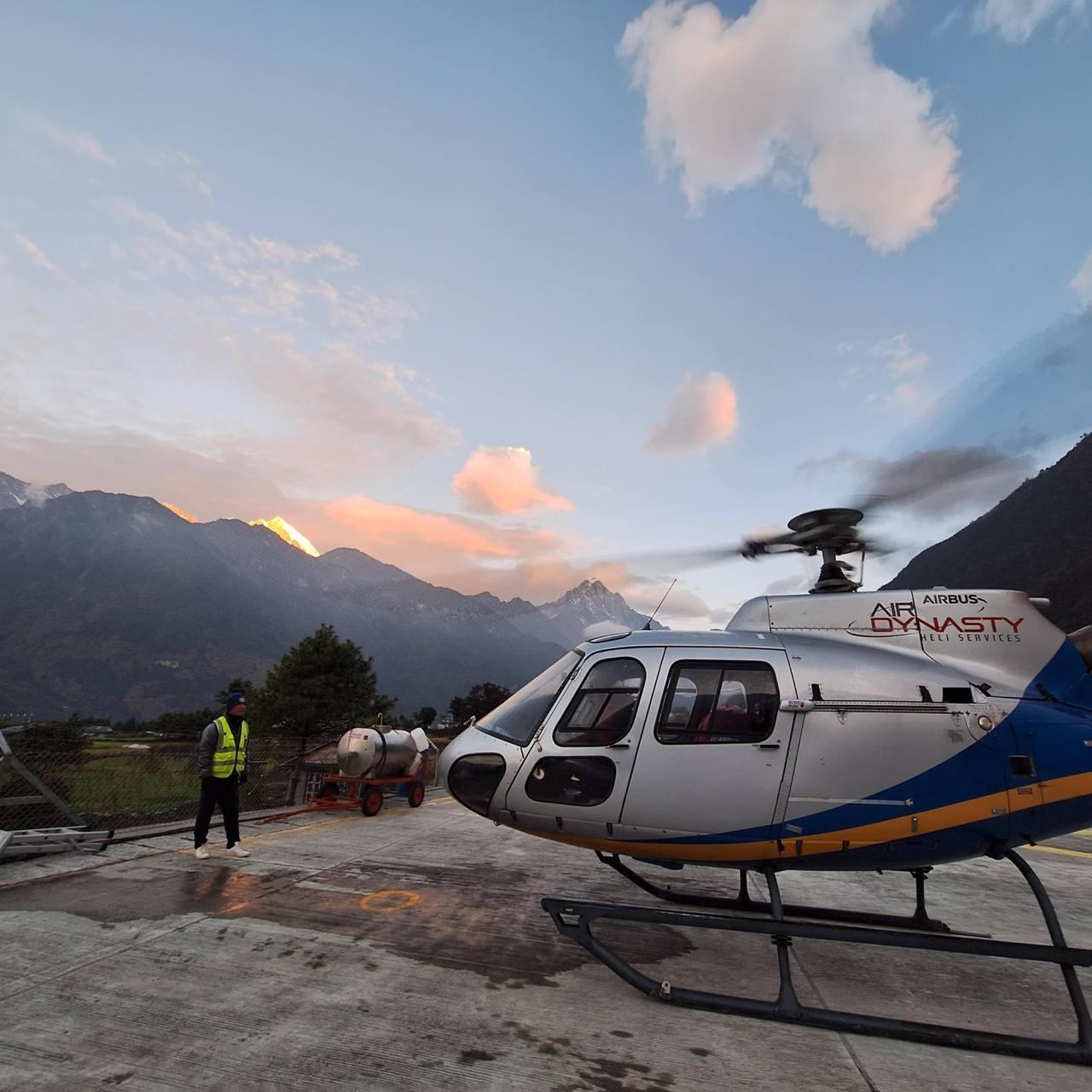
At Aero Connect Nepal, the booking process is designed to coordinate flights with CAAN-approved helicopter operators and adjust the operation when weather, aircraft availability, or other aviation requirements make that necessary. The company acts as a booking agency, not as the aircraft operator. However, all major operators like AirDynasty Heli rely heavily on Aero Connect Nepal for safe and secure flight operations every single day.
Several controls work together: pilot qualifications, aircraft maintenance, weather, passenger weight, baggage, fuel, and route planning, and regulatory compliance all determine whether a flight can proceed. CAAN's helicopter requirements also cover aircraft equipment, operational documentation, and flight crew qualifications and records. For passengers, the best way to assess safety is to look beyond marketing claims. Ask who will operate the flight, whether the operator is authorized, what aircraft will be used, how weather decisions are made, and what happens if the planned departure cannot go ahead.
Mountain flying requires more than a helicopter pilot licence. CAAN's helicopter training rules include mountain qualifications and experience requirements, with published material covering flight experience on type, mountain training, and route and operating-site experience for mountain operations. Its compliance material also refers to pilot qualifications for high-altitude fields and confined or congested helicopter operating areas. This matters around Lukla because pilots must operate in mountainous terrain where elevation, terrain, weather, and aircraft performance interact. Before booking, travellers should look for a company that can identify the licensed operating company and explains that the flight will be conducted by appropriately qualified mountain-flight crew rather than simply advertising "experienced pilots" without meaningful information.
Check out CAAN Helicopter's regulations in Nepal
An airworthy aircraft is essential to safe helicopter operations. CAAN's helicopter requirements set out equipment and flight-document standards, and commercial operators must hold an Air Operator Certificate and comply with its specifications. The AOC provides the basis for authorizing commercial air transport and for continuing safety oversight. Before departure, the crew and operator must check that the aircraft suits the route, payload, fuel requirements, and expected conditions. If an issue is identified, it should be resolved before departure or another suitable aircraft used, not flown simply because passengers are waiting. It's important for passengers to know how to choose a safe helicopter operator in Nepal.
Weather is a key factor on the Kathmandu-Lukla route. Visibility, cloud cover, rain or snow, and wind can affect the route and destination. Nepal's Department of Hydrology and Meteorology provides aviation weather services, and a clear morning in Kathmandu does not mean Lukla is safe for landing. Because conditions can change along the route and at different elevations, pilots and flight operations teams must assess the whole route, not just departure and arrival. Trekkers can check the latest Lukla weather, but the final go/no-go decision is an aviation operational decision.
Passenger and baggage weight directly affects helicopter performance, especially in mountain operations. Accurate passenger weights and baggage information are needed to calculate payload, centre of gravity, fuel requirements and available performance for the planned route, which is why baggage allowances should not be treated as a minor booking detail. Aero Connect's 2026 commercial information asks travellers to confirm passenger details and baggage before finalizing the booking. If actual passenger or baggage weight differs materially from the information provided during booking, the crew may need to reassess the load or seating arrangement.
Lukla is not just a regular city airport at the end of a road. It is the main air gateway to the Khumbu trekking region, sitting at about 2,860 metres. The Nepal Tourism Board identifies it as the starting point for the classic Everest Base Camp route. Those conditions change how flights are planned. The terrain, altitude and weather can affect visibility and aircraft performance. A flight to Lukla therefore needs mountain-specific operational judgement rather than being treated like an ordinary short domestic sector.
Lukla's elevation and location in the Himalayan foothills mean that aircraft performance and terrain awareness are important. As altitude rises, air density falls, which reduces helicopter performance. The operator therefore must consider the aircraft's payload, fuel, route, and expected conditions instead of relying only on the nominal distance between Kathmandu and Lukla. This is also why high-altitude helicopter operations elsewhere in the Everest region may require passenger or baggage adjustments.
Mountain weather can change faster than weather in Kathmandu. Clouds can form quickly in valleys and ridges, visibility can drop, and wind can change during the flight window. DHM maintains an aviation weather service and records observations from Lukla Airport. Its Lukla station is at about 2,786 metres, showing why local mountain observations matter more than Kathmandu weather alone. Department of Hydrology and Meteorology
Kathmandu to Lukla helicopter flights may be delayed or cancelled when weather or operating conditions fall outside the limits required for a safe flight. Visibility, low cloud, rain, wind, and changing mountain conditions can affect the route or landing at Lukla. Conditions in Kathmandu can also be different from those around Lukla, so a clear departure from Kathmandu does not necessarily mean the entire route is suitable. Flight crews and operations teams assess these conditions before and during the planned operation.
Waiting for suitable conditions is a normal part of mountain aviation, not a sign that the flight has been poorly managed. If conditions are temporarily unsuitable, the flight may be delayed until a safe operating window opens. If weather remains unsuitable for the day, the flight may be rescheduled or cancelled according to the applicable booking policy. This is why trekkers should check the Lukla weather before travel and understand the cancellation and rescheduling terms before booking.
Both helicopters and fixed-wing aircraft can be used to reach the Everest region, but they operate differently. A fixed-wing flight generally operates as part of a scheduled airline service, while a helicopter can be arranged through shared-seat or charter services depending on aircraft availability, passenger numbers, and operating conditions.
The difference is not simply "helicopter is safer" or "plane is less safe". That comparison is too broad to be useful. Each aircraft type has different operating characteristics, and the actual safety of an individual flight depends on the aircraft, crew, conditions, and operating decision.
| Factor | Fixed-wing flight | Helicopter flight |
|---|---|---|
| Typical service | Scheduled airline operation | Shared or private charter arrangements |
| Airport requirement | Requires suitable runway and airport infrastructure | Can use designated helicopter operating areas where permitted |
| Scheduling | Usually tied to published airline schedule | Can offer different scheduling arrangements |
| Price | Generally lower | Generally higher |
| Flexibility | More limited | More flexible depending on availability |
| Weather dependency | Still significant | Still significant |
| Weather-proof? | No | No |
| Suitable for | Travellers prioritizing lower transport cost | Travellers prioritizing scheduling flexibility or private/group arrangements |
Fixed-wing aircraft serving Lukla usually operate on scheduled airline services, depending on the airline's timetable and airport conditions. Helicopter services may be available as shared seats or private charters, so travellers have different options depending on the date and aircraft availability. However, a helicopter cannot simply bypass aviation restrictions. It still needs proper authorization, qualified crew, and operation within the relevant weather and performance limits.
For a trekker with limited time, helicopter travel can be an alternative way to manage the schedule. Aero Connect's Kathmandu-Lukla service lists about 45 to 60 minutes of flight time, but airport procedures, weather, air traffic and other operational requirements can make the total trip longer. This can help when a traveller needs to protect a trekking schedule or fit a tight itinerary. However, it should not be treated as a guaranteed time-saving option because mountain weather can also affect helicopters.
Fixed-wing aircraft need a suitable runway and airport environment for takeoff and landing. Helicopters operate differently and may use designated helipads or helicopter operating areas where authorized. At Tenzing-Hillary Airport, CAAN's operational documentation identifies designated areas for helicopter operations. This does not mean helicopters can land anywhere or operate without restrictions. The actual landing location, route, and permission still depend on aviation requirements. CAAN Nepal
A helicopter usually costs more than a scheduled fixed-wing seat because the economics are different. You are paying for the aircraft, crew, fuel, maintenance, operational availability, and, depending on the booking, the flexibility of a shared or charter arrangement. For 2026, Aero Connect lists the shared Kathmandu to Lukla helicopter flight from $540 per person. Its booking information says the final price should be confirmed based on the travel date, passenger details, baggage and operating conditions. For a detailed breakdown, see the Kathmandu to Lukla helicopter flight cost guide before booking.
The safe Kathmandu to Lukla helicopter journey starts with realistic expectations. The aircraft must be airworthy, the crew appropriately qualified, the passenger load correctly planned, and the weather suitable for the route. Just as importantly, the operating team must be willing to delay or cancel when those conditions are not met.
Aero Connect Nepal works as a specialist helicopter booking agency for Himalayan flights. We coordinate shared seats and private charters with CAAN-approved helicopter operators, confirm passenger and baggage details, monitor operational changes and help manage rescheduling when weather affects the original plan. The current 2026 shared Kathmandu to Lukla service starts at US$540 per person, subject to confirmation for your travel date. Aero Connect Nepal
If you are ready to travel, start with the Kathmandu to Lukla helicopter flight page. If you are returning after your trek, you can also review the Lukla to Kathmandu helicopter flight option. For travellers continuing beyond Lukla, Aero Connect can also arrange Everest-region helicopter packages and related flight logistics.
A Kathmandu to Lukla helicopter flight with Aero Connect starts from US$540 per person for a shared flight, while private charter pricing depends on the group size and aircraft arrangement. The final fare should be confirmed based on your travel date, passenger numbers, baggage, and operating conditions.
You can book through Aero Connect Nepal by providing your travel date, number of passengers, and baggage details. Aero Connect coordinates your booking with the appropriate helicopter operator and confirms the flight arrangements before departure.
Yes, Aero Connect can arrange private helicopter charters for travellers who prefer to travel as their own group rather than share available seats. Charter pricing depends on the aircraft, travel date, passenger numbers and operational requirements.
A standard booking covers the helicopter flight according to the confirmed itinerary and applicable passenger and baggage allowance. Airport charges, additional ground transportation, or other services should be confirmed with Aero Connect when requesting your quote.
Yes, Aero Connect can arrange a Lukla to Kathmandu helicopter flight subject to aircraft availability and suitable weather conditions. This option can be useful for trekkers who want to reduce the time required for their return journey.
Yes, Aero Connect offers Everest Base Camp helicopter tour arrangements that can include Lukla and other points in the Everest region depending on the selected itinerary. The flight remains subject to weather, aircraft availability and applicable aviation requirements.
If weather prevents the flight from operating, Aero Connect coordinates with the operating company regarding delay, rescheduling or cancellation under the applicable booking policy. Travellers should review the weather cancellation and refund conditions before confirming payment.
Yes, Aero Connect can provide a custom quote based on your travel date, passenger count, baggage, and whether you need shared seats or a private charter. This is particularly useful for families, trekking groups and travellers combining Lukla with an Everest helicopter itinerary.
A Kathmandu to Lukla helicopter flight can be operated safely when the aircraft, crew, weather, passenger load, and route meet applicable operating requirements. No responsible aviation company should describe the flight as completely risk-free or guarantee departure in unsuitable conditions.
Safety depends on qualified mountain-flight crew, an airworthy aircraft, appropriate weight and flight planning, weather assessment and compliance with aviation regulations. The decision to delay or cancel when conditions are unsuitable is also an important part of safe operations.
Mountain weather can change quickly, with clouds, rain, wind, and reduced visibility affecting the route or Lukla landing conditions. A clear sky in Kathmandu does not necessarily mean that conditions along the entire route are suitable for flight.
Flights may be delayed when visibility, cloud, precipitation, wind or other operating conditions are temporarily unsuitable. Waiting for a suitable operating window is a normal safety decision in mountain aviation.
No, helicopters still operate within weather and aircraft-performance limitations. If conditions fall outside those limits, the flight may need to wait, reschedule or cancel.
It is not accurate to say that one aircraft type is inherently safer than the other for every situation. Helicopter and fixed-wing flights have different operating characteristics, while the safety of an individual flight depends on the aircraft, crew, weather, route and operating conditions.
Lukla is located at approximately 2,860 metres in mountainous terrain, where elevation, surrounding terrain and rapidly changing weather can affect flight operations. These conditions require appropriate aircraft performance, experienced crew and careful assessment before departure and landing.