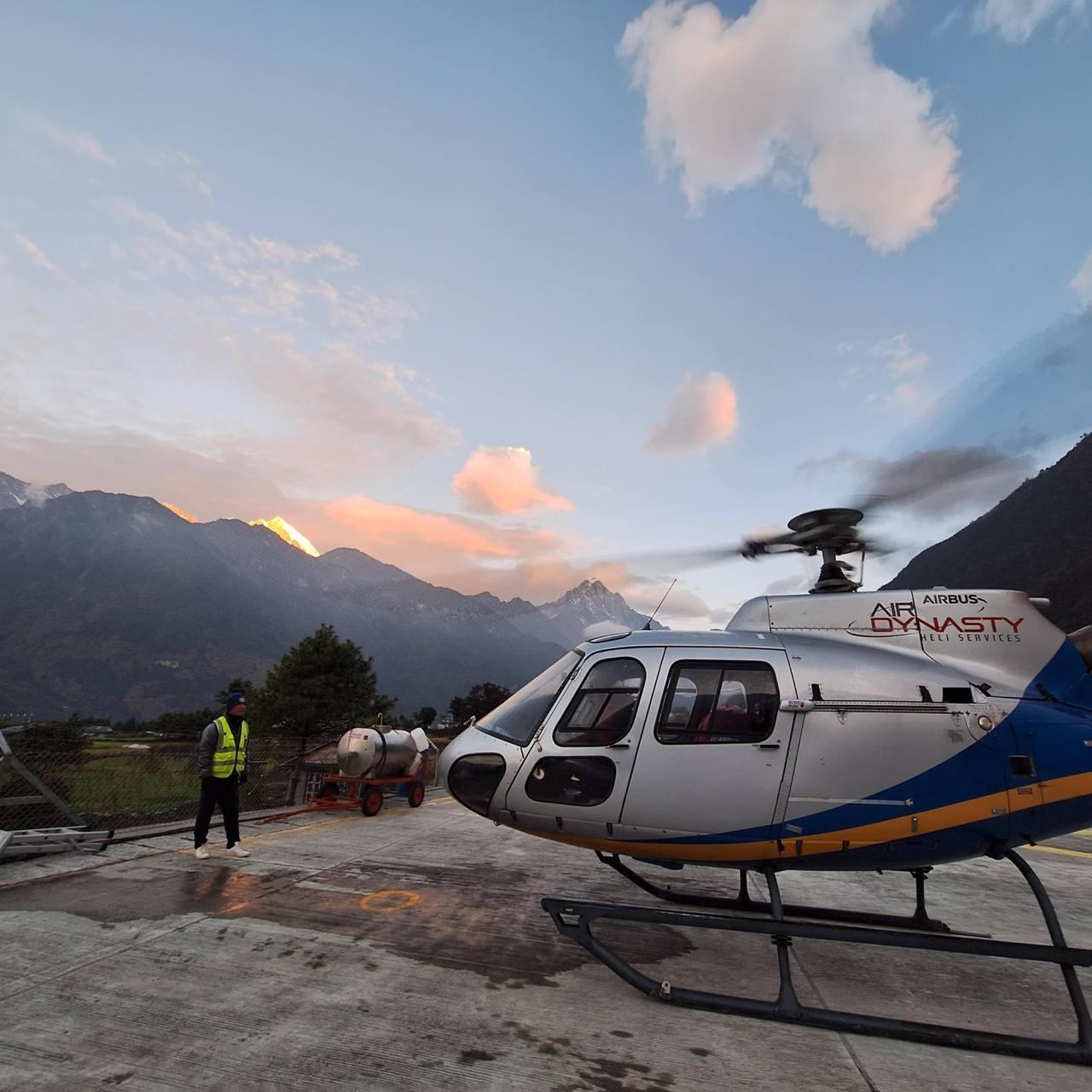
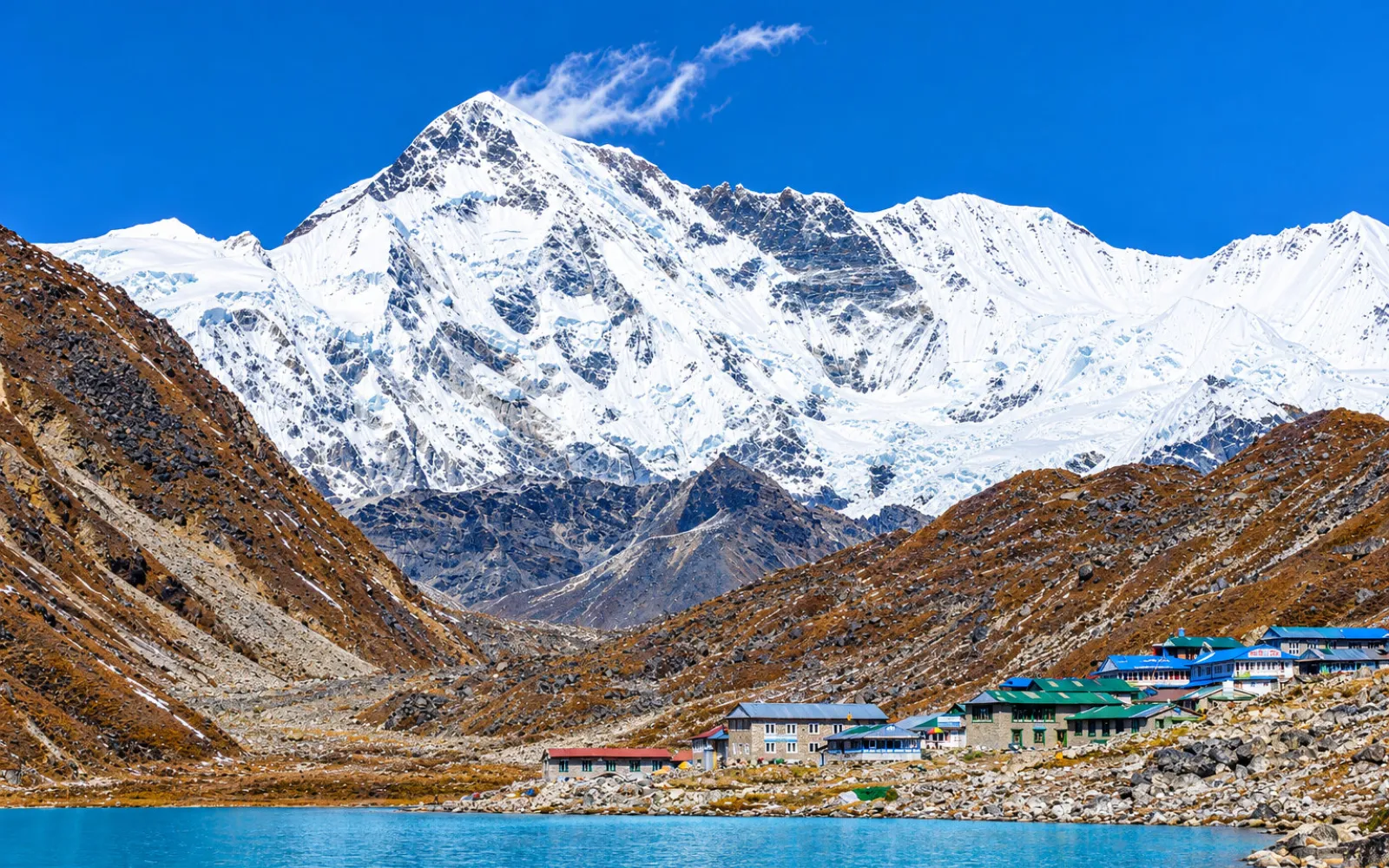
Trekking and helicopter tours are very different ways to explore Nepal and reach remote, beautiful destinations. A typical Everest Base Camp trek takes about 12 to 14 days, while an Everest helicopter tour usually takes about 2 to 5 hours, depending on the itinerary. Trekking may have a lower upfront price, but the full cost also includes accommodation, meals, domestic flights, permits, guide or porter services, insurance, trekking equipment, and extra days in Nepal. A helicopter tour costs more at first, but it saves a lot of time and cuts many of the costs of a multi-day trek.
If you want to choose a helicopter tour, Aero Connect Nepal is the best agency to choose. We offer Everest helicopter options starting at about $1,300 for an EBC overfly and $1,600 for an EBC tour with a Kala Patthar landing, depending on the itinerary. If keeping upfront cash costs as low as possible is the main goal, trekking can be cheaper. If you want to see Everest, save more than 10 days of travel time, and avoid many trekking-related expenses, a helicopter tour can be more cost-effective overall.
If you are interested in which travelers prefer which mode of exploration, then please continue engaging with our blog.
Trekking in Nepal can cost anywhere from a few hundred dollars for a short trek to more than $2,000 for longer or restricted routes. In 2026, a typical guided trek falls around $700 to US$2,000 per person, depending on the route, duration, accommodation, transportation, guide and porter arrangements, permits, and level of comfort. Shorter routes such as Poon Hill or Mardi Himal can be completed for less, while longer routes such as Everest Base Camp, Manaslu, or Upper Mustang require a larger budget.
The advertised trekking package is not always the complete cost. A trekker may also need to budget for Kathmandu accommodation, domestic transportation, trekking equipment, travel insurance, personal expenses, tips, and additional nights caused by weather or transportation delays. Daily teahouse accommodation and meals alone can range from roughly $25 to $65, depending on the region and altitude, while licensed guides commonly cost around US$30 to US$35 per day and porters around $25 to $30 per day.
Trekking in Nepal can cost anywhere from a few hundred dollars for a short trek to more than US$2,000 for longer or restricted routes. In 2026, a typical guided trek falls around US$700 to US$2,000 per person, depending on the route, duration, accommodation, transportation, guide and porter arrangements, permits, and level of comfort. Shorter routes such as Poon Hill or Mardi Himal can be completed for less, while longer routes such as Everest Base Camp, Manaslu, or Upper Mustang require a larger budget.
The advertised trekking package is not always the complete cost. A trekker may also need to budget for Kathmandu accommodation, domestic transportation, trekking equipment, travel insurance, personal expenses, tips, and additional nights caused by weather or transportation delays. Daily teahouse accommodation and meals alone can range from roughly US$25 to US$65, depending on the region and altitude, while licensed guides commonly cost around US$30 to US$35 per day and porters around US$25 to US$30 per day.
| Expense | Typical Cost Consideration |
|---|---|
| Accommodation | Kathmandu hotel plus mountain lodges or teahouses |
| Meals | Breakfast, lunch, and dinner during the trek |
| Transportation | Road transfers or domestic flights, depending on the route |
| Permits | Conservation, national park, TIMS, or restricted-area fees |
| Guide | Usually charged per trekking day or included in a package |
| Porter | Optional on some routes, commonly included in guided packages |
| Equipment | Purchase or rental of trekking clothing, sleeping bags, poles and other gear |
| Insurance | Travel insurance with appropriate trekking and high-altitude coverage |
| Extra nights | Additional accommodation and meals if weather or transport delays affect the itinerary |
| Tips | Gratuities for guides, porters and support staff |
The route makes a big difference. A 5- to 7-day trek in the Annapurna region may cost much less than a 14- to 16-day restricted-area trek. For example, current 2026 market estimates put budget guided packages around $280 to $420 for shorter Poon Hill or Mardi Himal routes, while longer routes such as Manaslu and Upper Mustang can reach $1,200 to $2,600 or more, depending on the package and comfort level.
This is why comparing only the price of a trekking package with a helicopter ticket can be misleading. A better comparison is the total trip cost, including how many days you need, what you spend during those days, and what transportation and support are required. If you are more interested in trekking, than helicopter tour, check our peak trekking seasons in Nepal.
Helicopter tour prices in Nepal vary according to the destination, flight duration, aircraft requirements, number of passengers, and whether you book a shared flight or private charter. Aero Connect Nepal currently has helicopter tour package experiences starting from $850 for selected Everest-region tours, $1,300 for an Everest Base Camp overfly, $1,350 for the Muktinath Darshan helicopter tour, and $1,600 for an Everest Base Camp tour with a Kalapatthar landing. Private charters and custom itineraries are priced according to the group size, route, and flight requirements.
The destination is only one part of the calculation. Flight duration, aircraft type, passenger numbers, shared or private arrangements, landing requirements, airport and landing charges, season, and weather or operational conditions can all affect the final price. A short sightseeing flight may cost considerably less than a private mountain charter covering a longer route or requiring a specific landing. Aero Connect publishes prices for several fixed departures, while private charters and fully customized helicopter itineraries are quoted according to the exact requirements.
A helicopter tour has a higher upfront cost because the price covers an aviation operation rather than only transportation from one destination to another. Aircraft operating costs include aviation fuel, pilot and crew costs, maintenance, airport and landing charges, and the limited passenger capacity of a helicopter. The aircraft also provides direct access to remote mountain destinations without requiring several days of road travel or trekking, which is why the price needs to be compared against the total cost and time of the alternative journey, not simply against a single trekking or flight ticket.
Aero Connect also publishes package prices upfront for its fixed tours, helping travelers compare the actual cost before booking. Furthermore, Aero Connect's booking model can help offset part of that cost by accessing commercial helicopter rates and coordinating available seats, with potential savings of $200 to $300 compared with some direct operator quotations. The exact savings are not guaranteed and depend on the specific flight, date, capacity, and booking terms.
So, plan your helicopter tour with Aero Connect Nepal today.
The time required for trekking in Nepal depends heavily on the route. Shorter treks can take around 3 to 5 days, medium-length routes commonly require 7 to 10 or more days, while major Himalayan treks can take 12 to 20+ days. The itinerary also needs to account for acclimatization days, transportation to and from the trailhead, weather delays, and additional nights when flights or road transfers are disrupted.
Helicopter tours compress much of this travel into a few hours. A mountain sightseeing or transfer flight may take 2 to 5 hours, although the exact duration depends on the destination, landing point, ground time, aircraft, weather, and selected itinerary. This difference creates an important opportunity cost.
A traveler taking a 10-day trek may need to take significantly more time away from work, business or other travel plans, while a helicopter passenger may complete the mountain experience within a half-day and return to Kathmandu or continue with the rest of their Nepal itinerary. For travelers with limited vacation time, the higher upfront helicopter price can therefore be weighed against the accommodation, meals, transportation and other expenses associated with spending many additional days on a trekking route. Check out our Lukla to Kathmandu helicopter tour to learn more about the detailed plan.
Trekking usually has a lower daily transportation cost, but it also takes more days and can add expenses for accommodation, meals, ground transportation, equipment, permits, and guide or porter services. If the trip runs longer because of weather or transport delays, you may also pay for extra hotel nights and other personal costs. So the initial trekking package may look cheaper, but it does not always show the full cost.
A helicopter tour has a higher transportation cost, but it gets you there much faster. Instead of spending several days traveling to and from a mountain destination, many helicopter trips take only a few hours. For people who are taking time off work or business, the days saved also have value.
The real comparison is not trekking package price versus helicopter ticket. It is the total trekking cost and time commitment versus the total helicopter cost and time commitment. If you have plenty of time and want the full trekking experience, trekking may make sense. If you want to reach a mountain destination quickly and avoid several days of extra expenses, a helicopter tour may be more cost-effective overall.
Check out our details on Everest Base Camp Helicopter Tour Cost: Complete 2026 Price Guide.
A helicopter tour can give travelers access to remote mountain destinations without requiring several days of walking to reach them. Depending on the itinerary, a helicopter can take passengers from Kathmandu or another departure point to destinations such as Muktinath, Everest region viewpoints, Annapurna destinations, and other mountain locations within a few hours. This can save several days of accommodation, meals, ground transportation, and trekking expenses while allowing travelers with limited vacation time to experience Nepal's high-altitude regions.
A helicopter also removes the need for a porter, multi-day mountain lodge itinerary, and extensive trekking equipment. Travelers can choose short sightseeing flights or arrange a private charter when they need a more flexible itinerary or are traveling as a group. This makes helicopter travel particularly practical for people who cannot commit to a week or more on a trekking route.
However, helicopter access is still subject to aircraft availability, weather, route conditions, landing permissions, and operational requirements, so no destination should be assumed to operate every day. Aero Connect Nepal coordinates helicopter bookings and passenger logistics with operating partners, helping travelers check the available route, schedule, and conditions before departure.
Please book your Everest Hotel View Helicopter Tour today
The most useful comparison is the total cost of the trip, not simply the advertised trekking package or helicopter ticket. Trekking usually spreads expenses across several days, including accommodation, meals, transportation, permits, guides, porters, and equipment, while a helicopter tour concentrates most of the cost into a short flight and can reduce the number of additional travel days required.
The most useful comparison is the total cost of the trip, not simply the advertised trekking package or helicopter ticket. Trekking usually spreads expenses across several days, including accommodation, meals, transportation, permits, guides, porters, and equipment, while a helicopter tour concentrates most of the cost into a short flight and can reduce the number of additional travel days required.
| Cost Factor | Trekking in Nepal | Helicopter Tour in Nepal |
|---|---|---|
| Upfront price | Generally lower | Generally higher |
| Trip duration | 3 to 20+ days, depending on route | Usually a few hours |
| Accommodation | Multiple nights required | Usually little or no mountain accommodation |
| Meals | Daily meals throughout the trek | Package dependent |
| Transportation | Road transfers and/or domestic flights | Helicopter flight included in itinerary |
| Guide | Often required | Not normally required for sightseeing |
| Porter | Optional or commonly used | Not required |
| Permits | Route dependent | Destination and flight dependent |
| Equipment | Trekking gear required | Significantly less equipment required |
| Physical effort | Moderate to strenuous | Minimal walking for most itineraries |
| Weather delays | Can add accommodation and travel costs | Flight may be rescheduled or cancelled |
| Time away from work | Several days to several weeks | Usually a few hours |
| Private option | Private trekking arrangements available | Private helicopter charter available |
| Best suited for | Travelers who want the full trekking experience | Travelers prioritizing time, access, and convenience |
Aero Connect Nepal is a premium helicopter booking agency and direct commercial source for helicopter capacity in Nepal, built around the operational realities of mountain aviation. Rather than functioning as a simple middleman who forwards your inquiry to an operator, Aero Connect manages access to available helicopter seats, commercial bookings, passenger requirements, and the ground-side logistics for your flight.
The opportunity provides travelers with a direct booking channel to Nepal's helicopter network, with pricing and availability managed by a team that works within the aviation booking flow every day. The helicopter itself is operated by the relevant licensed aviation company, while Aero Connect handles the customer-facing commercial and logistical side of the journey.
Aero Connect's operational reach continues beyond Kathmandu. Representatives in Lukla, Namche, Tengboche, Dingboche, other Sherpa settlements, and Kathmandu can assist passengers throughout their journey, including destination coordination and on-the-ground support when plans change. Within just two months of its inception, Aero Connect has already provided services to 3,000+ customers and successfully conducted 200+ flights across Nepal. Whether you are booking Muktinath, the Annapurna region, the Everest region, Langtang, or a private mountain charter, Aero Connect gives you access to helicopter capacity backed by a dedicated mountain support network.
A helicopter operator's direct quotation is not automatically the best available commercial rate. Aero Connect's access to helicopter capacity can allow customers to receive $200 to $300 in savings on selected bookings, depending on the route, date, passenger numbers, availability, and booking terms. Instead of comparing only a ticket price, compare who can access the aircraft, secure your seats, handle passenger logistics, and support you when weather or operational conditions affect the schedule.
Check Aero Connect's available helicopter tours before paying a higher direct quotation. Get the actual price, confirm your seats, and have a mountain-based team supporting your journey from booking to completion.
Trekking in Nepal can cost less upfront, but a helicopter tour can be more cost-effective when you consider the full cost of accommodation, meals, transport, equipment, extra days, and time away from work. The right option depends on your budget, available time, physical commitment, and the type of mountain experience you want. For travelers who value speed, convenience, and direct mountain access, a helicopter tour offers a practical alternative to a multi-day trek.
It depends entirely on your constraints. If you have 12–14 days and want cultural immersion, gradual acclimatization, and physical accomplishment, trekking is better. If you only have a single morning or lack the physical fitness for intense high-altitude hiking, the helicopter tour is the superior option.
A shared tour books you a single seat alongside other travelers (typically 4–5 passengers total), keeping costs low ($1,100–$1,500). A private charter rents the entire aircraft ($4,500–$6,500), allowing you to choose your travel group, customize the flight schedule, and secure flexible weights,
Yes. While Everest is the most famous, operators frequently run day tours to Annapurna Base Camp, Langtang Valley, Gosaikunda Lakes, and Muktinath.
Ground time at extreme altitudes like Kala Patthar (5,545m) or Everest Base Camp is strictly limited to 10–15 minutes due to the immediate risk of acute mountain sickness (AMS). However, you usually get a longer 30-to-45-minute stop for breakfast at lower, safer vantage points like the Hotel Everest View.
A heli-trek is a hybrid itinerary. You spend 7 to 11 days trekking uphill to experience the local culture and mountain paths, and then you skip the exhausting return hike by boarding a helicopter directly from the base camp back to Lukla or Kathmandu.
In absolute base package costs, they are nearly identical, running between $1,100 and $1,600 per person. However, trekking is vastly cheaper on a per-day basis ($80–$130/day vs. $300+/hour) and builds in weeks of food and lodging.
Most base flight quotes exclude the Sagarmatha National Park permit ($30–$40), local government/municipality taxes ($20–$30), and your breakfast at the world's highest hotel ($30–$40).
While trekking packages cover rooms and basic meals, you must pay out-of-pocket for trail luxuries: hot showers ($2–$5), device charging ($1–$5 per item), Wi-Fi access ($2–$7/day), snacks, and the standard tip for your guide/porter ($150–$300+).
Yes. Local operators maintain daily departure manifests during peak spring and autumn seasons to pool solo travelers into groups of five, allowing individuals to access the lower $1,100–$1,400 group rate instead of paying for a private charter.
Yes, but the risk profile is different. Because you fly rapidly from Kathmandu (1,400m) to over 5,000 meters without acclimatization, you may feel brief dizziness or a minor headache. However, because the ground stay is kept under 15 minutes, dangerous medical emergencies are rare.
Both are generally safe when proper protocols are followed. Trekking poses a higher risk of gradual acute mountain sickness (AMS) if you ascend too fast. Helicopters eliminate long-term altitude threats but are highly vulnerable to alpine weather anomalies.
Aviation safety guidelines in the Himalayas are incredibly strict. If there is poor visibility, high winds, or heavy cloud cover, your flight will be delayed or canceled. Reliable agencies will offer a rescheduled slot the next morning or a refund minus basic ground handling fees.
Your standard trekking permits (like the TIMS card or National Park entry) do not cover aviation logistics. If you choose to exit via helicopter because you are tired (and it is not an insured medical emergency), you must pay an on-the-spot charter fee ranging from $500 to $1,000 from key hubs like Lukla or Namche.
Annapurna helicopter flights are much cheaper than Everest tours because the distance from the nearest launch pad (Pokhara) is shorter. A shared seat to Annapurna Base Camp generally runs between $450 and $600 per person, compared to Everest's $1,100+.
Standard shared group helicopter tours do not operate directly between Pokhara and Everest Base Camp due to the massive distance and fuel constraints. If you are staying in Pokhara, you must either take a short domestic flight to Kathmandu first or pay for an expensive, custom private charter.