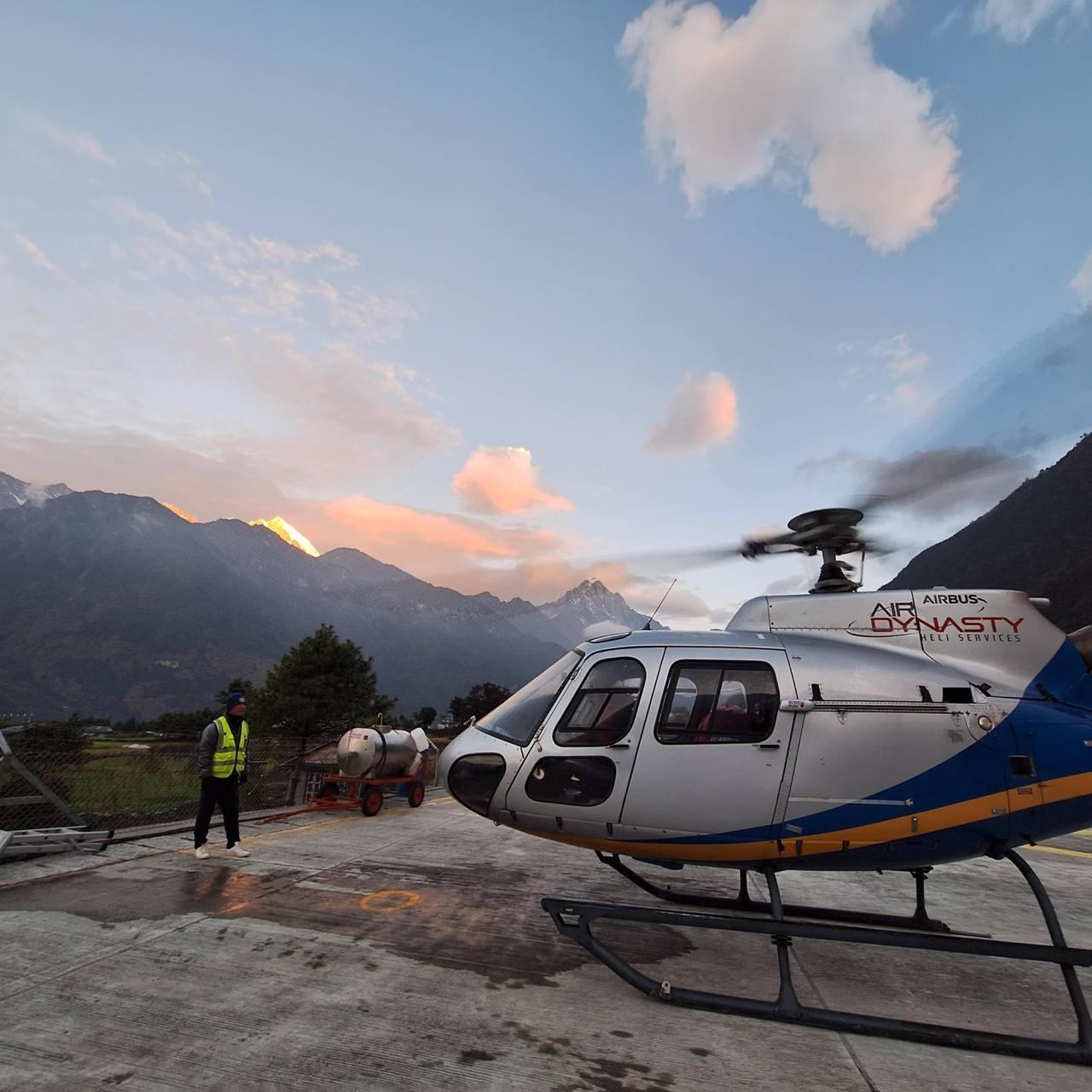
Helicopter passenger capacity in Nepal can change with seasonal operating requirements and flight conditions. During applicable monsoon operations, CAAN may require dual-pilot operations, meaning the Pilot in Command (PIC) is accompanied by a second pilot. On aircraft configured for 1 pilot + 5 passengers, this can reduce passenger capacity to four.
After the applicable dual-pilot requirement ends, flights can return to the approved single-pilot configuration, potentially restoring five passenger seats. However, actual capacity still depends on passenger weight, baggage, fuel, altitude, temperature, weather, and aircraft performance.
Aero Connect Nepal helps travelers navigate these operational factors by acting as a bridge between customers and helicopter operators, with operational connections and representative support at key airports and helipads. From shared and private bookings to Everest, Lukla, Annapurna, Mustang, and other helicopter flights, Aero Connect helps travelers understand available options and coordinate their journey.
For travelers, the key takeaway is simple: seat availability is only one part of helicopter capacity. CAAN requirements and actual flight conditions determine how many passengers can safely be carried on a particular flight.
During Nepal's monsoon season, the Civil Aviation Authority of Nepal (CAAN) introduces additional operational requirements for helicopter flights. Under CAAN Monsoon Circular 03/2025, issued on 20 May 2025, helicopter flights up to 12,000 feet AMSL during the monsoon season were required to operate with two pilots. During this period, helicopter operations in Nepal are required to be conducted under dual-pilot operations, with an exception for medical-evacuation flights carrying stretcher patients.
This seasonal requirement is important for passengers because the minimum flight crew can affect the number of passenger seats available in a particular aircraft configuration. CAAN's Helicopter Flight Operations Requirements also state that the flight crew must not be less than the minimum approved for the aircraft and route. Therefore, passenger capacity during monsoon should not be viewed simply as a fixed number of seats; it depends on the applicable crew requirement, aircraft configuration, route, and operational limitations.
Under CAAN's 2026 Monsoon Circular, all helicopter flights during the 2026 monsoon season were required to operate with two pilots, except medical-evacuation flights carrying stretcher patients. The directive came into effect on 15 June 2026 and remains in force until the Department of Hydrology and Meteorology declares the end of the monsoon.
The requirement forms part of CAAN's broader monsoon safety measures, which also include pre-flight technical checks, detailed weather assessment, identification of alternative landing sites, and additional precautions for mountain helicopter operations.
The 2026 requirement has also been independently reported by major Nepali media, including The Kathmandu Post and Kantipur, providing additional context around its application to helicopter operations.
Nepal's monsoon can bring heavy rainfall, reduced visibility, turbulence, windshear and rapidly changing mountain weather. CAAN's monsoon requirements therefore introduce additional operational measures for helicopter flights, including dual-pilot operations for applicable flights. The additional pilot provides another qualified crew member for weather monitoring, navigation, communication and operational decision-making during challenging conditions.
For passengers, the requirement can have a practical effect: when a second pilot is required, one seating position is occupied by flight crew rather than a passenger. On aircraft configurations where five passenger seats are available during single-pilot operations, this can result in four passenger seats being available when dual-pilot operations are required.
For a broader understanding of Nepal’s seasonal flying conditions, see Aero Connect Nepal’s guide to Nepal’s monsoon and September weather conditions. Travelers can also review CAAN’s official aviation circulars for the applicable regulatory requirements.
A helicopter’s passenger capacity depends not only on its approved seating configuration but also on the number of pilots required for the flight. When dual-pilot operations are mandatory, one additional seat is occupied by a pilot, reducing the number of seats available to passengers.
For example, an aircraft configured for one pilot and five passengers may accommodate four passengers when two pilots are required. After the applicable dual-pilot requirement ends, the aircraft may return to its approved single-pilot passenger configuration, subject to aircraft weight, fuel, altitude, weather, baggage, and operational limitations.
This is why the number of available passenger seats can change seasonally even when the helicopter itself remains the same.
The difference is straightforward: the second pilot occupies a seat that could otherwise be used by a passenger.
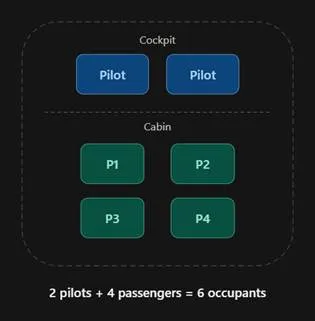
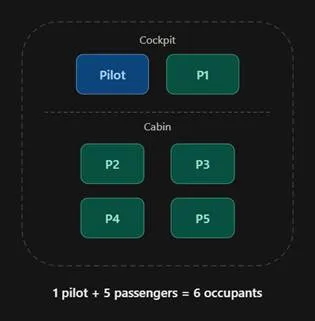
SINGLE VS DOUBLE PILOT CONFIGURATION
The change from four to five passengers is primarily related to the number of pilots required to operate the helicopter under applicable seasonal rules.
During applicable dual-pilot operations, the Pilot in Command (PIC) is responsible for the overall conduct and safety of the flight, while the second pilot serves as an additional flight crew member. In an aircraft configured for one pilot and five passengers, this can leave four passenger positions available.
When single-pilot operations apply, the PIC operates the helicopter as the sole pilot, allowing the aircraft to return to its approved 1 pilot + 5 passengers configuration.
The five-passenger capacity remains subject to the helicopter’s approved configuration and operational limitations, including passenger weight, baggage, fuel, altitude, weather, and aircraft performance.
The five-passenger capacity remains subject to the helicopter’s approved configuration and operational limitations, including passenger weight, baggage, fuel, altitude, weather, and aircraft performance.
With Nepal’s monsoon operating period over, applicable helicopter flights can return to their approved single-pilot configuration, in accordance with current CAAN aviation requirements and the operator’s approved procedures.
For an aircraft configured for 1 pilot + 5 passengers, this means all five passenger positions can be available again. During applicable dual-pilot operations, the second pilot occupies one position, reducing passenger capacity to four. The final load still depends on passenger weight, baggage, fuel, altitude, weather, and aircraft performance.
The transition out of monsoon is also monitored by DHM’s monsoon services. For more context on Nepal’s changing flying conditions, see Aero Connect Nepal’s August and September weather guide.
In simple terms: 2 pilots + 4 passengers during applicable dual-pilot operations → 1 pilot + 5 passengers after the requirement ends, subject to operational limitations.
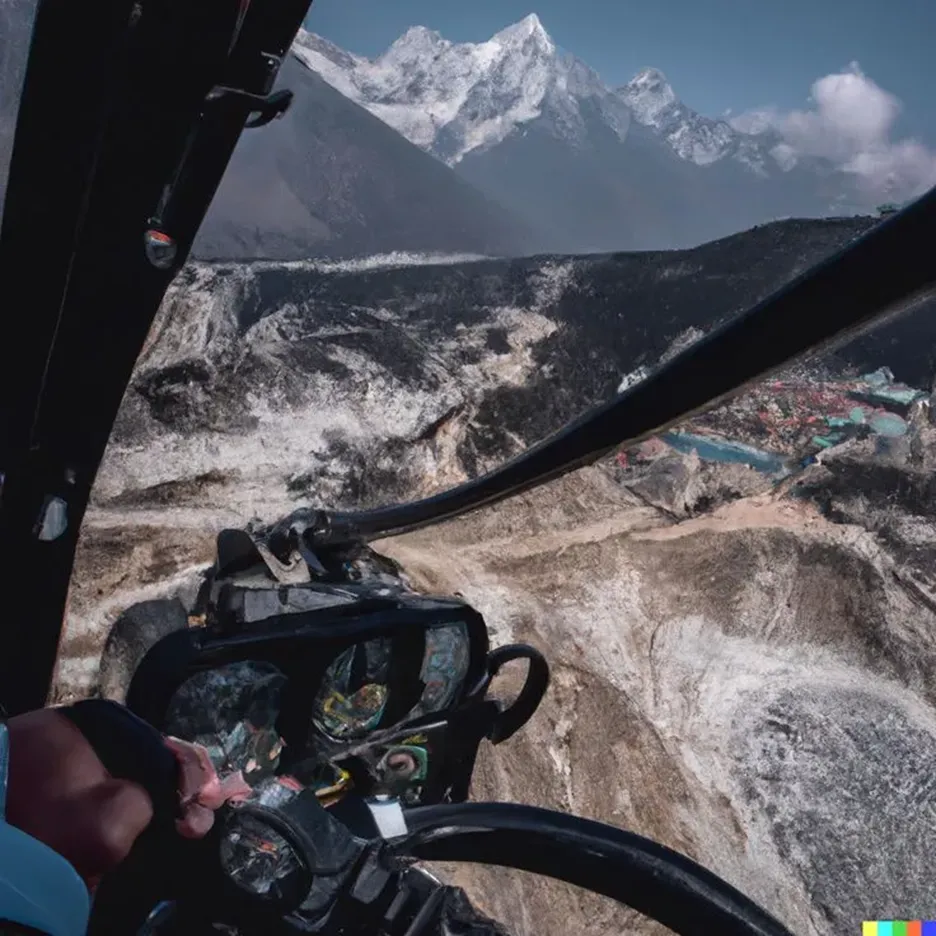
Passenger capacity is not determined by the number of seats alone. Every helicopter flight must remain within its approved weight, balance, fuel, altitude, weather, and performance limitations. CAAN’s helicopter flight-operation requirements establish operational and crew requirements, while the aircraft manufacturer’s approved limitations guide safe loading and performance. CAAN Helicopter Flight Operations Requirements
For high-altitude routes such as Everest, passenger and baggage weight becomes particularly important because altitude, temperature, and air density can affect helicopter performance. Therefore, even when five passenger seats are available under single-pilot operations, the actual passenger load may be adjusted to keep the aircraft within safe operating limits.
For travelers, this means approved seating capacity and actual flight capacity are not always the same. The final passenger load is confirmed by the operator based on the aircraft, route, weather, fuel requirement, and conditions on the day of flight.
Passenger capacity depends on total payload, not simply the number of available seats. The combined weight of passengers and baggage must remain within the helicopter’s approved operating limits, while enough fuel must be carried for the planned flight.
This becomes particularly important on high-altitude routes, where temperature, altitude, and air density can affect helicopter performance. If the total payload is too high, the operator may need to reduce passenger numbers, limit baggage, or adjust the fuel and flight plan.
For travelers, providing accurate passenger and baggage weights when booking helps the operator plan the flight safely and avoid unexpected capacity changes.
At higher altitudes and temperatures, air density decreases, which can reduce helicopter lift and overall performance. Wind, visibility, turbulence, and precipitation can also influence flight conditions, particularly on high-altitude routes such as Everest.
For a deeper look at Nepal’s seasonal flying conditions, see Aero Connect Nepal’s guide to Weather Reality & High Altitude Technical Challenges in Nepal and our related seasonal blogs.
Approved seating capacity does not always equal actual flight capacity. A helicopter approved for five passengers may carry fewer depending on passenger and baggage weight, fuel requirements, altitude, temperature, weather, and aircraft performance. These factors must remain within the aircraft’s approved operating limitations and applicable CAAN helicopter flight-operation requirements.
Therefore, five available seats does not always mean five passengers can be carried. The operator confirms the final passenger load before departure based on the conditions of that specific flight.
Passenger capacity can affect how many travelers can join a shared helicopter flight. When fewer passenger seats are available, groups may need to be split across flights or scheduled differently. After the applicable dual-pilot period ends, increased passenger availability can make group planning more straightforward, subject to operational limits.
For more information on the differences between shared and private flights, see Aero Connect Nepal’s Shared vs. Private Helicopter Tours in Nepal guide.
For Everest and other high-altitude flights, passenger capacity depends on more than available seats. Passenger weight, baggage, altitude, temperature, weather, fuel, and aircraft performance can affect the final load.
When planning your trip, explore Aero Connect Nepal’s Everest Base Camp Helicopter Tour with Kala Patthar Landing, Everest Base Camp Helicopter Overfly Tour, Hotel Everest View Helicopter Tour, Kathmandu to Lukla Helicopter Flight and Kongde Helicopter Tour with Breakfast.
Providing accurate passenger and baggage details when booking helps the operator assess the appropriate payload, flight configuration, and operating conditions before departure.
Planning a helicopter flight in Nepal involves more than selecting a destination. Weather, aircraft configuration, passenger weight, baggage, altitude, fuel requirements, seasonal operating rules, and real-time flight conditions can all affect the final operation.
Aero Connect Nepal acts as the bridge between travelers and helicopter operators. Through its network and operational connections with helicopter operators across Nepal, Aero Connect helps travelers access the right flight options while coordinating with the operational side of the journey.
Aero Connect also maintains representative support at key airports and helipads, helping coordinate passengers, flight information, ground arrangements, and operational updates at different points of the journey. This gives travelers a direct connection between the booking desk, local ground support, and helicopter operation rather than relying solely on a third-party booking platform.
For Everest and high-altitude travel, customers can explore Aero Connect’s Everest Base Camp Helicopter Tour with Kala Patthar, Everest Helicopter Overfly Tour, Hotel Everest View Helicopter Tour, and Kongde Helicopter Tour.
Aero Connect’s supporting content also helps travelers understand the factors behind their flight, including Nepal’s seasonal helicopter weather conditions, how to choose a safe helicopter operator, and shared vs. private helicopter tours.
From booking to airport coordination and onward helipad support, Aero Connect Nepal connects the traveler-facing experience with the operational side of helicopter travel in Nepal. This helps customers make informed bookings based on the actual route, aircraft, seasonal conditions, and operational requirements of their flight.
The cost of a 2-seater helicopter in Nepal depends on the aircraft type, route, flight duration, fuel requirements, and whether the flight is private or shared. High-altitude routes can also have different pricing due to operational requirements. For an accurate quote, travelers should provide their route, travel date, and number of passengers to the operator or booking provider.
Nepal’s monsoon generally occurs from June to September, although the exact onset and withdrawal dates can vary each year. The Department of Hydrology and Meteorology (DHM) officially monitors and publishes monsoon onset and withdrawal information.
Helicopter pilot salaries in Nepal vary according to experience, aircraft type, qualifications, employer, and the nature of operations. Pilots involved in high-altitude, rescue, charter, or specialized operations may have different compensation structures. There is no single official salary applicable to all helicopter pilots.
Helicopter hourly rates in Nepal vary depending on the aircraft type, operator, route, fuel requirements, and operational conditions. Charter pricing may also include positioning, landing, ground handling, or other operational costs, so an hourly rate alone does not necessarily represent the total flight cost.
Private jet costs depend on the aircraft type, flight route, number of passengers, flight duration, positioning requirements, and airport charges. International and domestic charter costs can therefore vary significantly. A direct quotation is required for an accurate price.
A helicopter is generally chartered based on the aircraft and route rather than priced simply per person. A solo traveler may therefore pay for a private charter or, where available, book a seat on a shared helicopter flight. The final price depends on the route, aircraft, duration, and operating conditions.