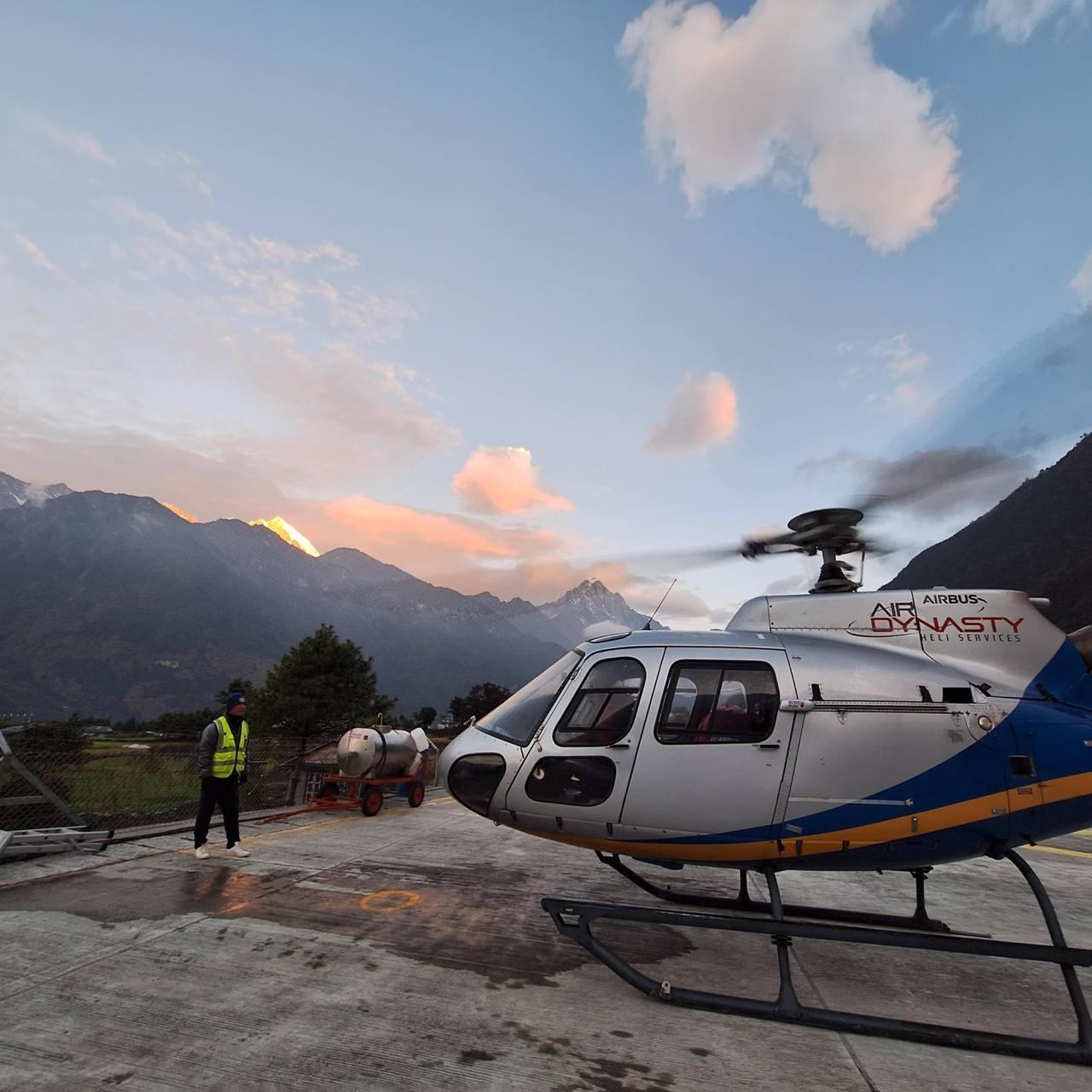
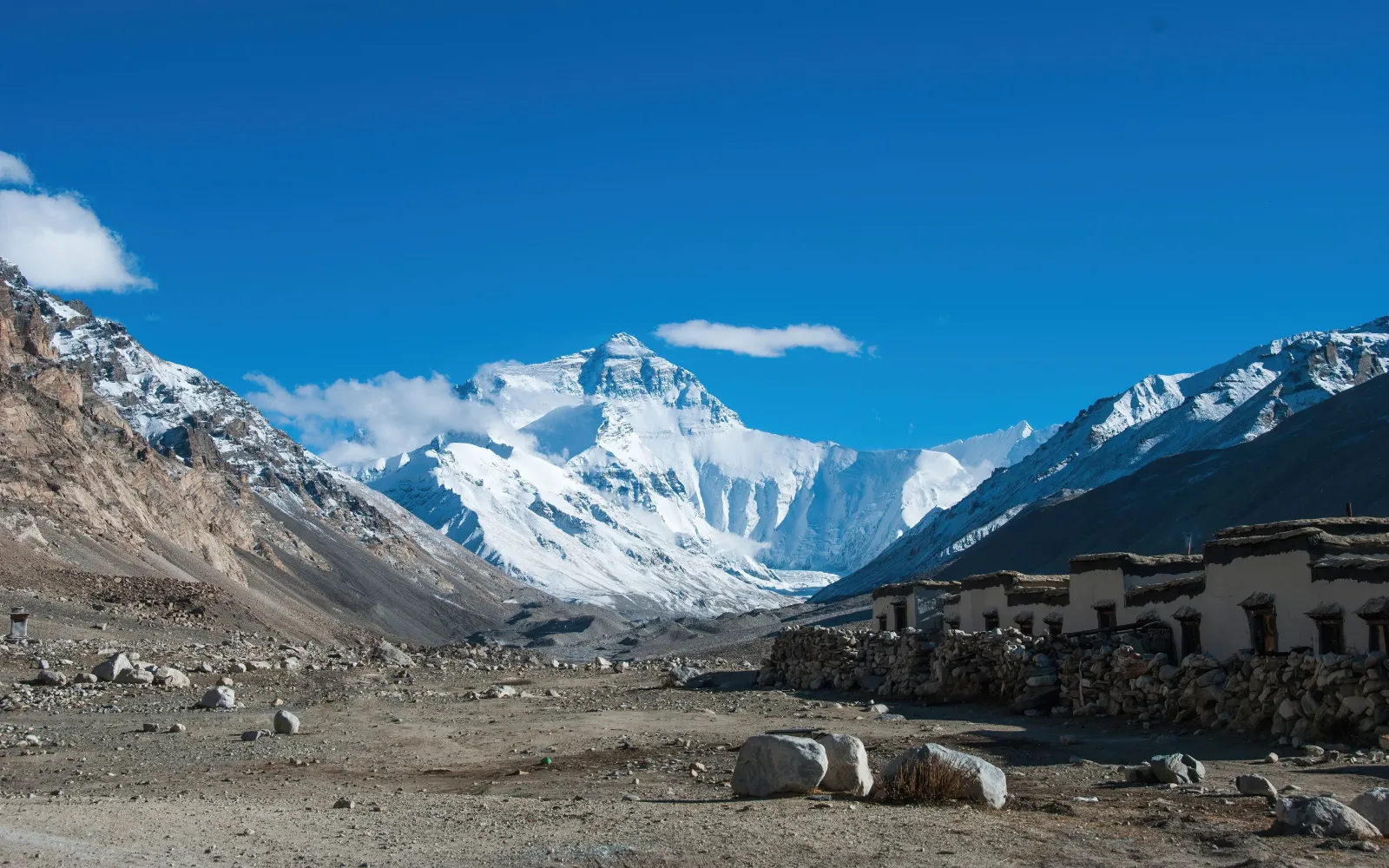
Lukla is more than just the starting point for an Everest Base Camp trek. It is the gateway to the Khumbu, connecting travelers with some of Nepal’s most remarkable mountain destinations. But how does Lukla connect to Everest Base Camp, and what options do you have if you want to trek, fly, or combine both?
This guide follows the journey from Lukla to Phakding, Namche, Pheriche, Lobuche, Gorak Shep and Everest Base Camp, while explaining where helicopter travel fits into the route. Discover how Aero Connect Nepal’s mountain helicopter expertise and representatives across Nepal can help coordinate flights, tours and ground assistance from Lukla and the Everest region to other mountain destinations, subject to weather and operating conditions.
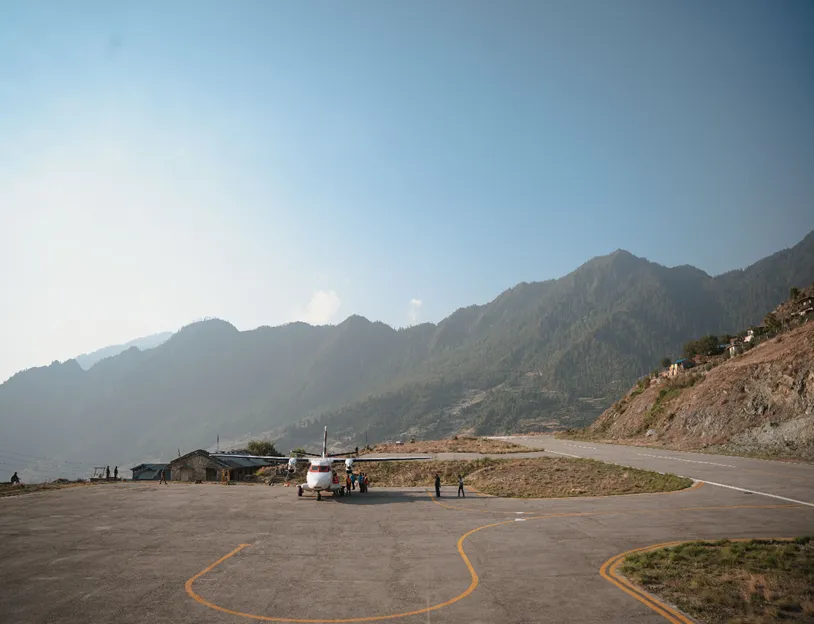
Lukla is a key entry point to Nepal’s Khumbu region and the starting point for many Everest Base Camp journeys. Tenzing-Hillary Airport connects Lukla with Kathmandu, allowing travelers to begin their journey before continuing through Namche, Tengboche, Dingboche/Pheriche, Lobuche and Gorak Shep toward Everest Base Camp.
Lukla is the gateway, not the destination. Travelers can reach it by fixed-wing aircraft or helicopter, with Kathmandu to Lukla Helicopter Flight offering another way to access the Khumbu, subject to weather and operational conditions.
The journey from Lukla to Everest Base Camp is a gradual progression through the Khumbu, taking travelers from the lower Dudh Koshi valley to the high-altitude landscape surrounding Everest. Rather than reaching Base Camp directly from Lukla, the classic trekking route passes through several villages that serve as overnight stops, acclimatization points and gateways to the next stage of the journey.
1. Lukla → Phakding
The trekking journey begins in Lukla at approximately 2,860 m. After arriving by air, trekkers generally begin walking north toward Phakding, following trails through the lower Khumbu and along the Dudh Koshi River.
Phakding, at approximately 2,610 m, is commonly used as the first overnight stop. Because it sits slightly lower than Lukla, this initial section provides a relatively gentle introduction to the trekking route. The area has numerous teahouses and lodges, making it a practical place to rest before the longer climb toward Namche Bazaar.
2. Phakding → Namche Bazaar
From Phakding, the trail continues through the Dudh Koshi valley toward Namche Bazaar at approximately 3,440 m. Trekkers pass through settlements and cross suspension bridges before reaching the Sagarmatha National Park area around Monjo.
The route then becomes more demanding as it climbs toward Namche. The village is one of the most important stops on the Everest Base Camp route, providing accommodation, food, supplies and opportunities for acclimatization.
Namche also marks a noticeable transition in the journey, as trekkers begin moving deeper into the mountainous Khumbu rather than simply following the lower river valley.
3. Namche Bazaar → Tengboche
After acclimatization in Namche, the route continues toward Tengboche, located at approximately 3,860 m.
The trail passes through forests and open mountain terrain, with views of peaks including Ama Dablam and other major Himalayan mountains. Tengboche is particularly known for Tengboche Monastery, making it both a cultural and geographical landmark along the route.
This section represents another gradual increase in altitude before trekkers move into the higher Khumbu.
4. Tengboche → Dingboche or Pheriche
From Tengboche, the route continues toward the high-altitude settlements of Dingboche and Pheriche. These locations should not be treated as one fixed sequence because trekking itineraries can use either settlement depending on the chosen route and acclimatization plan.
Dingboche sits at approximately 4,410 m, while Pheriche is approximately 4,240 m. Both are important stops for travelers adjusting to the increasing elevation.
At this stage, the landscape becomes more open and alpine, with less vegetation than around Namche and Tengboche. Trekkers commonly allow additional time in this part of the route to acclimatize before continuing toward Lobuche.
5. Dingboche or Pheriche → Lobuche
After the high-altitude acclimatization stage, trekkers continue toward Lobuche at approximately 4,940 m.
The route becomes increasingly rugged and alpine as it approaches the Everest region. Lobuche is an important overnight stop because it places trekkers closer to Gorak Shep while avoiding an unnecessarily long single-day push from the lower Khumbu.
For travelers considering helicopter transportation, Lobuche is also relevant because it can form part of an alternative return itinerary from the high Khumbu, depending on operational conditions.
6. Lobuche → Gorak Shep
The trail from Lobuche continues toward Gorak Shep at approximately 5,164 m, one of the highest settlements on the classic Everest Base Camp route.
At this elevation, the environment is significantly different from the lower sections of the trek. Vegetation is sparse, temperatures can be much colder, and the effects of altitude become increasingly important.
Gorak Shep serves as the main staging point for the final excursion to Everest Base Camp. Trekkers typically stay here before or after making the journey to EBC.
7. Gorak Shep → Everest Base Camp
The final trekking section takes travelers from Gorak Shep to Everest Base Camp, at approximately 5,364 m.
Unlike the villages along the route, Everest Base Camp is generally visited as a destination rather than used as a conventional overnight settlement. Trekkers make the journey from Gorak Shep to Base Camp and normally return to Gorak Shep or continue according to their itinerary.
Kala Patthar may also be incorporated into the itinerary, providing a high viewpoint over the surrounding Everest landscape.
For travelers interested in exploring Everest region and Kala Patthar explore our Everest Base Camp Helicopter Tour with Kala Patthar Landing.
How the Route Connects
The overall progression can therefore be summarized as:
Lukla → Phakding → Namche Bazaar → Tengboche → Dingboche/Pheriche → Lobuche → Gorak Shep → Everest Base Camp
Each section serves a different purpose. Lukla provides the main gateway into the Khumbu, Phakding begins the trekking journey, Namche provides a major acclimatization and resupply point, Dingboche/Pheriche prepare travelers for higher elevations, Lobuche and Gorak Shep form the final approach, and Everest Base Camp is the main trekking destination.
The route can also be combined with helicopter transportation. Travelers may use a helicopter to reach Lukla, experience the Everest region from the air, or arrange return transportation from parts of the Khumbu such as Pheriche, Lobuche or Gorak Shep, where applicable. Helicopter operations remain subject to weather, visibility, aircraft availability, landing conditions and operational decisions.
Pheriche and Gorak Shep are two important high-altitude locations on the Everest Base Camp route, but they serve different purposes. Pheriche is primarily associated with acclimatization, rest and access to the upper Khumbu, while Gorak Shep is the final major settlement before the excursion to Everest Base Camp.
Located at approximately 4,240 m, Pheriche is an important high-altitude settlement on the Everest trekking route. It is commonly used as a place to rest and acclimatize before trekkers continue toward Lobuche and Gorak Shep.
Pheriche also becomes relevant on the return journey. Travelers finishing their trek can use Pheriche as a stopping point before descending toward lower Khumbu villages or, depending on the itinerary and operating conditions, arranging helicopter transportation toward Kathmandu.
Book your flight from Periche to Kathmandu here: Periche to Kathmandu Shared Helicopter Tour
At approximately 5,164 m, Gorak Shep is the final major settlement before Everest Base Camp. It serves as the main staging point for the trek to EBC, with travelers typically making the Base Camp excursion from here.
Gorak Shep is also an important location for travelers considering helicopter transportation after reaching the upper Khumbu. A Gorak Shep to Kathmandu helicopter flight can provide an alternative to retracing the entire trekking route, subject to weather, visibility, aircraft availability and operational conditions.
Helicopters provide several ways to access and travel through the Everest region beyond the traditional trekking route. Travelers can use helicopter services to reach Lukla from Kathmandu, explore the Everest landscape by air, or return from higher Khumbu locations after trekking. Each option serves a different type of itinerary and remains subject to weather and operational conditions.
For travelers beginning an Everest journey, a Kathmandu to Lukla helicopter flight provides an alternative way to reach the Khumbu gateway by air. This can be particularly useful for travelers planning a shorter itinerary or combining air travel with a trek from Lukla.
The flight provides direct access to Lukla without requiring a separate fixed-wing connection. However, helicopter operations depend on weather, visibility, aircraft availability and operational requirements.
Lukla can also serve as a starting point for helicopter experiences deeper into the Everest region. Depending on the itinerary, travelers can explore areas around Everest Base Camp, Kala Patthar, Hotel Everest View and Kongde by air.
For travelers with limited time, an Everest Base Camp helicopter tour can provide an aerial experience of the Khumbu and access to selected viewpoints without completing the full trekking route.
For more information about Kongde: 9 Things to Know About a Kongde Helicopter Tour Before You Fly
Helicopters can also provide return transportation for travelers who have already trekked into the Everest region. Instead of retracing the entire route from the high Khumbu, travelers may arrange helicopter transportation from locations such as Gorak Shep, Pheriche or Lobuche, where operations are possible.
Trekkers completing the EBC journey may consider a Gorak Shep to Kathmandu helicopter, while travelers descending through the lower high-altitude section may consider a Pheriche to Kathmandu helicopter.
These services can be particularly relevant for travelers combining trekking and helicopter travel, walking through the Khumbu for part of the journey while using air transportation for the return.
All high-altitude helicopter operations remain dependent on weather, visibility, landing conditions, aircraft availability and operational decisions. Travelers should confirm current flight feasibility and routing when planning their itinerary.
Travelers thinking of exploring Everest Region and are deciding to Trek or take a Helicopter Tour can visit our Everest Base Camp: Trek or Helicopter? Autumn & Winter 2026 Guide (Post-Flood Update) blo
Lukla, Namche Bazaar, Pheriche, Gorak Shep and Everest Base Camp are different points along the wider Khumbu travel corridor. They are connected by trekking routes, while helicopters can provide selected air connections depending on the itinerary, weather, aircraft availability and operational conditions.
Weather is one of the most important factors affecting travel in the Everest region because the journey crosses several different elevations and geographical environments.
Conditions around Lukla can be noticeably different from those around Namche, Pheriche, Gorak Shep or Everest Base Camp. A flight that has suitable conditions at one location may still encounter cloud, wind, precipitation or reduced visibility farther along the route.
For this reason, both fixed-wing and helicopter operations require current weather assessment rather than relying only on conditions at the departure point.
Lukla is significantly lower than the settlements farther up the Khumbu. As elevation increases, temperature, wind, cloud formation and visibility can change.
This means that clear conditions in Lukla do not automatically mean clear conditions around Everest Base Camp which is mentioned Weather Reality & High-Altitude Technical Challenges in Nepal here.
This is particularly important for helicopter travelers because the aircraft may need suitable visibility along the route and appropriate conditions at the intended landing area.
Travelers planning an Everest journey should therefore check Lukla weather as well as conditions in the higher Khumbu, rather than treating the region as having one uniform forecast.
Kathmandu–Lukla fixed-wing flights operate in mountainous terrain where visibility, cloud, wind and weather conditions can affect operations. CAAN flight-operation requirements require crews to review available meteorological information and ensure that conditions meet the applicable operating requirements before departure. CAAN Flight Operations Requirements
Because weather around Lukla can change quickly, flights may be delayed, rescheduled or cancelled when conditions are unsuitable at the airport or along the route. Travelers should therefore allow some flexibility when planning connections after arriving in Lukla and check the latest flight status with the airline or operator.
For more context, see our Nepal Weather in September & October 2026 article, which explains seasonal visibility, rainfall and mountain-weather patterns affecting helicopter and trekking operations.
Helicopters offer more routing flexibility than scheduled fixed-wing flights, but they still require suitable weather and operating conditions. CAAN's helicopter operating requirements include specific considerations for required visibility, weather and landing conditions at the destination.
Helicopter operations toward Lukla or the higher Khumbu can be affected by:
Therefore, a helicopter should not be considered a guaranteed alternative when a fixed-wing flight is delayed. Conditions can be suitable in Lukla while remaining unsuitable around Pheriche, Gorak Shep, Kala Patthar or Everest Base Camp.
Travelers planning a Kathmandu to Lukla Helicopter Flight, Lukla-to-Kathmandu Helicopter Flight or Everest Base Camp Helicopter Tour should check current operating conditions and keep some flexibility in their itinerary. Our Helicopter Safety Standards in Nepal article provides additional information on weather assessment and CAAN-regulated helicopter operations.
The key point: both fixed-wing aircraft and helicopters are weather-dependent. Their operational capabilities and routes differ, but neither should be treated as completely unaffected by mountain weather.
Travel across Nepal’s mountains can change with weather, terrain and operational conditions. Having local support can make it easier to coordinate your journey when plans change.
Aero Connect Nepal specializes in mountain helicopter tours, charters and transportation across Nepal, with representatives and ground support across major mountain destinations. From Everest and Annapurna to Mustang, Langtang and other remote regions, our team can assist with helicopter arrangements and local coordination.
Whether you are in Lukla, Namche, Pheriche, Gorak Shep or another destination, our representatives can help coordinate available options based on your location, itinerary and current operating conditions.
Tell us where you are, where you need to go and your travel date and we’ll help coordinate the available options.
Book Helicopter Flight Through Us
Contact Aero Connect Nepal on WhatsApp
Check Kathmandu–Lukla Helicopter Availability
Check Lukla-Kathmandu Helicopter Availability
Yes. A Kathmandu to Lukla helicopter flight is an alternative way to reach the Khumbu. It can be useful for travelers with limited time or those combining helicopter travel with trekking.
Helicopter tours can provide aerial access to the Everest region and may include destinations or viewpoints around Everest Base Camp, Kala Patthar and Hotel Everest View, depending on the selected itinerary and current operating conditions.
It depends on your itinerary and priorities. Trekking provides the opportunity to experience the Khumbu on foot, while helicopter travel can reduce travel time or provide specific connections. A combination of trekking and helicopter travel is also possible.
Yes. Aero Connect Nepal specializes in mountain helicopter tours and transportation across Nepal and has representatives and ground-support coordination across major mountain destinations. The team can help assess available helicopter and ground-transport options based on your location, itinerary, weather and operating conditions.
You can contact Aero Connect Nepal directly to discuss your location, travel date and required route.
WhatsApp: +977 9851455587
Email: info@aeroconnectnepal.com